

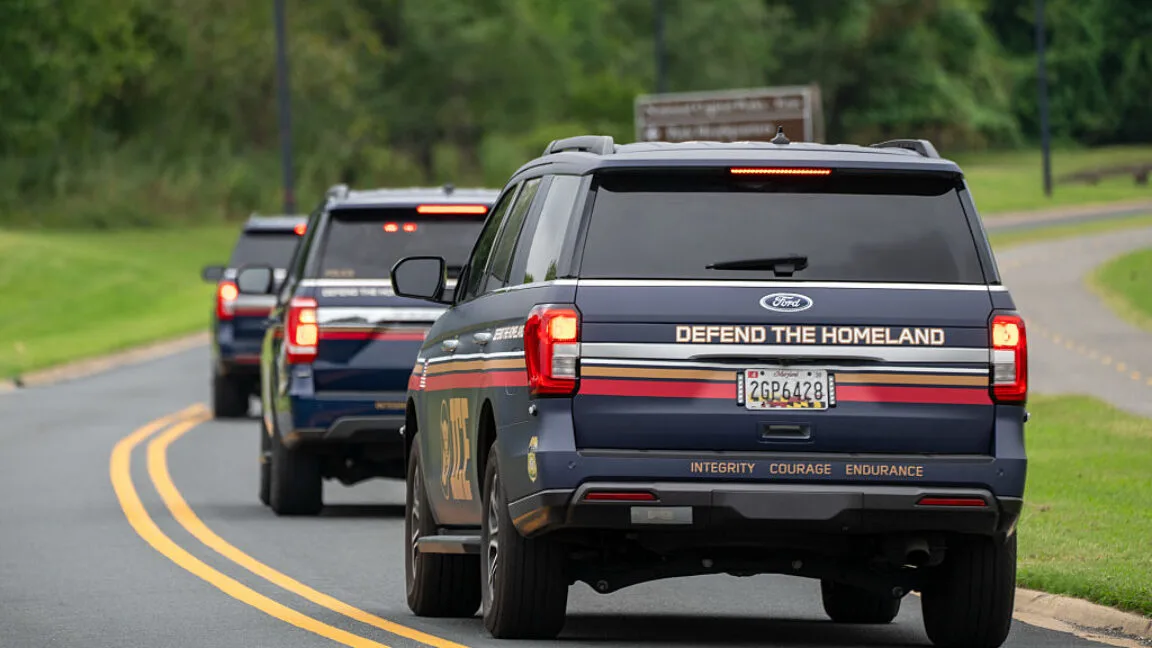
The Department of Justice (DOJ) has launched lawsuits against four states that have barred Immigration and Customs Enforcement (ICE) agents from obtaining undercover license plates. The government argues that these state policies violate the Constitution by imposing stricter rules on federal officers compared to state law enforcement, potentially endangering ICE personnel.
The DOJ maintains that denying undercover plates increases risks to agents, including harassment, invasive tracking, and easier evasion of arrest by ICE targets. According to the complaints, confidential license plate registrations safeguard officers by preventing public access to vehicle information, which could otherwise be exploited to identify and harass agents.

Central to the DOJ’s case are concerns about “doxing,” the publication of personal information that could threaten law enforcement officers. The department points to activist websites such as ICEList.info and ICESpy.org, platforms that track ICE activity and personnel. However, evidence supporting claims that these sites facilitate harmful doxing remains unclear. Both sites have restrictions against sharing sensitive personal data and operate within what advocates say is protected free speech under the First Amendment.
ICESpy.org, for instance, uses facial recognition to match photos of ICE officers from publicly available sources like LinkedIn, linking only to information agents have shared publicly. The site includes warnings that threatening federal employees constitutes a felony and restricts content that could lead to harassment.
Similarly, ICEList.info functions as a user-edited database documenting ICE arrests and deportations. It lists agents only when sufficient evidence ties them to specific enforcement actions and actively removes posts that might attempt to disclose personal or private details. The owner of ICE List has stated that their platform does not publish home addresses or other private information, a key factor in drawing the line against doxing.
While the DOJ defines doxing as releasing highly sensitive information such as Social Security numbers, home addresses, and phone numbers, a review of ICEList.info profiles found that the information shared is typically limited to publicly available professional contacts. The controversy highlights tensions between privacy concerns for federal agents and the rights of the public and watchdog groups to document government enforcement activities.