

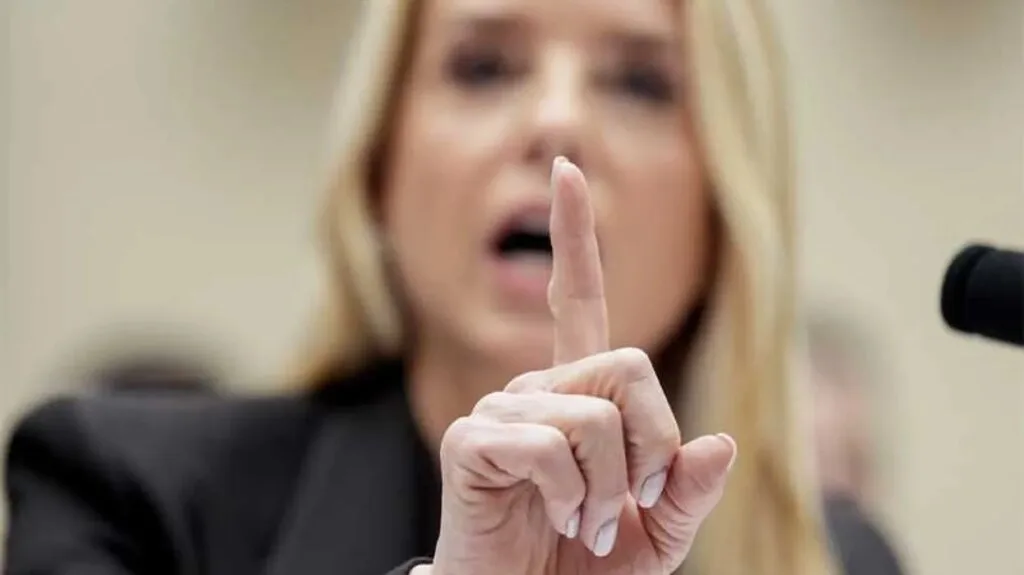
Former Attorney General Pam Bondi faced sharp criticism from a former Justice Department official after she attempted to deflect responsibility for the department’s flawed handling of Jeffrey Epstein’s case files. Anthony Coley, ex-director of the DOJ’s Office of Public Affairs, dismantled Bondi’s testimony before the House Oversight Committee, stressing that she was deeply involved in the obstruction efforts rather than a bystander.
Coley emphasized that Bondi was central to decisions that stalled transparency, ignored demands for disclosure, and refused to meet with Epstein’s survivors—many of whom had suffered abuse as minors. While victims sought direct engagement, Bondi declined and later failed to recognize their presence during congressional hearings. By contrast, a GOP congresswoman was granted access to the White House Situation Room to be discouraged from supporting efforts that would release Epstein files.

Reports from inside the Trump White House further undermined Bondi’s narrative. White House Chief of Staff Susie Wiles criticized Bondi’s approach, recounting how Bondi provided empty folders when asked for the so-called Epstein client list and falsely claimed it was on her desk. Coley noted that Bondi appeared before the Oversight Committee behind closed doors, armed with accusations against Todd Blanche, the acting Attorney General, yet failed to demonstrate transparency herself.