

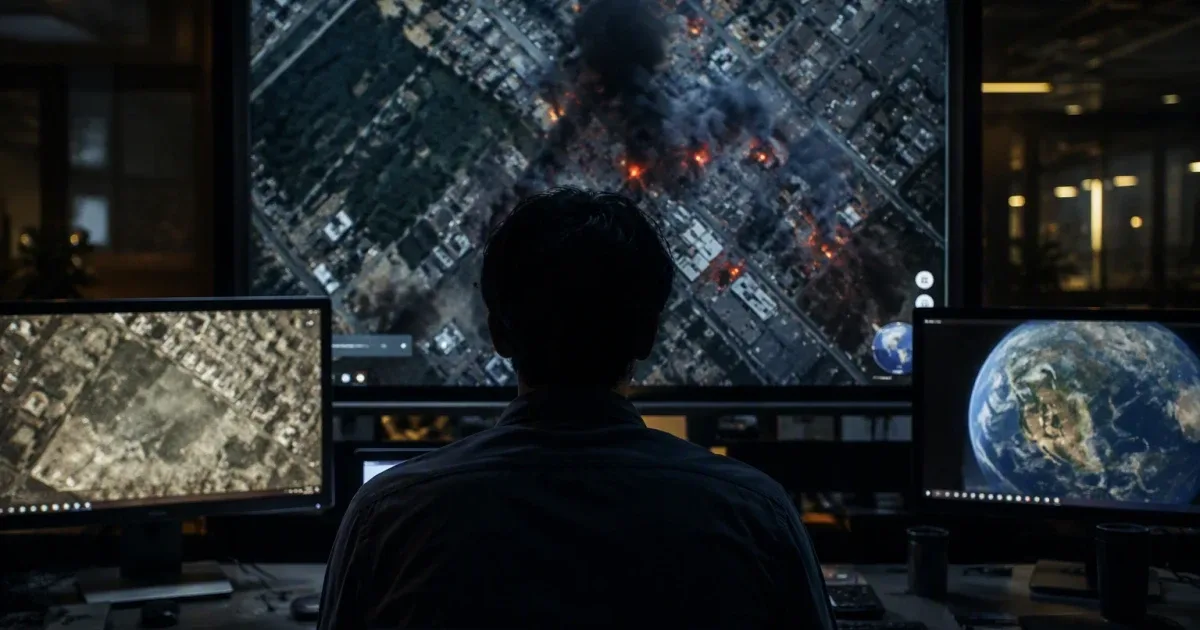
Google discontinued its newly launched AI image-generation feature in Google Earth just one day after introducing it, responding to widespread criticism over the ease of creating misleading satellite imagery. Users quickly produced fabricated scenes depicting collapsed buildings, bombings, fires, and riots, casting doubt on the reliability of such AI-generated visuals.
The feature, called Nano Banana, had been announced in a recent blog post as an innovation blending generative AI with satellite data. However, the rapid propagation of doctored images sparked immediate backlash from journalists, human rights groups, and open-source analysts. They highlighted how the technology could distort public understanding by creating realistic yet false depictions of conflict zones and disasters.

One particularly notable example included an AI-generated satellite image falsely showing the Eiffel Tower collapsed, which was verified as fake by independent fact-checkers. Although Google suggested users could identify generated images through SynthID watermarking and tools like Gemini or Google Lens, these measures did not fully address concerns that convincingly fake visuals could still circulate widely, potentially misleading audiences.
Google Earth has long served as a trusted resource for researchers, reporters, and investigators monitoring crises and verifying ground realities. The introduction of AI-generated content risked undermining its credibility by allowing fabrications resembling authentic aerial views of damaged or war-torn areas.
This episode underscores broader warnings voiced since 2021 regarding the dangers of AI-enabled deepfake satellite imagery as a source of misinformation. The OECD AI incidents database had already flagged this emerging threat before Google's Nano Banana experiment. The swift retreat illustrates how geospatial technologies are becoming contested spaces in information conflicts—where manipulated maps can influence public perception and decision-making just as powerfully as doctored photos or videos.