

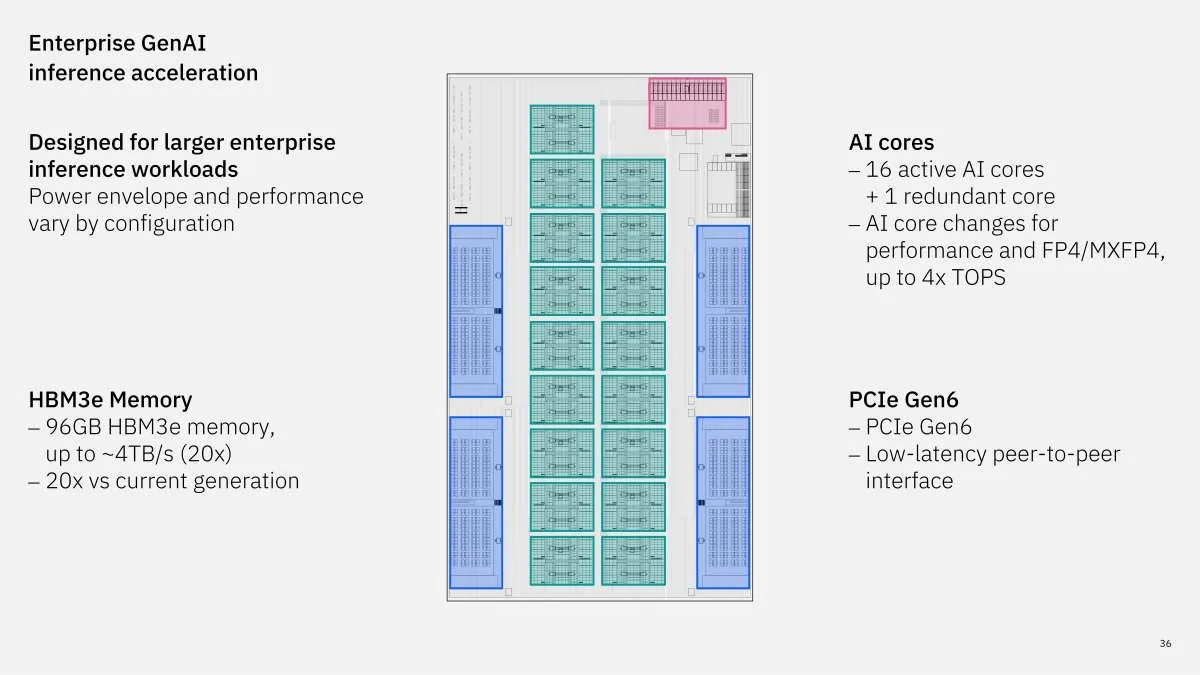
IBM showcased its upcoming generation of IBM Z and LinuxONE processors at Hot Chips 2026, highlighting a dual-ISA (Instruction Set Architecture) design combined with dedicated AI inference acceleration hardware. This integration targets demanding enterprise workloads, particularly those involving Generative AI and large-scale machine learning applications.
The latest processor architecture merges traditional IBM Z capabilities with the added flexibility of LinuxONE, providing compatibility across two ISAs. This allows businesses to run a broad spectrum of workloads with high efficiency and security. Complementing the processors, IBM introduced an AI acceleration chipset intended to deliver significant performance gains in inferencing tasks, crucial for real-time AI-driven enterprise processes.

IBM’s presentation detailed the hardware innovations underpinning this acceleration, including specialized AI engines embedded alongside the main CPUs. These enhancements aim to minimize latency and maximize throughput when processing AI workloads. By integrating these AI accelerators directly within the server platform, IBM seeks to reduce dependence on external GPUs and improve overall system consolidation.
The new generation platforms are designed to continue IBM Z’s focus on security, reliability, and scalability, while evolving to meet modern AI and multi-cloud demands. The dual-ISA approach presents a strategic move to offer enterprises a more versatile computing environment, combining legacy mainframe strengths with open-source and Linux-based flexibility.
Industry observers note that this announcement underscores IBM’s commitment to advancing enterprise computing through tighter AI integration, recognizing Generative AI as a key driver of future IT infrastructure investment. The enhanced performance and versatility are expected to appeal especially to sectors requiring robust transaction processing with embedded AI capabilities.