

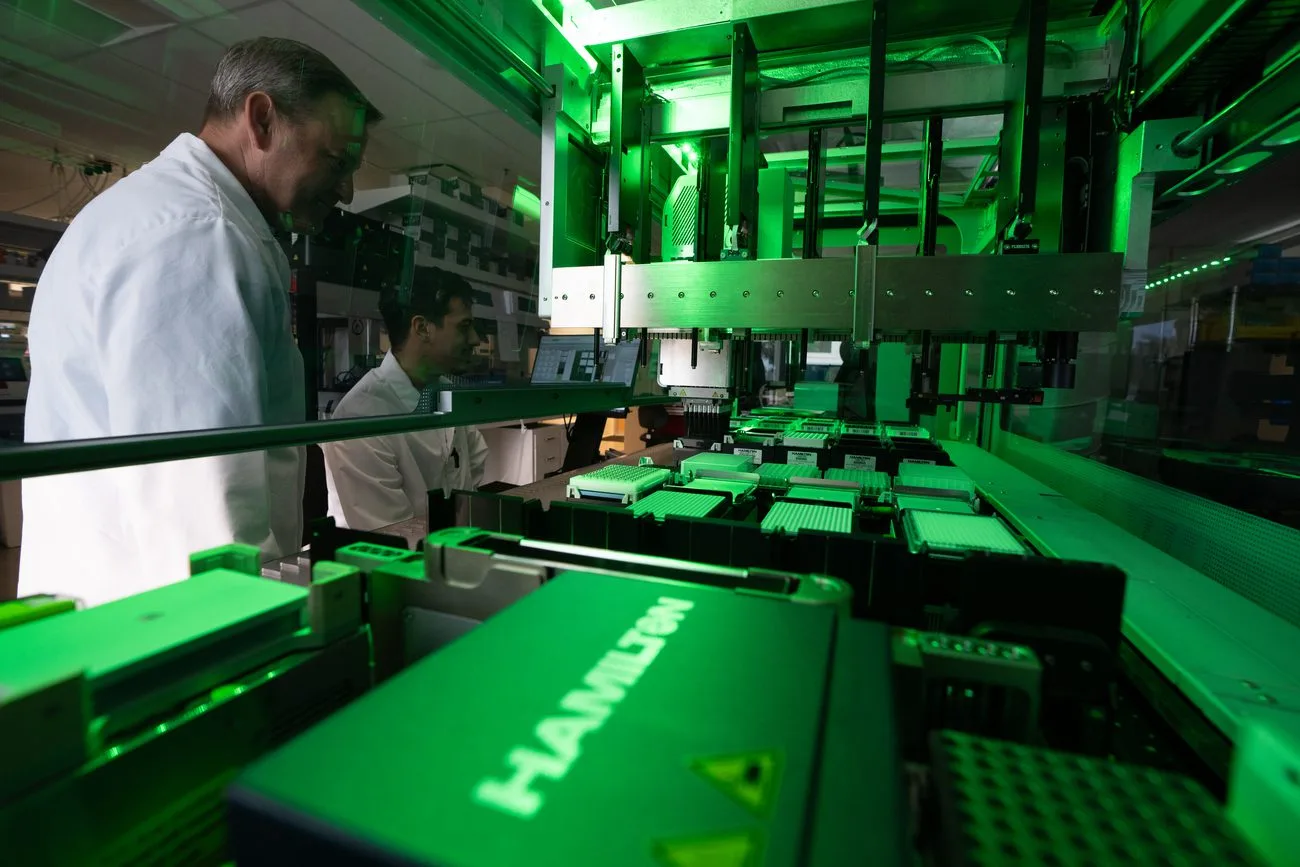
Transcripta Bio, a pioneering biotech startup focused on AI-driven drug discovery, has secured $24 million in funding to push forward investigational new drug (IND) studies and prepare clinical trials for its neurological disease pipeline. The company uses advanced robotic platforms combined with artificial intelligence to develop small molecule therapies aimed at modulating gene expression patterns linked to diseases such as autism spectrum disorder (ASD) and facioscapulohumeral muscular dystrophy (FSHD).
Founded recently in 2023 and based in Palo Alto, Transcripta Bio currently operates with a team of fifteen employees. The company’s CEO highlighted that this kind of venture was not feasible five years ago due to recent breakthroughs in scalable sequencing technology, computational power, and laboratory automation. These innovations have made it possible to apply AI comprehensively to biological data and drug discovery processes.

Transcripta Bio employs a proprietary three-tiered platform to translate transcriptomic data into actionable drug candidates. First, the company analyzes single-cell RNA sequencing data from patients to identify disease-specific gene expression signatures. Next, they use an internal “drug atlas” that examines the impact of thousands of small molecules across 80% of the transcriptome, measuring dose-response effects in multiple cell types relevant to neurological conditions, including motor neurons and fibroblasts. Finally, artificial intelligence models process these data to pinpoint candidate compounds capable of therapeutically modulating gene expression patterns associated with disease.
The company’s pipeline mixes novel molecules with repurposed clinical-stage drugs, benefiting from existing safety data to reduce development time and costs. For example, in 19q12 syndrome—an ASD subtype—Transcripta demonstrated that entrectinib, an oncology drug already FDA-approved, successfully reversed disease phenotypes at low doses. Clinical improvement was observed in at least one patient within nine months of treatment.
Transcripta has also discovered new compounds targeting Huntington’s disease by downregulating MSH3, a DNA repair protein linked to disease progression. They intend to submit an IND application next year to begin formal clinical testing. Additional pre-IND research is underway for other neurological conditions.
The company counts Mayo Clinic and Omnimed among its new investors, joining previous funding partners like JAZZ Venture Partners and BlueYard Capital. The CEO stressed the importance of early-stage risk reduction in drug development, noting that success rates for clinical candidates traditionally remain below 10%. By harnessing AI and rich transcriptomic data, Transcripta Bio aims to improve these odds and accelerate the delivery of novel therapies.