

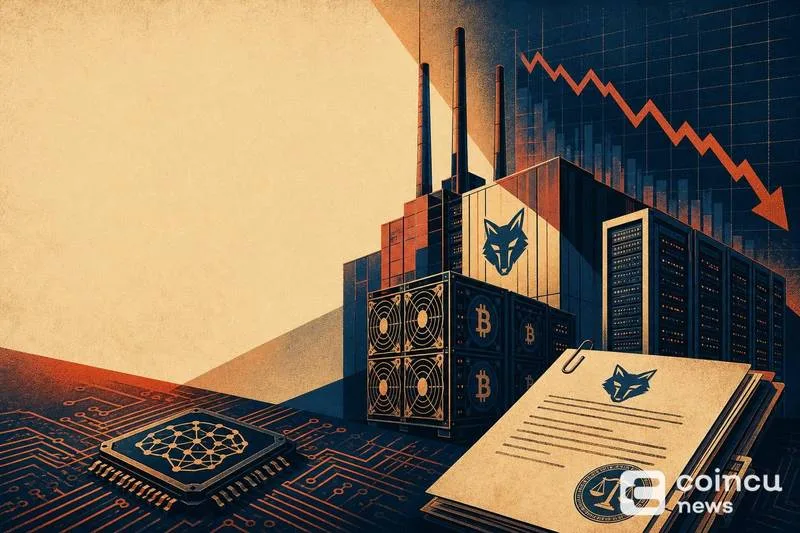
The Bitcoin mining AI infrastructure index experienced a reported 16% decline over the past month, reflecting growing investor caution in a sector that had surged on promises of integrating AI data center workloads with bitcoin mining operations. This drop coincides with recent filings by TeraWulf, a leading bitcoin mining and data center company, fueling concerns around insider liquidity and market confidence.
The index, which tracks publicly traded firms operating where bitcoin mining intersects with AI infrastructure, has faced pressure despite gains earlier in the year. Companies in this niche had benefited from elevated valuation multiples, partly driven by narratives linking bitcoin mining to high-performance computing and AI cloud services. However, details about the index’s composition, weighting, and oversight remain unclear, leaving the 16% figure as an unverified benchmark rather than a formally audited measure.

TeraWulf’s recent filings on the U.S. Securities and Exchange Commission’s EDGAR database form the core of market discussions. These documents suggest some form of insider share transaction, although it is not explicitly confirmed whether this involves outright sales, planned dispositions under regulatory frameworks, or other mechanisms. Additional disclosures on the company’s investor-relations portal add context but do not clarify the full extent of executive holdings changes.
Insider liquidity movements matter significantly for investors tracking this emerging sector. Historically, when executives begin to reduce holdings—especially in fast-growing or speculative segments—it can trigger reevaluation of stock valuations. For bitcoin mining companies repositioning themselves as AI infrastructure providers, the perception that insiders are monetizing shares often raises questions about the sustainability of valuation premiums linked to the AI narrative.
While the SEC filing confirms insider activity at TeraWulf, broader interpretations that executives across the sector are broadly selling shares rely on market speculation and lack definitive corroboration. Yet, the filing has contributed to a shift in sentiment seen across similar companies, which had ridden gains from the combined buzz around bitcoin mining and AI capabilities.