

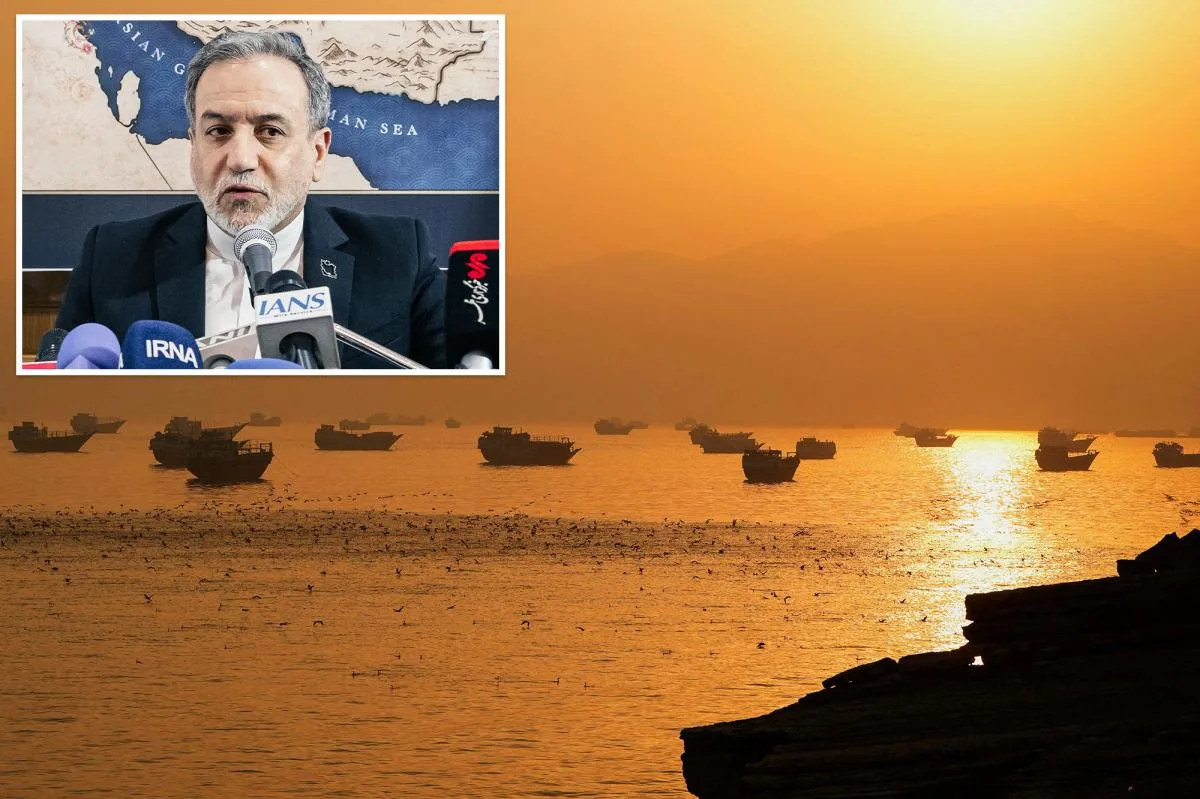
Before the United States called off a major military operation against Iran, Iranian officials reportedly signaled a willingness to reopen the strategic Strait of Hormuz to maritime traffic. This development prompted President Trump to delay what was expected to be a large-scale strike on Iranian targets, including critical infrastructure.
According to intelligence reported by Israeli media and diplomatic sources, Iran’s Foreign Minister Abbas Araghchi communicated with Qatari and American diplomats, proposing concessions that could permit shipping vessels to enter the strait through Iranian waters and exit via Omani waters. This arrangement aimed to ease tensions in the waterway through which a significant portion of the world’s oil supply passes.

Despite these signals, the Islamic Revolutionary Guard Corps (IRGC) has publicly denied any agreement concerning the Strait of Hormuz’s reopening. An official associated with the IRGC dismissed reports of a deal as false. The IRGC’s stance has complicated efforts to maintain a cease-fire after Iran resumed attacking vessels navigating through routes near Oman, a move intended to deter foreign shipping without Iranian consent.
Iran has consistently insisted on its right to impose tolls on ships passing through the strait, a position that conflicts with international maritime law. President Trump attributed his decision to postpone military action to requests from Iran and other Middle Eastern leaders who urged dialogue and de-escalation. He also highlighted that a framework to fully open the strait and address Iran’s nuclear threat had been tentatively agreed upon.
In a public message, Trump stressed that although the military option was on hold, the U.S. remained prepared for forceful action if necessary, claiming readiness at a level unseen since World War II. His restraint followed consultations with key regional partners, including Saudi Arabia’s Crown Prince Muhammad bin Salman, who advocated for resolving tensions through diplomacy.
Oman’s support for the proposed maritime arrangement added diplomatic weight to the effort, but internal Iranian divisions—particularly between diplomatic figures like Araghchi and the more hardline IRGC—have raised doubts about the deal’s viability and future implementation.