

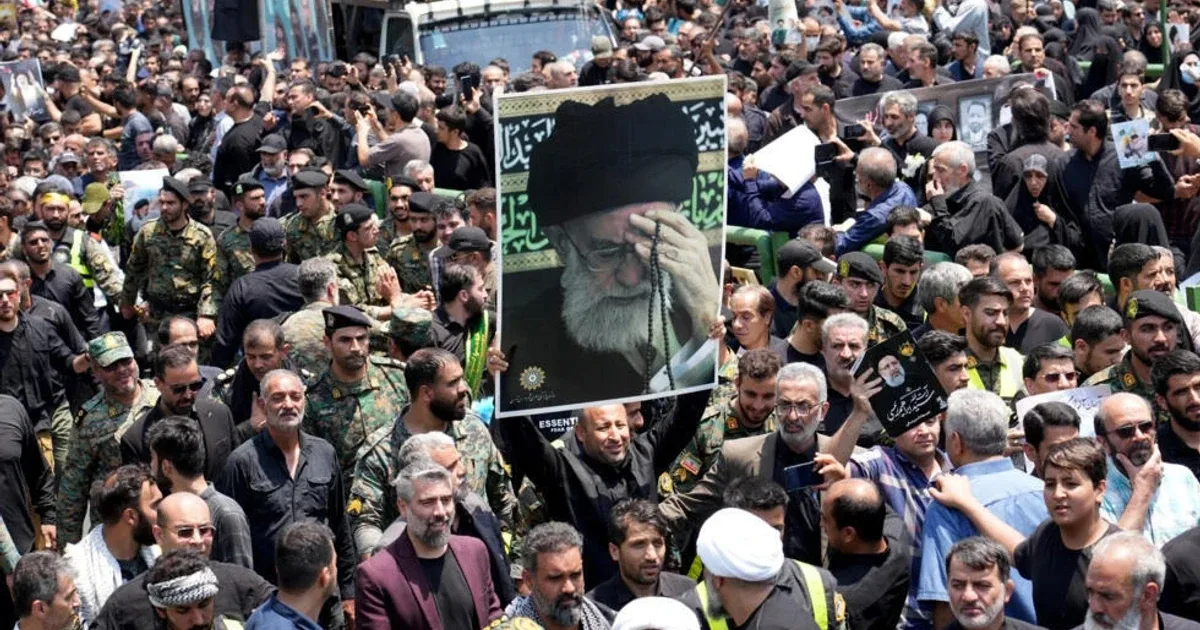
Tehran held a massive funeral procession for its recently killed supreme leader, turning the mourning into a public expression of outrage following days of renewed military strikes that shattered the latest ceasefire. The large crowds filled the streets, many expressing vows of retaliation against the United States and Israel, signaling how the burial became a pivotal moment in the widening conflict.
The current hostilities began with coordinated US-Israeli attacks that targeted Iran’s top leadership, including the supreme leader, the defense minister, and the commander of the Islamic Revolutionary Guard Corps. Since those strikes, reported violence has spread across multiple countries in the region, resulting in significant casualties, with Iranian media reporting hundreds of deaths within Iran alone.

Despite brief attempts at halting hostilities, the ceasefire collapsed again, fuelling further military actions in the Middle East. US officials, meanwhile, have continued to pursue diplomatic efforts, even as accusations emerged that Israel shared intelligence with Washington about a suspected assassination plot against then-President Donald Trump. Trump framed the crisis starkly, indicating the US would either negotiate a deal with Iran or escalate military actions to "finish the job."
The funeral itself served not just as a ceremony but as a powerful political event underscored by collective grief and nationwide demands for vengeance. This moment highlights the deepening internal challenges within Iran’s power structure following the leader’s death, as well as the volatile conditions on the battlefield that persist.
The situation remains highly unstable, with ongoing strikes and a fractured ceasefire casting doubt on the prospects for peace. The future of the conflict depends largely on whether Washington and Tehran can restore dialogue to prevent a broader regional war.