

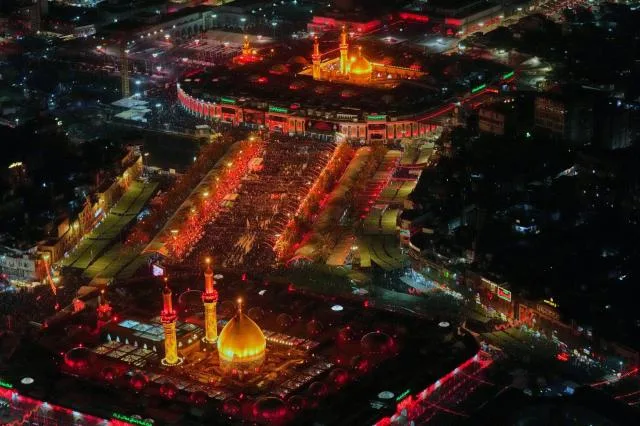
More than 22 million Shiite Muslims have converged on the Iraqi city of Karbala to observe the annual Arbaeen pilgrimage, a significant religious event commemorating the martyrdom of Imam Hussein. The gathering ranks among the largest religious assemblies worldwide and draws worshippers from across Iraq and abroad, with around 5 million attendees coming from outside the country.
Iraq’s unique position in the ongoing tension between the United States and Iran was underscored by the visit of Iranian Foreign Minister Abbas Araghchi, who participated in the pilgrimage. His presence highlighted Iraq’s delicate role as a mediator with close ties to both Washington and Tehran amid fears of a renewed escalation in the regional conflict.

Despite the massive turnout, observers noted a noticeable shift in the demographic makeup of the pilgrims this year. Iranian flags and groups dominated the pilgrimage route and city, particularly along the main Najaf-Karbala road. Conversely, the presence of pilgrims and flags from other Arab, European, and Islamic countries appeared to have diminished. Pilgrims attributed this reduction to the heightened regional instability and ongoing war, which have discouraged foreign visitors outside of Iran.
Support for the pilgrims came from extensive volunteer efforts providing essential services such as food, water, and medical care along the crowded routes leading to Karbala. These volunteer processions have remained a vital pillar ensuring the safety and well-being of millions of participants during their journey.
The Arbaeen pilgrimage unfolds against a backdrop of challenging economic conditions in Iraq. The country’s heavy reliance on oil exports—accounting for more than 90% of state revenues—has left its economy vulnerable amid disruptions caused by the war and the closure of the Strait of Hormuz. Baghdad faces the dual challenge of managing the pilgrimage’s immense logistical demands while navigating the broader impact of regional instability and economic strain.