

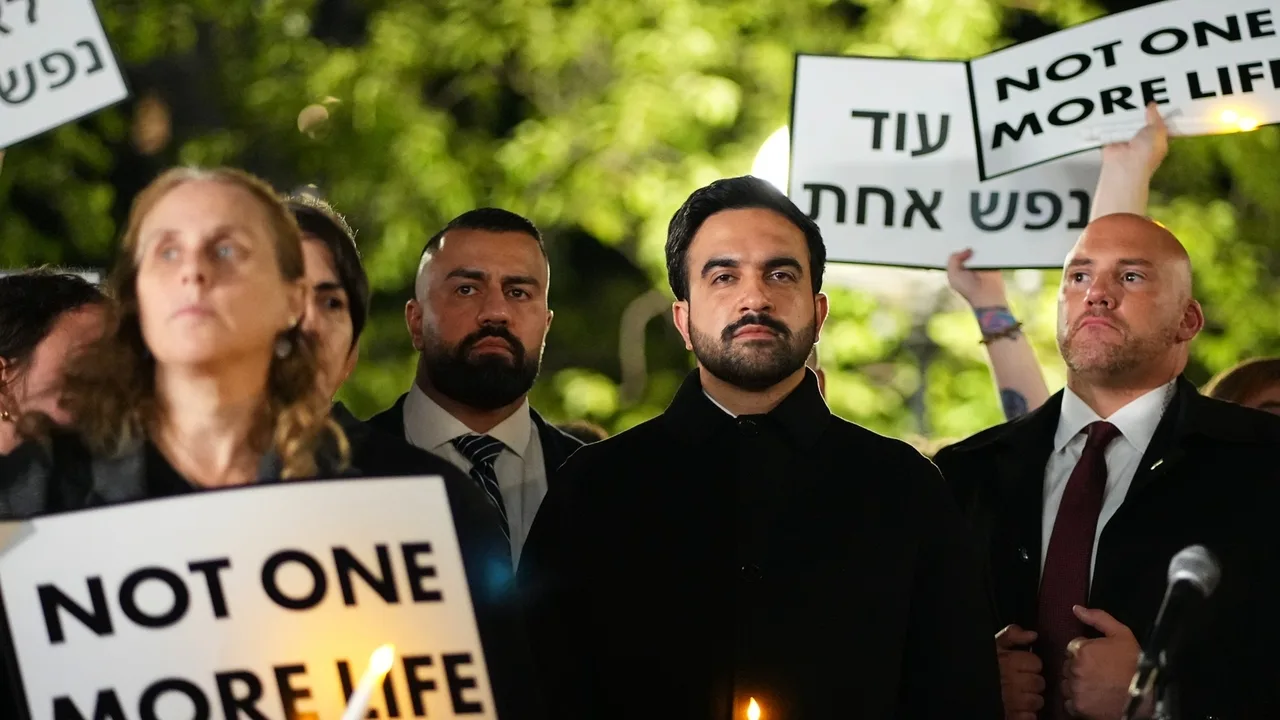
New York City Mayor Zohran Mamdani’s remarks on the anniversary of the October 7 attacks have sparked sharp backlash from both supporters and critics of Israel. Attempting to condemn Hamas’ violence while simultaneously denouncing Israel’s military response, his nuanced stance has drawn widespread criticism and debate.
The mayor unequivocally labeled the Hamas attacks as “horrific war crimes” but also described Israel’s retaliation, particularly in Gaza, as a form of “genocide.” This dual condemnation aimed to acknowledge the complexity of the conflict but instead intensified divisions, with many accusing Mamdani of false equivalence or insensitivity toward either side.

Mamdani’s speech came amid a charged political climate in New York, where tensions continue over the Israel-Palestine conflict. His references to both Palestinian suffering and Israeli security needs reflect an effort to balance statements on human rights and national defense, yet critics on both sides viewed the remarks as polarizing.
Supporters of Israel expressed outrage over the use of the term “genocide” in describing Israel’s military operations, arguing that it delegitimizes Israel’s right to self-defense against terrorism. Conversely, some advocates for Palestinian rights welcomed the mayor’s acknowledgment of the humanitarian crisis in Gaza but criticized the condemnation of Hamas as insufficient.
This speech follows a broader pattern of increasingly vocal political figures in major U.S. cities addressing Middle East conflicts with complex messaging that often challenges traditional partisan narratives. Mamdani’s approach reflects the diverse demographics of New York City and the evolving discourse surrounding the region.