

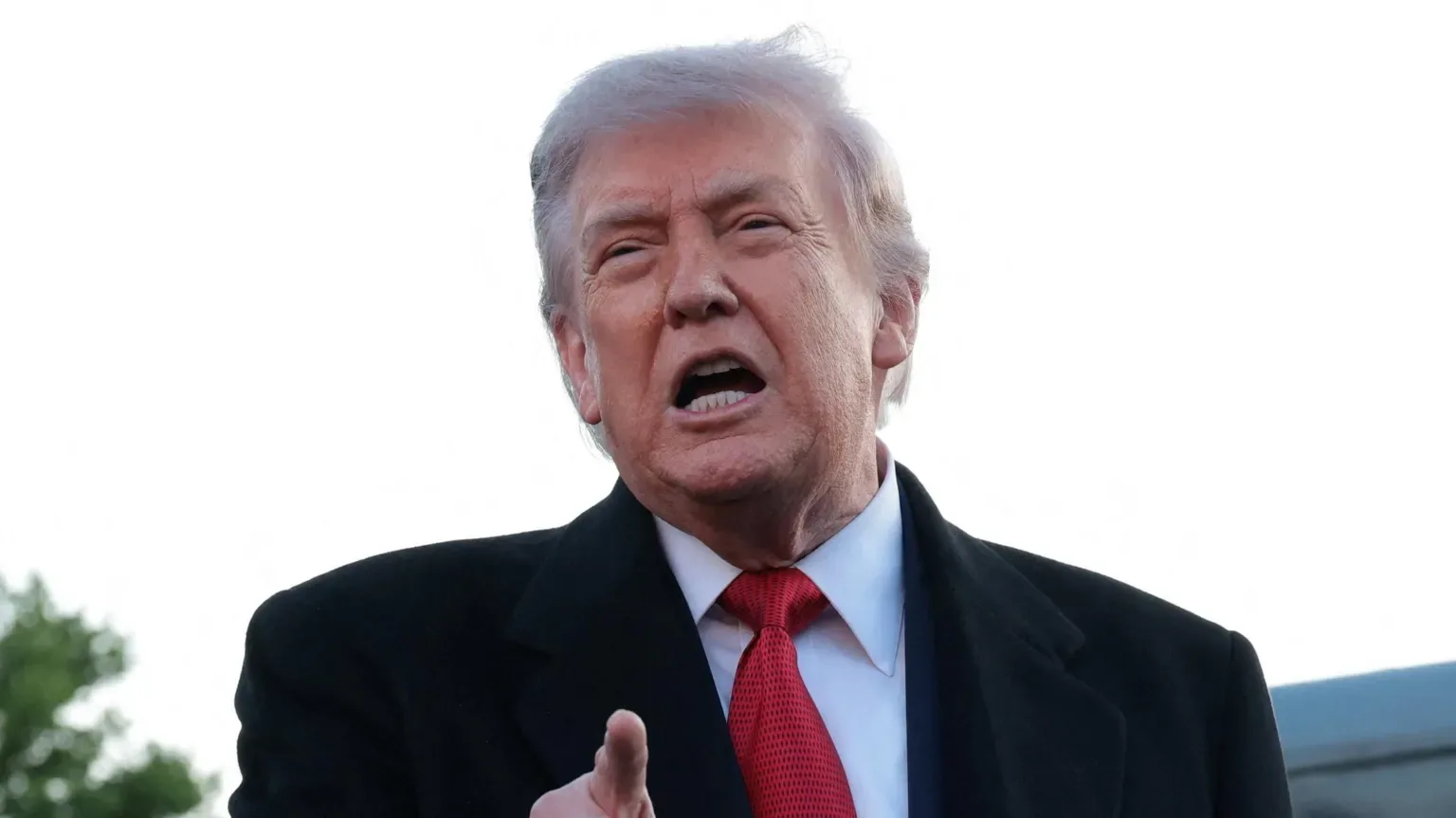
President Donald Trump announced that negotiations with Iran would commence Monday afternoon, following his decision to cancel what he described as potentially “massive” military strikes against the country. Speaking aboard Air Force One, Trump explained that Saudi Arabia’s Crown Prince Mohammed Bin Salman and US allies in the Middle East, including the United Arab Emirates and Qatar, encouraged him to delay the attacks over an emerging diplomatic agreement.
Trump stated that Iran and regional partners had requested a pause, as preliminary terms on the Strait of Hormuz had reportedly been agreed upon. Despite this, the US president did not specify a deadline for reaching a comprehensive deal on Iran’s nuclear program, emphasizing his preference for negotiation over conflict and asserting readiness to act if necessary.

The Strait of Hormuz remains a critical flashpoint in the region, with over 20% of the world’s crude oil and liquefied natural gas supplies passing through its waters. Global energy markets responded swiftly to Trump’s announcement, with Brent Crude and US oil prices falling sharply during Asian trading hours. Since the conflict escalated months ago, oil prices have fluctuated due to fears of disruption in this vital passage.
Iran’s official news agency rejected Trump’s claim that Tehran had requested a postponement of military action, labeling it as falsehood. However, Iranian Foreign Minister Abbas Araghchi confirmed ongoing talks with Oman aimed at finalizing an agreement concerning navigation and security in the Strait of Hormuz. Meanwhile, Iran’s acting Defense Minister warned that Tehran perceives all adversarial threats as serious, whether real or psychological, and vowed vigilance against any attacks.
Trump characterized the aborted strikes as potentially the largest US military action since World War II. He avoided confirming whether targeted attacks would have involved Iranian energy infrastructure, which legal experts consider could breach international law. His administration continues to balance heightened military readiness with a willingness to explore diplomatic resolutions to the prolonged tensions.