

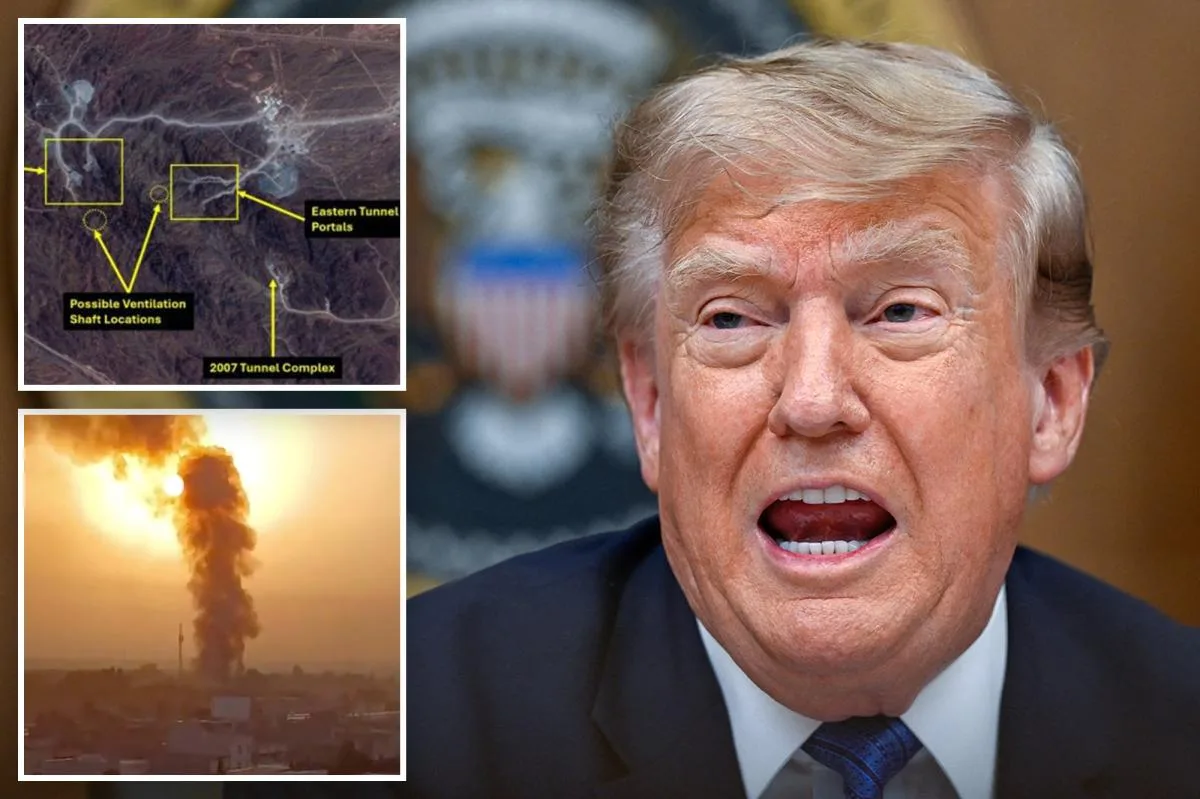
Efforts to halt Iran’s nuclear program face significant obstacles due to the country’s use of deeply buried facilities at Pickaxe Mountain. According to a nuclear expert monitoring the site, the best tactical option may lie in targeting the entrances of the mountain’s tunnel system rather than attempting direct strikes deep underground.
Pickaxe Mountain houses a complex network of tunnels that Iranian forces use to conceal nuclear activities, including the relocation of centrifuges. While some tunnels are hardened and filled, others remain open, with visible signs of ongoing construction and vehicle activity. Conventional bunker-buster bombs might struggle to penetrate the nearly 450 feet of granite shielding these tunnels, making direct air strikes less effective.

The expert noted that the depth of the tunnels is comparable to descending a 38-story building, complicating any “boots on the ground” operation, which, although risky, might allow placing explosives directly within the facility. However, the primary strategy under consideration favors precision strikes to collapse or seal tunnel entrances. Such an approach would deny Iran access to these critical underground routes and enable continued aerial surveillance.
President Trump has publicly emphasized the importance of disabling Iran’s underground nuclear capabilities. He has hinted at the possibility of renewed military action, warning of severe consequences if Iran fails to negotiate agreements over strategic points like the Strait of Hormuz. Despite concerns about the effectiveness of existing munitions against deep subterranean targets, Trump maintains that a new wave of strikes could weaken Iran’s resolve substantially.
Satellite imagery monitored by defense technology firms shows ventilation shafts and tunnel openings at Pickaxe Mountain, highlighting potential strike targets. Experts suggest that exploiting these access points may provide the most feasible pathway to disrupt Iran’s nuclear ambitions without the risks associated with deep infiltration.
Iran, meanwhile, remains engaged in diplomatic discussions with Oman aimed at safeguarding passage through key maritime routes, even as tensions escalate over its nuclear program. The situation remains fluid, with military options weighed carefully against the risks and challenges posed by the protected underground facilities.