

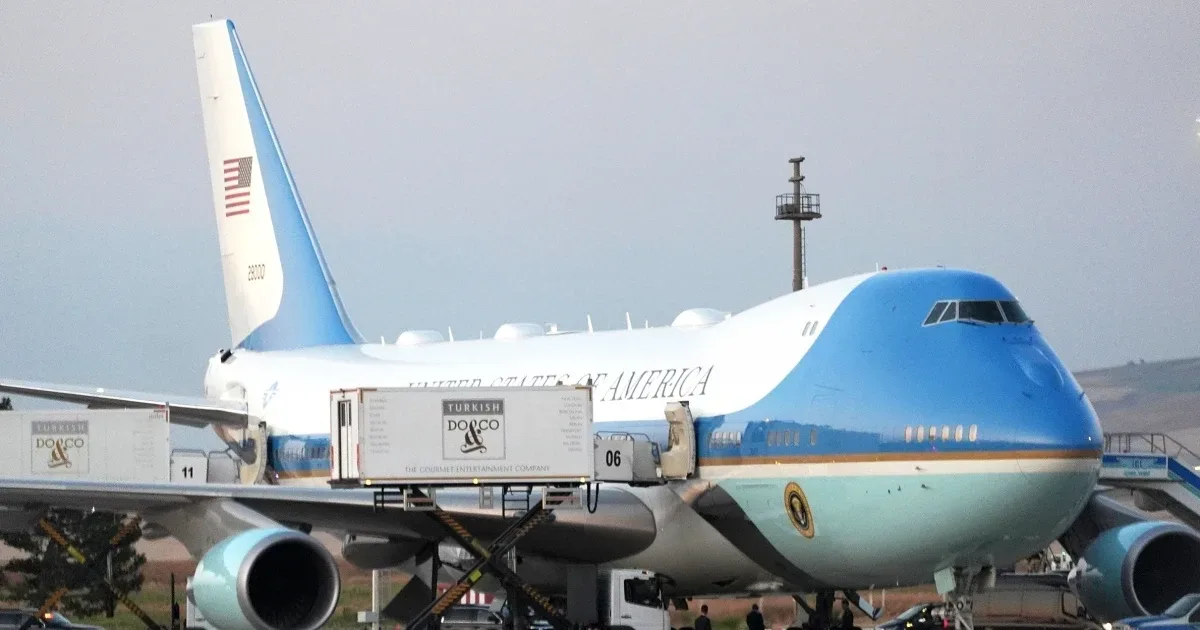
During his departure from a NATO summit in Turkey, Donald Trump underwent a discreet aircraft transfer designed to obscure his location amid credible threats from Iran and its affiliates. Instead of leaving aboard the familiar Air Force One, the president was shifted onto a smaller military jet, a C-32A, under a carefully coordinated operation.
This maneuver involved using an airport catering truck to shield Trump from public and media view, creating the impression that he remained aboard Air Force One while he was covertly moved to the alternative aircraft. The older presidential plane served as a decoy, maintaining visible activity as the real extraction took place on the secondary jet. White House personnel and journalists traveling with the president were reportedly unaware of the swap, believing Trump was still on the original plane for several hours.

The operation responded to elevated security concerns following threats from Iran, necessitating heightened protective measures for the sitting U.S. president in a volatile region. Secret Service officials favored deploying the less conspicuous older Air Force One model, avoiding the newer Boeing 747-8 gifted by Qatar, to minimize risk exposure during the departure. Trump's journey continued from Turkey to RAF Mildenhall in England before he flew home, utilizing the newer aircraft on part of the route once the immediate threat zone was behind him.
This three-pronged strategy—featuring a visible presidential exit, a hidden aircraft change, and a military transit—highlighted the extensive security protocols employed to safeguard the president. The arrangement kept both the public and senior administration officials uncertain about Trump’s exact location until he was securely away from Turkey, reflecting the complexities of protecting U.S. leadership amid international tensions.