

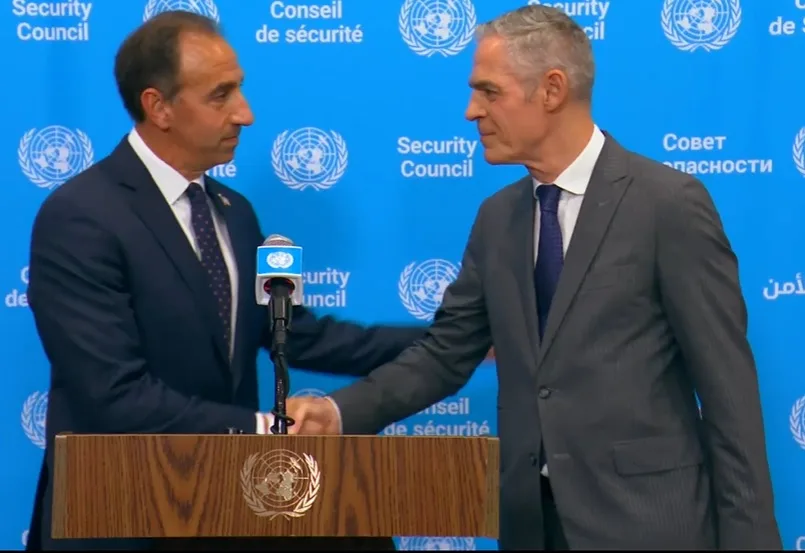
The United Nations Security Council has underscored the growing challenge terrorists pose by employing advanced technologies such as artificial intelligence (AI), drones, and satellites, prompting calls to adapt global counterterrorism strategies. These new tools enable extremist groups to enhance their operational capabilities, making conventional approaches increasingly insufficient.
Members of the Security Council emphasized that the rapid integration of AI and remotely controlled drones into terrorist tactics demands a coordinated international response that incorporates technological innovation and intelligence sharing. They warned that failing to adjust could lead to more sophisticated attacks and complicate efforts to track and disrupt terrorist networks.

In acknowledging the evolving landscape, the council noted the dual-use nature of AI and satellite technology, which while beneficial for civilian applications, also present risks when harnessed for malicious purposes. They encouraged member states to collaborate closely on regulatory frameworks and reinforce monitoring mechanisms to detect and neutralize threats before they materialize.
The discussion highlighted the importance of developing both defensive and offensive capacities, including enhanced cybersecurity measures, counter-drone systems, and AI-driven intelligence analysis. Special focus was placed on empowering law enforcement and military units with better tools to respond swiftly and effectively to technological threats on multiple fronts.
The Security Council also recognized the role of international cooperation in establishing norms and sharing best practices to prevent the proliferation of these technologies in terrorist hands. Emphasis was placed on the balance between security imperatives and protecting civil liberties in an era of surveillance and artificial intelligence.
This strategic shift aligns with broader global security efforts aiming to stay ahead of threats and protect civilians, infrastructure, and governance institutions from attacks facilitated by technology. The council’s call reflects a consensus that counterterrorism policy must evolve as rapidly as the tools that terrorists adopt.