

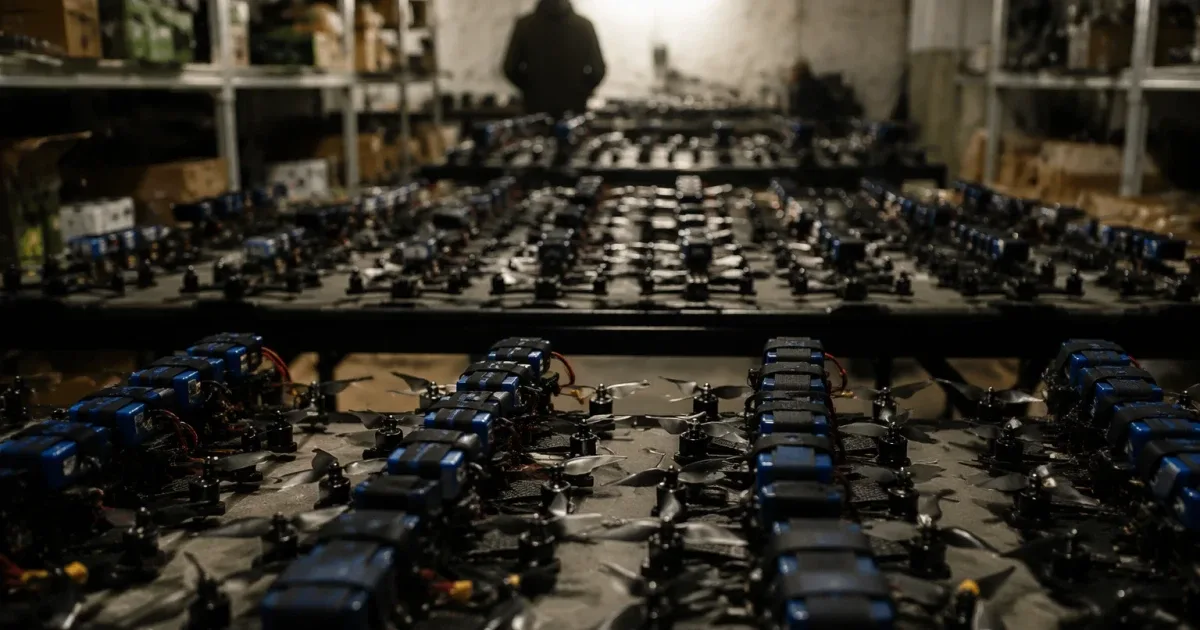
The United States is still in the early stages of ramping up its drone manufacturing capacity, far behind Ukraine’s extraordinary wartime output, according to Pentagon officials. Ukraine is expected to produce between 6 million and 7 million small attack drones this year, a scale that dwarfs US production and underscores the hurdles America faces in scaling defense manufacturing to meet battlefield demands.
This production gap reflects longstanding challenges in the US defense industrial base, including lengthy procurement processes, bureaucratic slowdowns, and supply chains not structured for urgent wartime surges. Although the Trump administration tightened regulations requiring drones to be domestically produced, the industrial infrastructure remains unprepared to rapidly increase output at a pace comparable to Ukraine’s wartime tempo.

Ukraine’s drone industry has aggressively expanded under conflict conditions, doubling its output yearly—from at least 2.2 million drones in 2024 to a projected 4 million in 2025, with plans for roughly 500,000 drones per month in 2026. This rapid growth stems from a manufacturing approach centered on rapid iteration, decentralized production, and immediate battlefield feedback—methods that the Pentagon now aims to integrate into US production plans.
The urgency of this challenge has fostered increased cooperation between the US and Ukraine. In late July, Ukraine agreed to export drones to support the Pentagon’s Drone Dominance program, while President Volodymyr Zelenskiy announced progress toward joint US-Ukraine drone manufacturing initiatives.
The implications of the US lag extend beyond number comparisons. The ability to quickly replenish drone stockpiles in a high-intensity conflict is crucial for supporting allies such as Taiwan or NATO members and maintaining strategic deterrence. The core issue lies in transitioning the peacetime industrial base to operate at the speed and scale of a wartime economy—a transformation the Pentagon has only recently prioritized.