

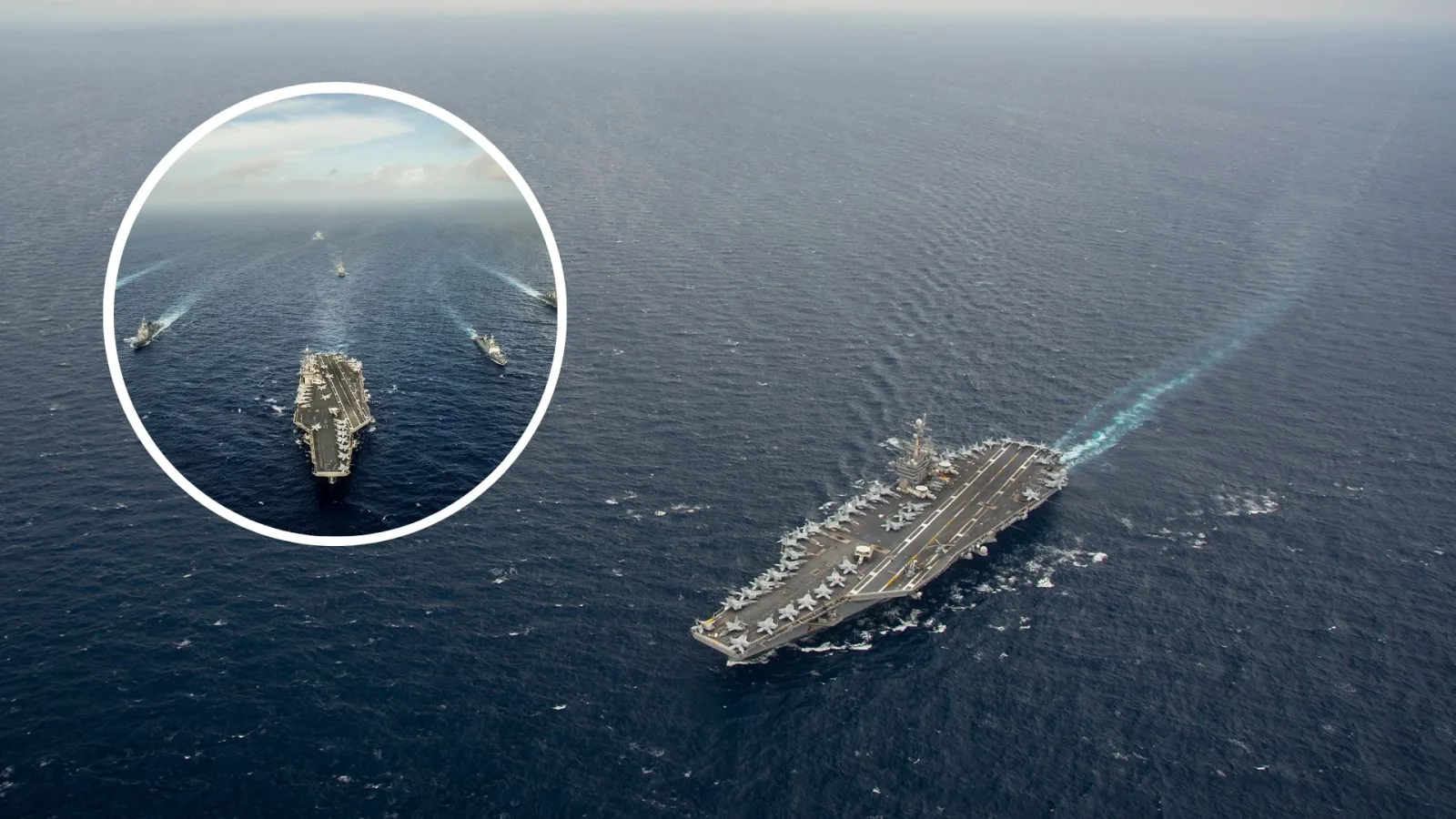
The USS George Washington, a nearly 100,000-ton nuclear-powered aircraft carrier, has entered the U.S. Central Command area of operations to relieve the USS Abraham Lincoln after its lengthy deployment. This carrier rotation reinforces America’s naval presence amid heightened tensions in the Middle East, particularly related to ongoing conflicts involving Iran.
Accompanied by elements of its strike group, including the cruiser USS Robert Smalls and the destroyer USS Shoup, the George Washington transited the Arabian Sea as part of a scheduled deployment. This transition not only maintains continuous carrier-based air power in the region but also allows the Navy to rotate crews and equipment, preventing overextension after the Abraham Lincoln’s unprecedented time at sea.

The arrival of the George Washington underscores the operational challenges faced by the U.S. Navy in balancing military commitments across multiple theaters. With a limited number of large nuclear-powered aircraft carriers, maintaining an active presence in the Middle East while supporting strategy in the Indo-Pacific strains available resources. The carrier strike group, with its integrated mix of air power, surface warfare, and air defense capabilities, serves as a highly mobile force able to project power rapidly without relying on permanent bases.