

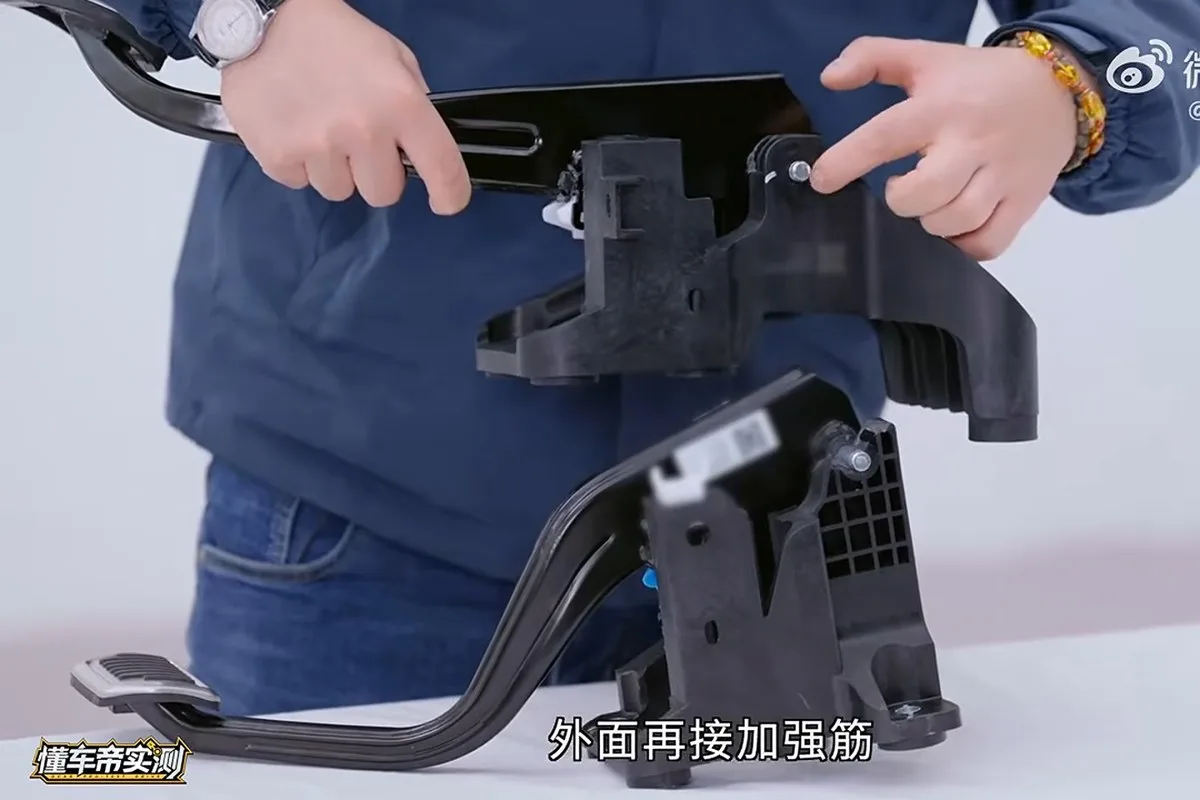
During a recent evaluation, the brake pedal of a Chinese electric vehicle repeatedly snapped under stress, exposing potential flaws in its design or manufacturing process. This failure occurred during emergency braking tests, highlighting serious safety concerns for drivers relying on the braking system.
The faulty brake pedal, part of the Maextro V800 model, broke three times throughout the testing procedure. Comparisons with a similar, non-defective pedal from another model underscored the severity of the issue, suggesting inconsistencies in component quality control. The repeated fracture of this critical safety part raises alarms about the overall durability and reliability of certain parts used in these electric vehicles.

Brake pedals are essential for effective vehicle control, especially in emergency situations. Failures in this system can lead to hazardous driving conditions and increase the risk of accidents. The incident has sparked calls for more stringent testing protocols and stricter oversight of supply chains to ensure that automotive parts meet necessary safety standards before reaching consumers.
This episode also reflects broader concerns about quality assurance in emerging electric vehicle markets. As manufacturers race to capture market share in the fast-growing EV sector, issues like defective assemblies could undermine confidence in new models. Regulators and industry observers are now watching closely to see if manufacturers will address these drawbacks promptly to safeguard drivers.