

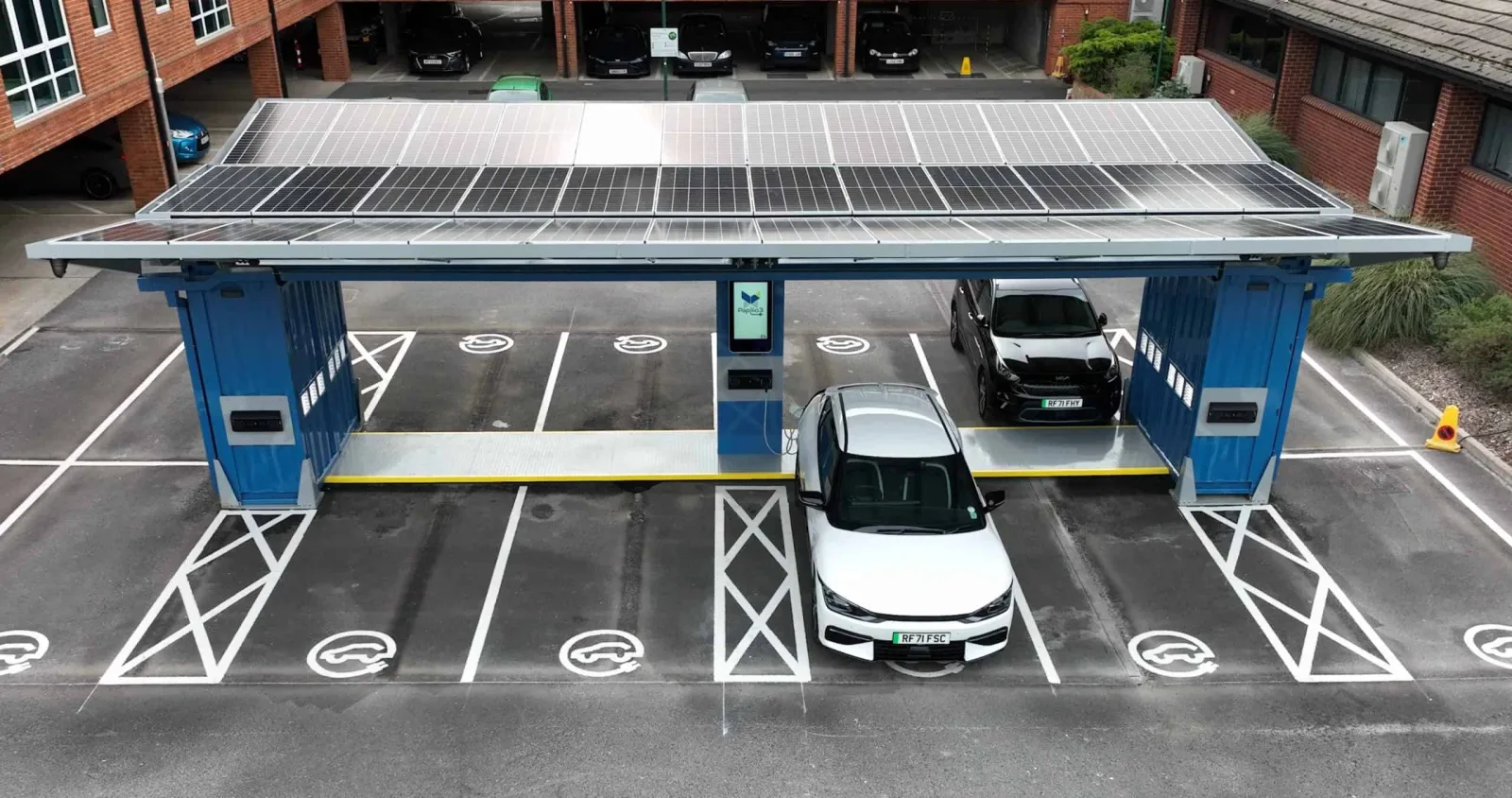
Electric vehicle fleets can significantly lower energy expenses and mitigate grid constraints by deploying DC-coupled smart energy hubs, according to a recent report by Cenex. These hubs integrate solar power, battery storage, and bidirectional vehicle-to-everything (V2X) charging technology to optimize energy use behind the meter in commercial and public-sector settings.
The study examined the 3ti Papilio3 V2X DC FastHub system across diverse environments such as fleet depots, factories, office buildings, and leisure facilities. Using Cenex’s EIGER energy modelling tool, researchers found that peak site demand could drop substantially—by anywhere from 5 kW up to 150 kW depending on site characteristics and operations. This reduction in demand directly translates into notable annual savings on energy costs, estimated at £2,600 to £3,700 for office, leisure, and depot sites using two-rate tariffs. For factory settings with higher energy needs, potential savings may reach as high as £18,000 yearly.

Central to these savings is the use of a DC-coupled architecture, which minimizes energy conversion losses commonly seen in traditional AC-coupled systems. By improving system efficiency and maximizing the use of renewable energy generated on-site, these microgrids help maintain grid stability in constrained areas and accelerate fleet electrification efforts.
Cenex highlighted the importance of integrating solar generation, battery storage, and smart V2X charging to support vehicle fleets while reducing energy costs and peak demand. The report underscores the significance of such innovative solutions in grid-constrained environments where traditional infrastructure upgrades may be challenging or costly.
3ti’s CTO emphasized the practical benefits of the HALO V2X Hub, a behind-the-meter DC microgrid that combines solar panels, batteries, and bidirectional vehicle charging. The system enables fleets to manage energy flows more efficiently, enhance resiliency, and unlock tangible financial savings.