

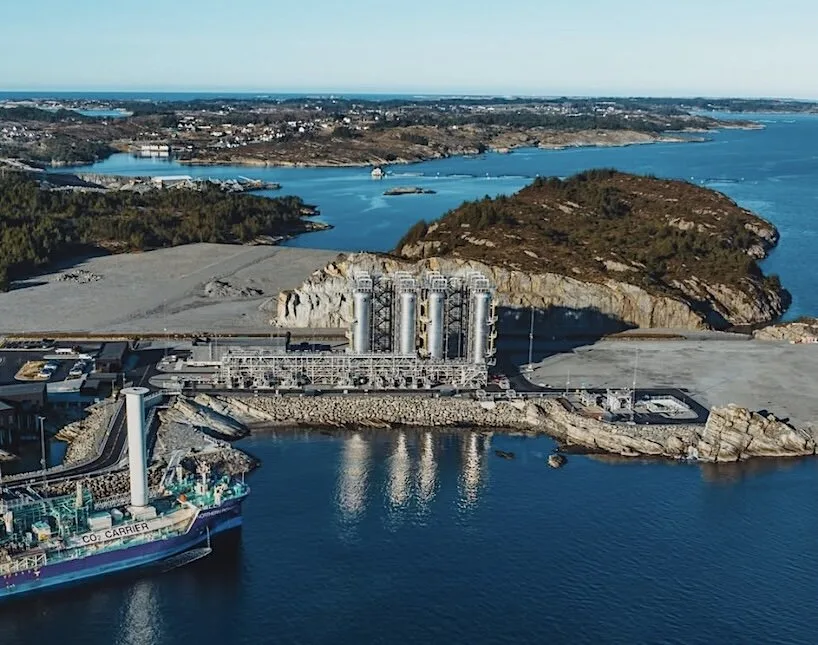
Europe has launched its largest carbon capture and storage (CCS) facility at the Yara Sluiskil ammonia plant in the Netherlands. This pioneering project captures carbon dioxide emissions from fertilizer production and transports the CO₂ via pipeline to Norway, where it will be permanently stored underground.
The facility aims to significantly reduce industrial greenhouse gas emissions by intercepting CO₂ before it enters the atmosphere. Once captured, the gas is compressed and pumped through a pipeline that crosses the North Sea to a dedicated storage site beneath the seabed. This process aligns with broader European efforts to deploy CCS technology as part of climate change mitigation strategies.

Yara’s plant specializes in ammonia and fertilizer production, which traditionally emits large amounts of CO₂. The new capture facility now traps these emissions onsite, helping the company lower its carbon footprint without interrupting production. The captured carbon is then shipped safely to Norway, leveraging cross-border infrastructure cooperation and knowledge-sharing in carbon management.
This cross-country network represents a significant step in scaling CCS at an industrial level. By integrating carbon capture with dedicated offshore storage, the project demonstrates how strategic partnerships and infrastructure investment can facilitate deep emission cuts in hard-to-abate sectors.
The pipeline connection to Norway uses established offshore storage sites designed for long-term sequestration of CO₂ in deep porous rock formations. This method prevents the greenhouse gas from re-entering the atmosphere, offering a viable solution to reduce industrial emissions suspended in fossil-based manufacturing processes.
Experts see this development as a blueprint for similar initiatives aimed at other major CO₂ emitters within Europe, highlighting the importance of cross-border collaboration in achieving net-zero targets. Such projects can accelerate the deployment of CCS technologies by sharing infrastructure, reducing costs, and optimizing storage capacity.
While the initial phase targets emissions from Yara’s fertilizer plant, the facility’s modular design could eventually serve multiple industrial sites, widening the impact on the region’s carbon reduction goals. The expansion potential underscores the role industrial-scale CCS can play in Europe’s energy transition framework.