

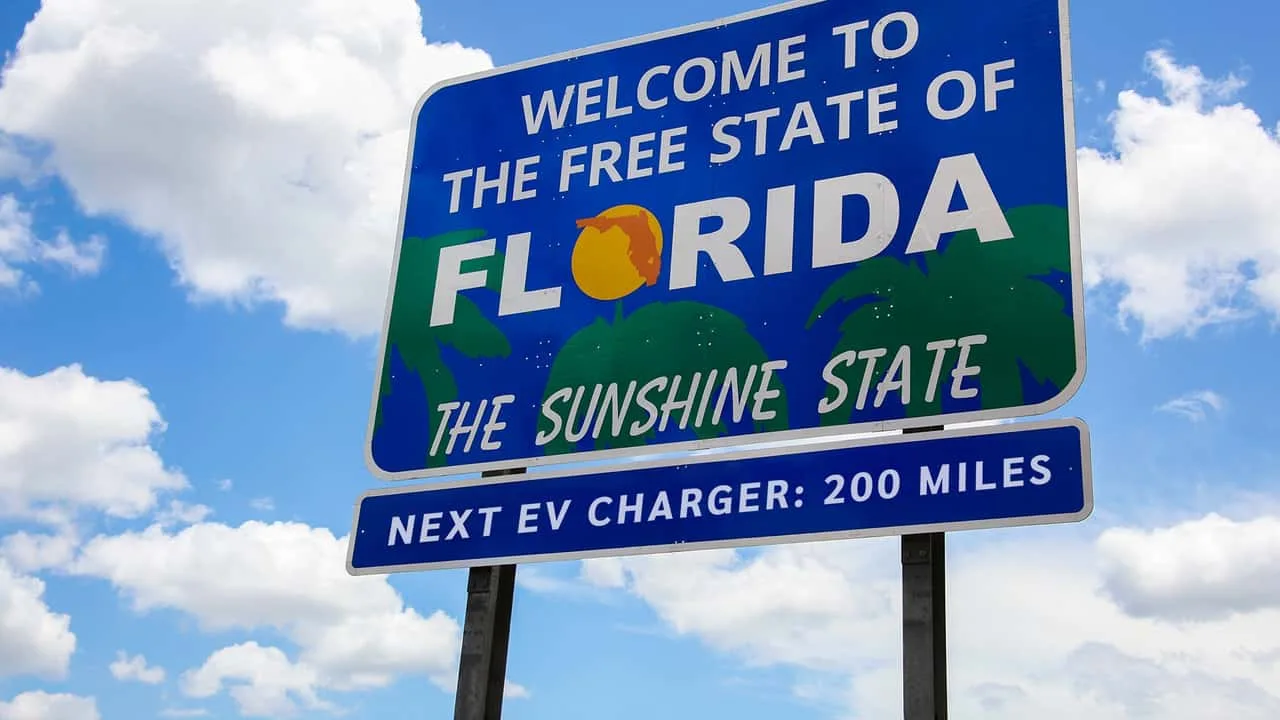
Florida has proposed diverting $198 million from the federal National Electric Vehicle Infrastructure (NEVI) program, originally allocated for public fast EV chargers, to develop infrastructure for electric vertical take-off and landing aircraft, or eVTOLs. The Florida Department of Transportation (FDOT) is pitching the creation of an “Aerial Highway Network” to support these electric air taxis, positioning it as a complementary transportation mode to ease road congestion and enhance connectivity across the state.
The FDOT’s plan involves establishing charging facilities at 32 designated “vertiports” where eVTOLs would take off and land. Each vertiport is expected to cost about $5.6 million and would be located in diverse sites such as luxury residential complexes, golf courses, military bases, and airports. This infrastructure would power the emerging eVTOL market, which remains largely experimental and has yet to be fully commercially deployed anywhere in the U.S.

Despite eVTOLs’ nascent status, companies like Joby Aviation, which recently conducted test flights in New York City, have garnered attention and investment, including backing from major players like Delta Air Lines. FDOT argues the investment in eVTOL infrastructure offers greater long-term benefits than continuing to fund conventional electric vehicle charging stations.
The department justifies this shift by highlighting the private sector's rapid expansion of EV charging networks, citing growth from companies like Tesla, Electrify America, ChargePoint, and new market entrants including Ionna and Walmart. Florida’s public fast-charging infrastructure has reportedly doubled over the past four years, reaching more than 450 stations, which FDOT argues reduces the urgency for NEVI federal funds to support additional EV chargers in the state.
However, the federal NEVI program was designed to bridge gaps in the charging network, particularly focusing on underserved rural areas where private companies show less interest due to lower profitability. States like New York have used NEVI funds to deploy fast chargers in remote regions, helping to address charging deserts and facilitate longer trips for electric vehicle users.
Florida’s pivot toward investing NEVI funds in eVTOL infrastructure raises questions about meeting the immediate needs of EV drivers, especially outside urban centers, and how the state prioritizes new transportation technologies amid ongoing electrification efforts for traditional vehicles.