

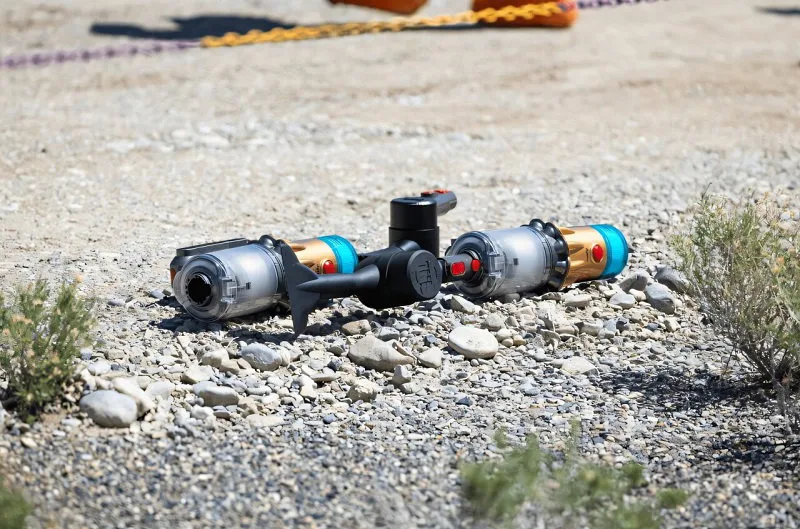
Investigators gathering radioactive debris after a nuclear explosion face considerable challenges due to the dangerous nature of fallout particles and the urgent need for thorough analysis. To address these obstacles, researchers at Idaho National Laboratory have created a specialized attachment for commercial handheld vacuums that streamlines and secures the collection process.
This device captures tiny radioactive glass beads—formed when intense heat melts local materials and then cools into particles smaller than a millimeter—inside a sealed container attached to the vacuum, preventing contamination of the vacuum motor and handlers. These particles are crucial for nuclear forensics, which involves analyzing debris to determine the origin and characteristics of nuclear weapons, aiding response efforts and deterrence strategies.

Previously, collection methods relied on basic tools like brooms, dustpans, and standard battery-powered vacuums, requiring time-consuming and risky manual transfers of samples. The new attachment includes a one-way valve and specialized filters that trap even the finest particles, significantly reducing exposure risk and improving efficiency. It was first prototyped with 3D printing and has evolved through practical training feedback to be both durable and easy to manage, even when emergency personnel wear protective suits.
By cutting the collection time from around 15 minutes to approximately five, this innovation helps responders spend less time in hazardous zones while collecting essential forensic evidence more quickly. The project supports the broader U.S. nuclear forensics program, which coordinates multiple agencies to analyze nuclear threats and enhance national security.