

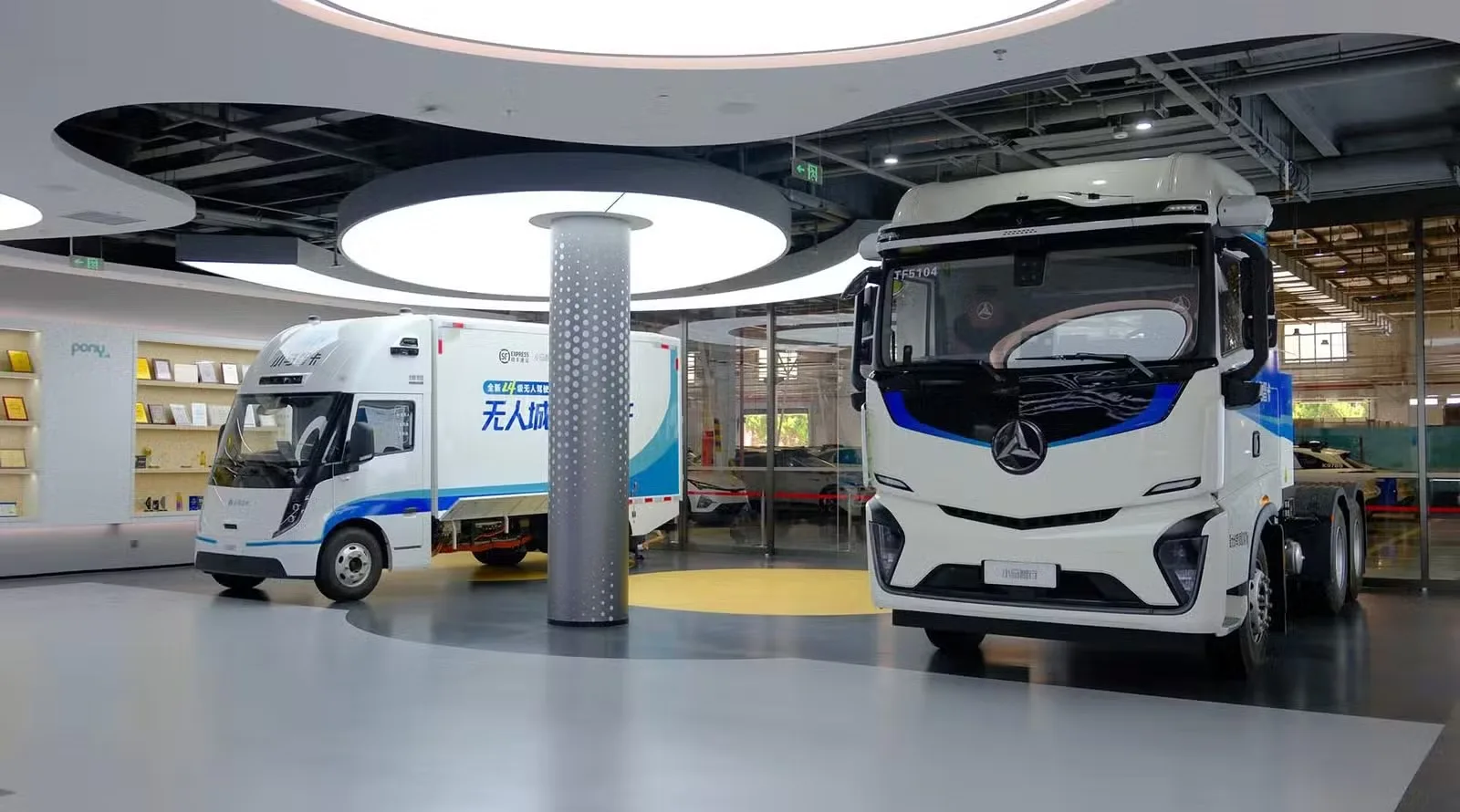
Pony AI is preparing to significantly expand its fleet of autonomous heavy-duty electric trucks, aiming to deploy between 500 and 1,000 units within the next two to three years. These vehicles will support long-haul freight, bulk commodity transport, and port logistics, marking a growing push for autonomous solutions in the heavy trucking sector.
The company’s goals follow a steady progression from early prototype vehicles toward more production-ready models. Pony AI entered the autonomous trucking space in 2018 with largely hand-built vehicles and has since developed its technology through partnerships with established truck manufacturers, improving both reliability and cost-efficiency.

Key to this scaling effort is the introduction of the fourth-generation autonomous trucks, which benefit from hardware costs reduced by approximately 70 percent compared to earlier models. These trucks are designed with a long service life, capable of operating up to 20,000 hours or traveling 1 million kilometers, promising durability for commercial use.
By the end of 2025, the company already had 200 robotrucks active on roads, making the upcoming increase to 1,000 a notable expansion. The successful deployment hinges on concurrent advancements in autonomous driving systems, reduced hardware costs, and stronger collaborations with logistics partners and vehicle makers.
Looking beyond heavy trucks, Pony AI has even more ambitious plans for light-duty autonomous vehicles, with a target of putting 100,000 such trucks on the road by 2030. Achieving these numbers will depend on technological maturation and market readiness, but the company’s progress suggests a growing viability of autonomous electric trucks across multiple logistics applications.