

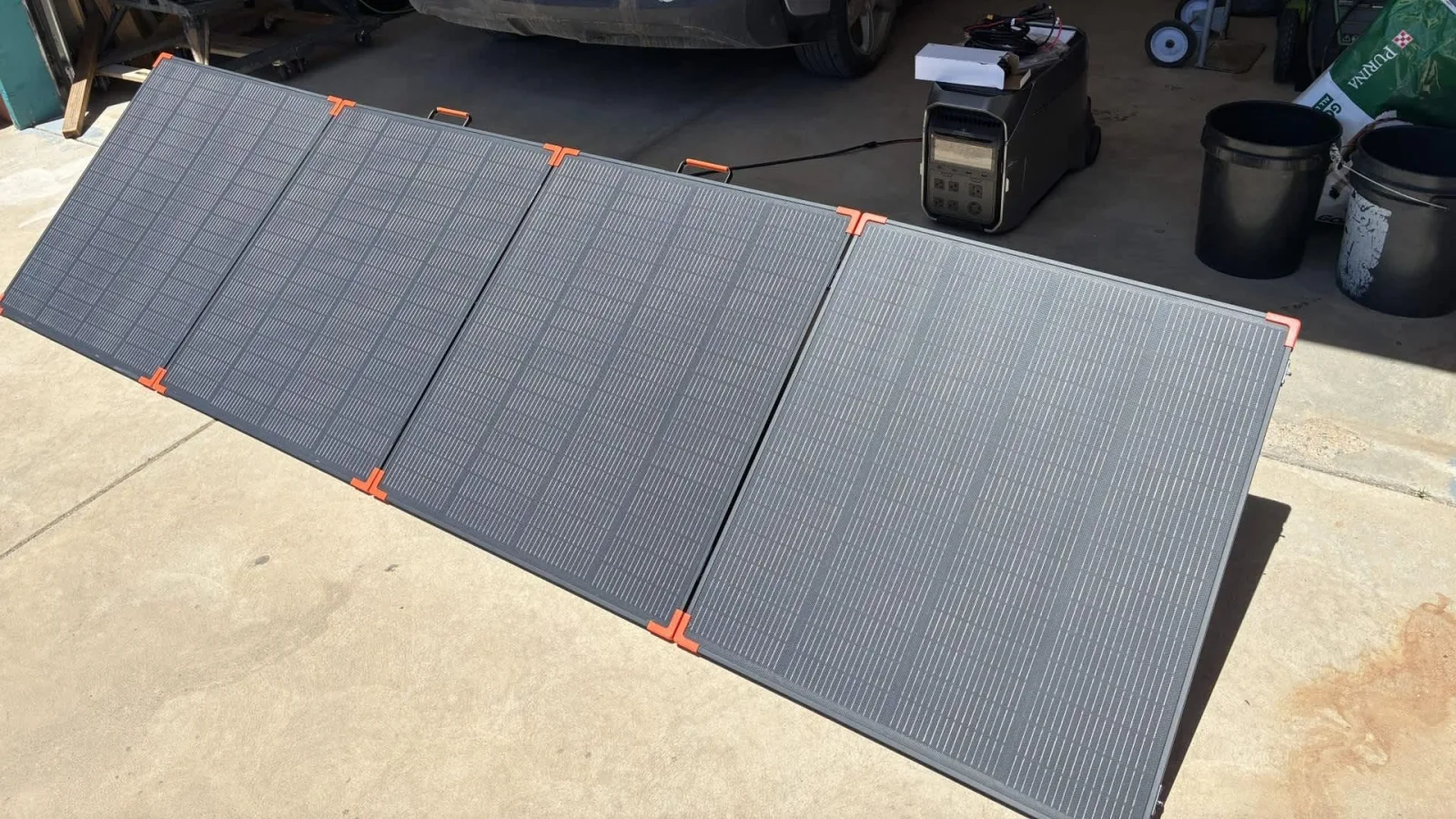
Instead of investing in an expensive expansion to his fixed solar setup, a homeowner with extensive experience in renewable energy opted for a more affordable alternative: 900 watts of portable solar panels. This system supplies much of the electricity needed to charge his electric vehicle, bike, and mower without requiring a full-scale rooftop upgrade.
He shared his approach on a popular solar forum, explaining that the high upfront costs and limited return on expanding the main array led him to choose portable panels. By manually repositioning these panels throughout the day to follow the sun, he maximizes their efficiency despite the modest wattage. While this requires more hands-on effort, it avoids the significant expense associated with permits, installation labor, and electrical work for fixed solar system additions.

This strategy highlights a practical option for households seeking to reduce their dependence on grid electricity for specific uses, such as EV charging or powering electric tools. For many, the barrier to solar adoption remains the initial investment rather than technical feasibility. Portable solar systems offer a flexible and lower-cost way to capture solar energy, particularly for renters or homeowners unwilling or unable to overhaul their roofs.
Small portable arrays like this can effectively supplement daytime charging needs when vehicles are parked in sunlight. They also support electric bikes and lawn equipment, contributing to ongoing savings and a reduction in emissions tied to conventional electricity sources. While not suitable for everyone—requiring adequate space, sunlight, and manual adjustment—these systems provide an accessible entry point for those testing solar solutions.
For households ready to explore larger, permanent solar installations, online platforms exist to compare installer quotes and potentially save thousands on projects. However, portable solar panels remain a valuable, lower-risk alternative that helps offset energy costs and supports cleaner transportation with minimal upfront commitment.