

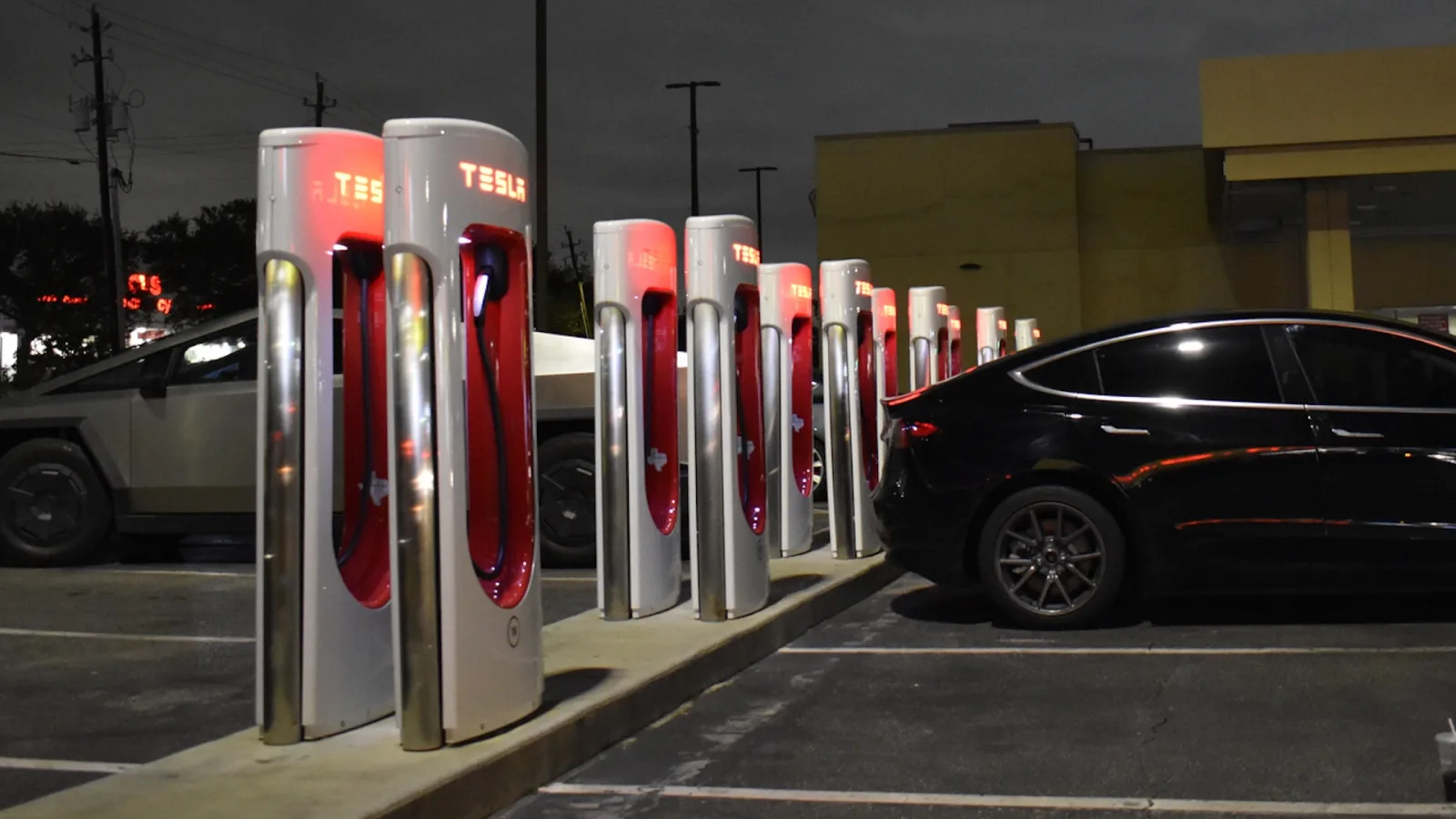
The recent shooting at an Idaho In-N-Out restaurants parking lot that also hosts a Tesla Supercharger has reignited attention on a little-known safety issue involving electric vehicle (EV) charging cables. Because EV charging connectors lock into cars during power transfer, drivers cannot immediately unplug and drive away in emergencies, raising serious concerns about driver safety in crisis situations.
The shooting, which left three people dead and several injured, including a Tesla driver charging at the site, prompted discussion about how quickly an EV driver can exit under threat. Typical EV models require drivers to release the charging port lock via the vehicle’s interface or a manual release before disconnecting the cable. This delay could prove critical if a driver needs to escape rapidly.

One product that attracted renewed interest was EVject, an aftermarket "Escape Connector" designed to fit between the charger and the vehicle cable. This device detaches automatically if the car moves, allowing the driver to leave without the usual unlocking process. However, Tesla had previously challenged EVject’s safety, filing a lawsuit over the product’s lack of temperature safeguards, warning it could overheat dangerously. After adding thermal protection to a revised model, EVject resolved the lawsuit. Despite this, EVject only offers a partial solution since drivers must still detect the threat and react quickly.
This incident highlights a fundamental conflict in fast EV charging design: locking connectors enhance safety by preventing accidental cable disconnections during high-voltage charging but slow emergency departures. This applies not only to Tesla’s proprietary charging standard (NACS) but also to other popular interfaces like CCS and J1772, widely used across the EV industry.
Industry experts and commentators emphasize that most EV charging occurs at home, not public stations—where drivers have greater control and face fewer immediate risks. This significantly limits scenarios where an emergency “drive-off” mechanism would be necessary.
Looking ahead, experts argue that the most effective remedy would come directly from automakers and charging infrastructure providers. Integrating an in-cabin emergency disconnect function—capable of instantly cutting power, releasing the connector latch, and allowing a quick departure—could provide a safer and more reliable solution. Tesla, manufacturing both EVs and charging stations, may be well-positioned to pioneer such safety features. Meanwhile, the broader automotive and charging network sectors face a collective challenge to balance security with emergency accessibility in EV charging designs.