

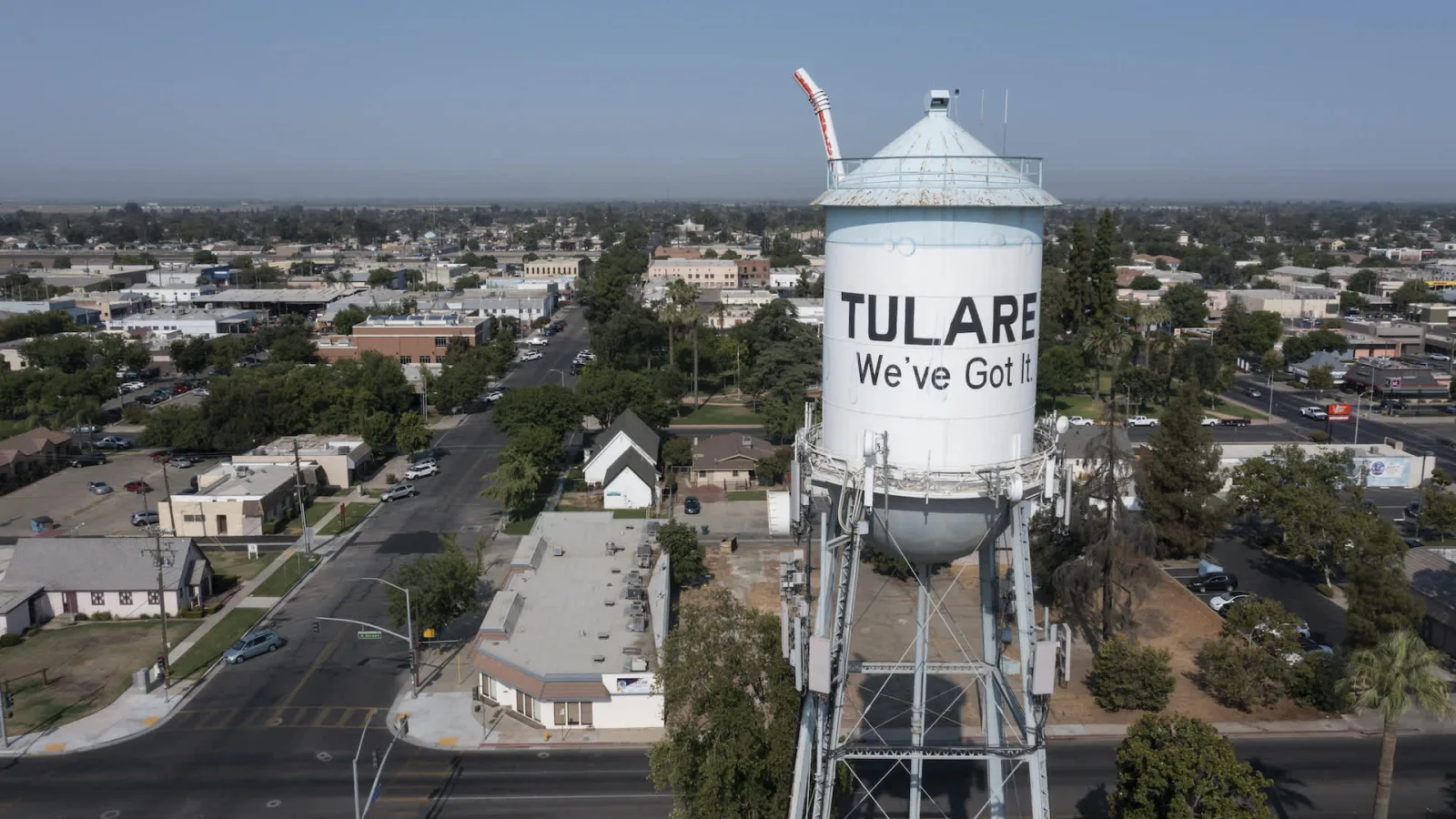
Residents and local officials in California’s San Joaquin Valley are increasingly worried about the possible water consumption of new artificial intelligence (AI) data centers planned for Tulare and Kings counties. These projects, proposed by Global Stack USA, would be located at county fairgrounds that operate outside typical county permitting rules, creating uncertainty over water oversight.
The Mid-Kaweah Groundwater Sustainability Agency, responsible for managing local water resources, emphasized the necessity of transparency regarding groundwater withdrawals by these facilities. A recent scientific study highlighted the substantial water demands associated with data centers, estimating an average 1-megawatt center could use close to 19 acre-feet of water annually. This raised alarms in a region already grappling with limited access to water for agriculture and communities.

In response, Tulare County implemented a temporary moratorium on data center development in unincorporated areas, initially set for 45 days but with the option to extend for up to a year. This pause aims to provide local authorities time to formulate land-use regulations addressing the unique challenges posed by these technologies.
Global Stack USA describes its proposed facilities as compact edge-node units roughly the size of shipping containers. The company insists these data centers utilize closed-loop cooling systems and do not require regular connections to municipal water supplies, potentially reducing their impact on local water sources.
Nevertheless, public opposition has been strong. Over a hundred residents gathered in city council chambers to express concerns, even though city officials acknowledged limited control over the fairground sites. The fairgrounds’ management underscored that only a non-binding memorandum of understanding exists with Global Stack USA, framing the plans as preliminary and not slated for formal review for several months.
These tensions occur amid broader debates about AI’s energy and water use. AI operations demand vast amounts of electricity and often depend on water-intensive cooling, which can pressure already stretched power grids and water supplies. While AI technologies also offer potential benefits such as enhancing energy grid efficiency through predictive modeling, rapid data center expansion risks increasing utility costs and environmental stress.
Efforts on the legislative front continue as state lawmakers have introduced bills to require more rigorous reporting on AI data center water consumption, seeking greater accountability and monitoring. Local agencies, including the Tulare County Resource Management Agency, are prioritizing careful planning before approving new developments, underscoring the need to balance technological growth with sustainable resource management in this drought-prone region.