

Contrary to forecasts predicting below-normal rainfall, India experienced unexpectedly heavy rains throughout July, drawing attention to the growing difficulty of monsoon prediction amid climate shifts. Between the first and twenty-sixth of the month, rainfall slightly exceeded normal levels, defying initial warnings of a below-average monsoon season.
This rainfall surge significantly eased the nationwide deficit recorded at the end of June, reducing it from 40 percent to 16 percent by late July. While several states, including Maharashtra, Gujarat, Assam, Odisha, Jammu and Kashmir, and Himachal Pradesh, faced intense rainfall episodes categorized as heavy to extremely heavy, a majority of the country benefitted from normal to excess precipitation.

The India Meteorological Department (IMD) data indicates that fifteen states reported normal rainfall, four experienced excess to large excess rainfall covering about 60 percent of the country's area, and seventeen states remained under rainfall deficiency. Notably, Northwest and Central India recorded only minor deficits, while East, Northeast India, and the South Peninsula continued to experience significant shortfalls.
Experts attribute this atypical monsoon pattern to complex interactions between climate change and ocean–atmosphere dynamics. The warming of the West Pacific apparently counteracted the usual dry impact of El Niño conditions this year, allowing active monsoon systems to persist with unusual vigor. The presence of multiple cyclonic circulations over Myanmar and the Bay of Bengal further intensified rainfall activity.
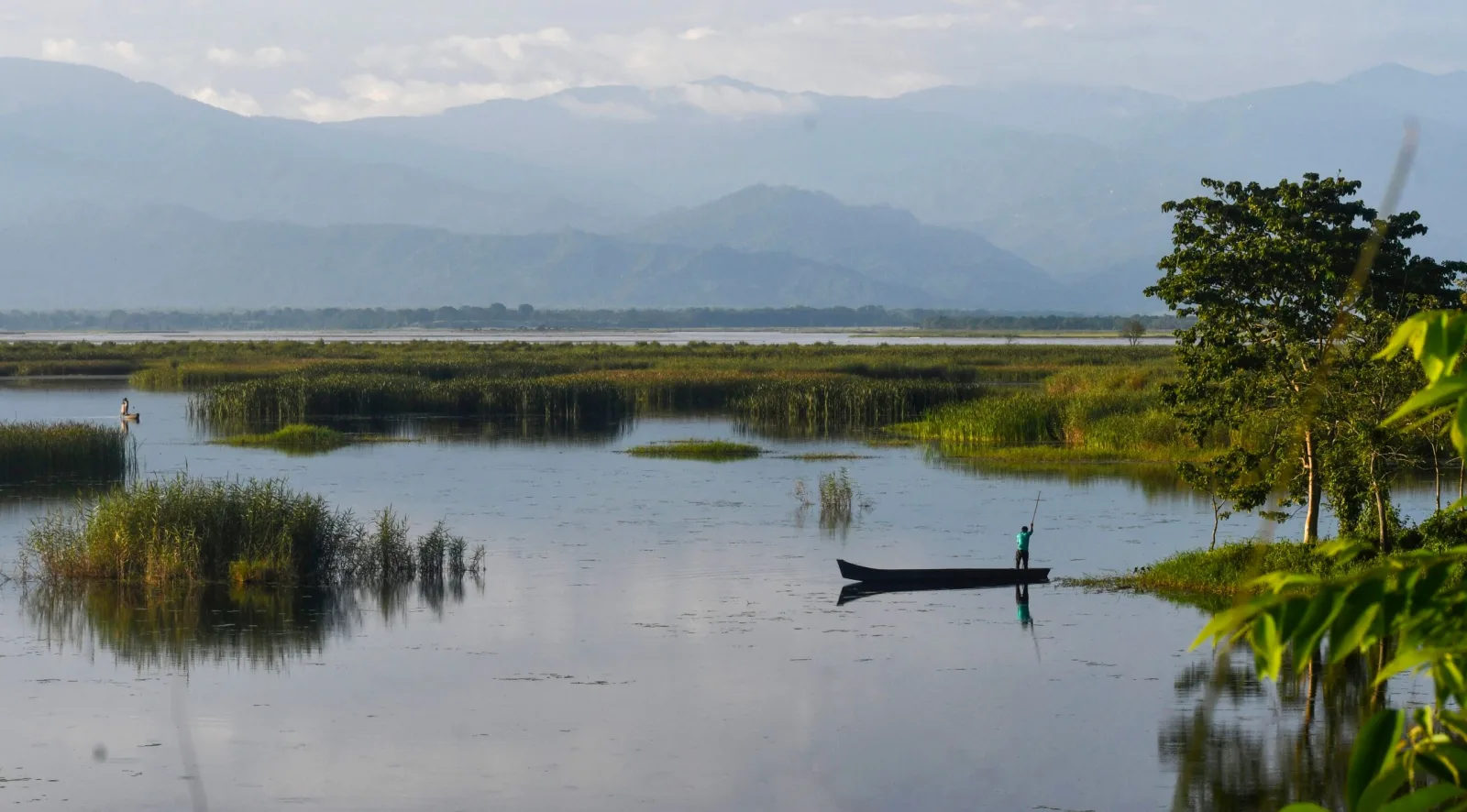
Additional factors such as increased western disturbances contributed to heavy rains in western states, triggering floods particularly in Assam. Scientists emphasize the influence of localized low-pressure systems alongside broader climate drivers like the Indian Ocean Dipole (IOD) and Madden–Julian Oscillation (MJO), which, despite being in neutral phases, have not dampened monsoon activity.
One striking example of extreme rainfall occurred in Umergram, Gujarat, where a 24-hour rainfall total surpassed one thousand millimeters, ranking among the highest recorded in India since the early 20th century. Researchers suggest such anomalies underscore the growing impact of climate change on established monsoon patterns, introducing new uncertainties for forecasting and water resource management.