

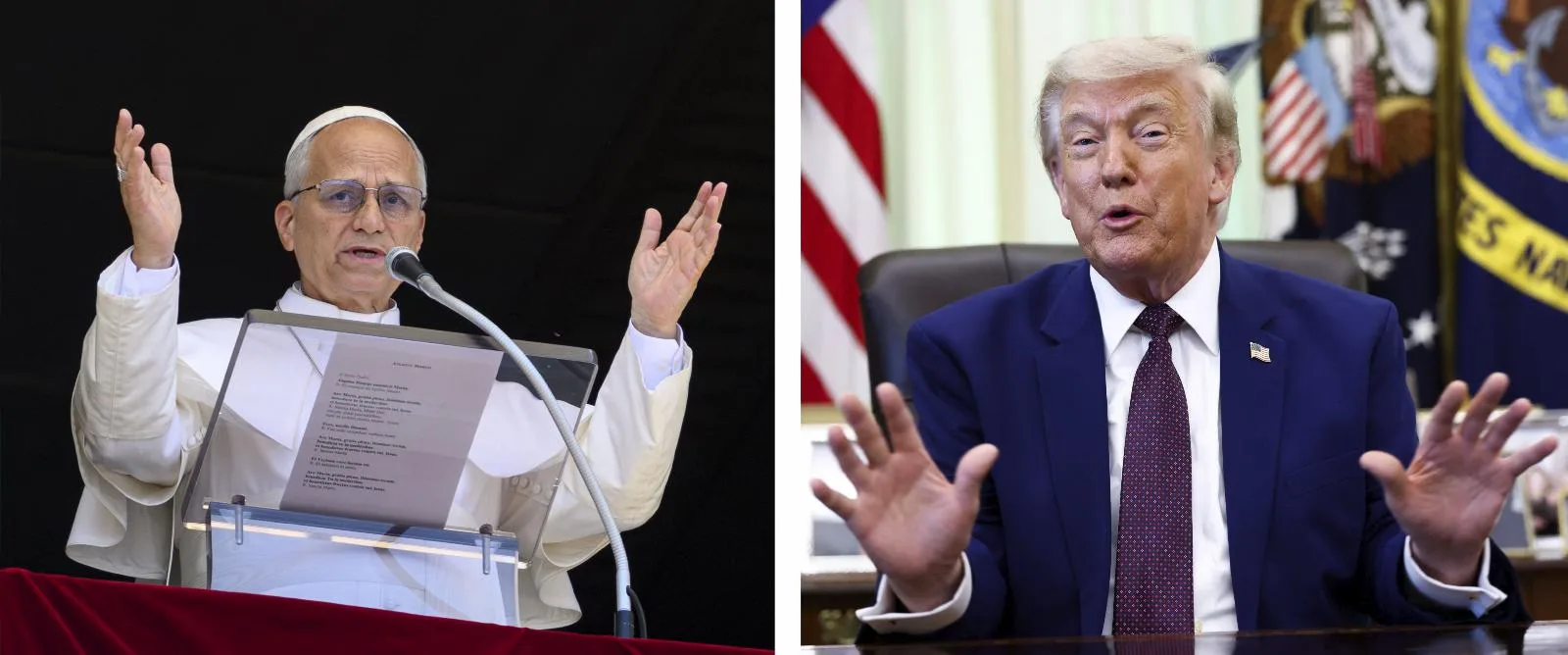
The release of Pope Leo XIV’s encyclical on artificial intelligence, “Magnifica Humanitas,” has coincided with a surge in his public standing, placing him far ahead of President Donald Trump in favorability ratings. According to a new Economist/YouGov poll, the pope’s net favorability stands at plus 37 points, while Trump’s lags at minus 17, marking a striking 54-point gap between the two.
This survey, conducted shortly after the encyclical’s publication, highlights the impact of Pope Leo’s message addressing the ethical challenges of AI and the importance of protecting human dignity amid rapid technological advances. Nearly two-thirds of Americans surveyed expressed concern that AI is evolving too quickly. At the same time, a majority agreed with the pope’s view that AI can serve positive purposes if it respects the unique aspects of human experience.

An overwhelming share of respondents supported the pontiff’s assertion that artificial intelligences lack genuine human experiences such as joy, pain, and love, emphasizing the irreplaceable nature of human relationships. This moral framing seems to resonate strongly with the public, contrasting with growing skepticism about political leadership.
The poll reveals broader discontent with President Trump’s tenure, registering a record-low approval rating of 38% in a contemporaneous Marquette Law School survey. Inflated public anxiety over inflation and the ongoing war in Iran appears to weigh heavily on Trump’s standing. Despite this, he retains significant influence within Republican primary voters, with over 70% willing to support candidates he endorses.
Vice President JD Vance and former Vice President Kamala Harris also registered net unfavorable ratings in the Economist/YouGov poll, at minus 8 and minus 3 points respectively. Meanwhile, another recent survey from Washington Post-ABC News-Ipsos identified broad public disapproval of Trump’s social media attacks on Pope Leo, which followed the pope’s public criticism of the Iran conflict.
These findings suggest a complex political landscape where moral authority, represented by Pope Leo’s ethical stance on AI, contrasts with declining public confidence in national leadership amid economic and geopolitical tensions.