

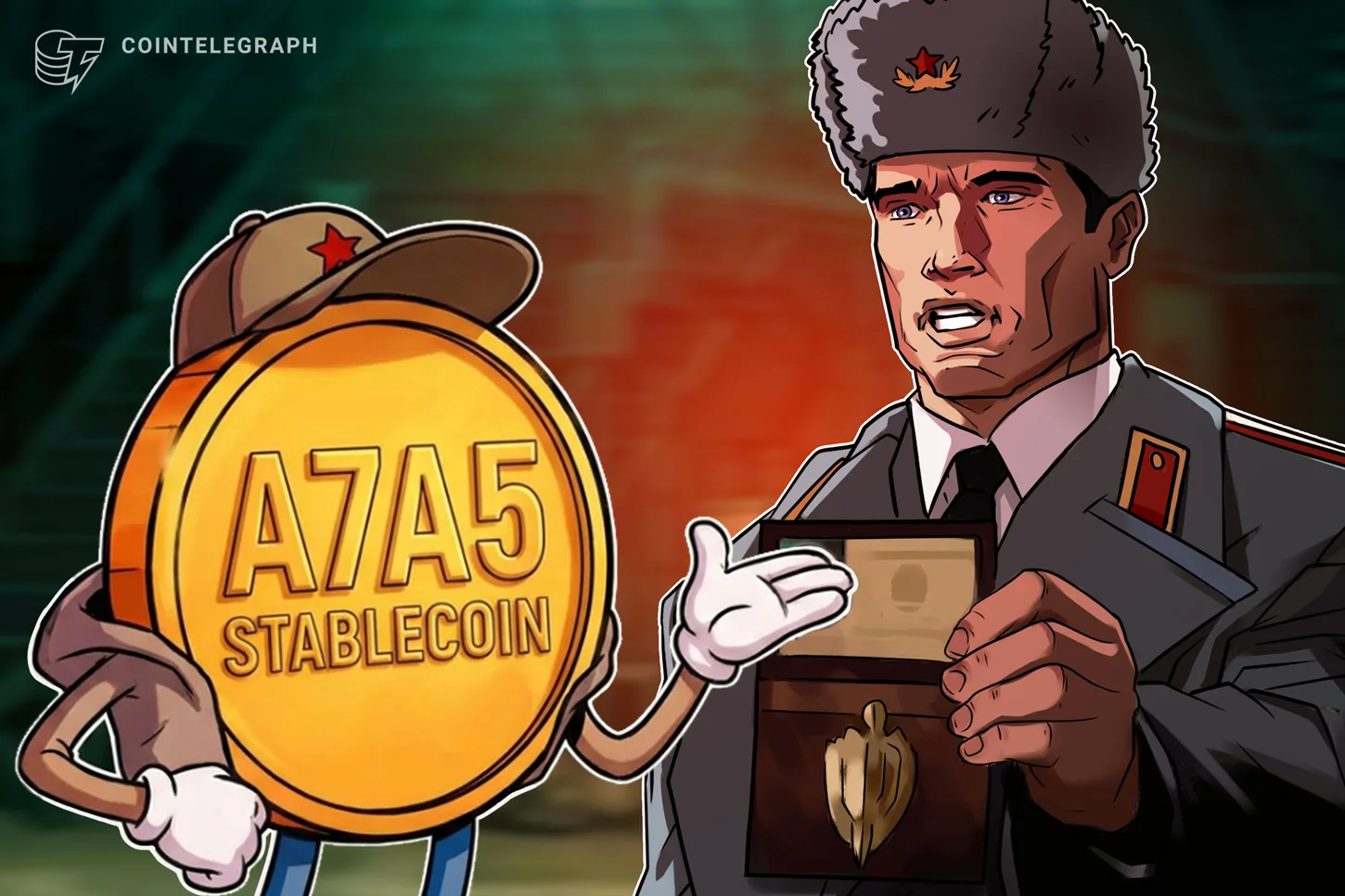
A British teenager has become one of the youngest individuals sanctioned by Russia after revealing that a ruble-pegged stablecoin was used to bypass Western financial sanctions linked to the war in Ukraine. The teen, Alexander Browder, uncovered how the digital currency known as A7A5, backed by Russian financial institution Promsvyazbank, enabled sanctioned entities to covertly convert the stablecoin into cash.
The stablecoin A7A5 operates despite sanctions imposed by the UK, US, and EU, facilitating illicit financial flows related to Russia’s economy. Browder’s findings, published through the Global Cryptocurrency Laundering Database, have spotlighted the vast scale of this operation. A recent report by blockchain security firm CertiK indicated that A7A5 processed over $110 billion in on-chain transactions, underscoring the stablecoin’s significant role in circumventing sanctions.

European Union authorities sanctioned A7A5 in late 2025 due to its use in evading war-related restrictions, but its continued activity highlights enforcement challenges. Alexander Browder’s disclosures have drawn attention to the need for stricter measures targeting the cryptocurrency exchanges that convert A7A5 to cash and the countries facilitating these transactions.
Alexander’s father, Bill Browder, a political activist known for exposing Russian corruption and spearheading the Global Magnitsky Justice Campaign, emphasized the unique nature of his son’s sanctioning, calling him the first high school student to face such penalties from an authoritarian regime. Reports suggest Russia has also restricted access for certain journalists, indicating a broader clampdown on dissent.
In parallel, the Russian government is advancing legislation to tighten control over digital assets. A proposed bill aims to criminalize unlicensed crypto services and require mandatory registration with Russia’s central bank. If enacted, the law would ban unauthorized crypto platforms as of mid-2027, signaling heightened regulatory scrutiny over the sector.