

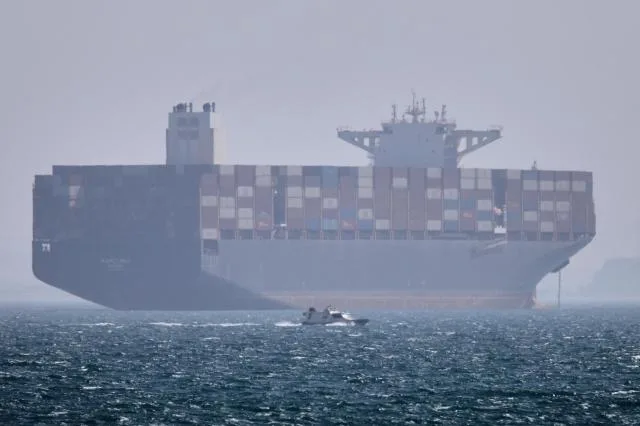
President Donald Trump convened a high-level meeting with his national security team to evaluate whether to proceed with a tentative agreement aimed at extending the ceasefire with Iran and ensuring the reopening of the Strait of Hormuz. After nearly two hours of discussions in the White House Situation Room, no final decision was announced, underscoring the administration’s cautious approach.
The proposed deal seeks to prolong the fragile ceasefire by 60 days while broader negotiations continue over Iran’s nuclear program, a contentious issue that has yet to be resolved. Trump emphasized his redlines clearly, demanding Iran’s commitment never to develop nuclear weapons and insisting on the removal of sea mines blocking international navigation in the strait. The president reiterated these points publicly ahead of his meeting, signaling that any agreement must meet strict conditions before his approval.

Despite reports of progress, Iranian officials maintain that the agreement has not been finalized and expressed deep skepticism about U.S. intentions. Iran’s chief negotiator highlighted the regime’s distrust of verbal assurances, stating that tangible actions—not talks alone—will determine the outcome. He also linked concessions to Iran’s military capabilities, signaling that missile strength underpins Tehran’s negotiation stance.
Moreover, Tehran’s priorities extend beyond the nuclear issue. The Iranian government insists that any truce include a cessation of hostilities between Israel and Iran-backed Hezbollah militants in Lebanon, where violence continues despite an official ceasefire. The regime is also pressing for the unfreezing of billions of dollars in Iranian assets currently held abroad.
U.S. Vice President JD Vance indicated that negotiators are working on general terms concerning Iran’s nuclear program, with technical details to follow during subsequent discussions. Meanwhile, Iran is focusing on the immediate cessation of conflict, downplaying nuclear specifics for the moment. This divergence reflects ongoing friction and unresolved challenges that could complicate the finalization of any agreement.