

Harvard Kennedy School (HKS) is reshaping its educational approach to address the profound influence artificial intelligence (AI) will have on public policy and leadership. Recognizing AI’s transformative potential, HKS has launched initiatives designed to immerse students in both the technical and ethical dimensions of AI in governance.
The school recently introduced a new tech policy concentration within its master’s in public policy program. This enhancement aligns with a broader 10-year strategic plan that emphasizes technology and AI’s role across all sectors. As part of these efforts, HKS recruited AI and policy experts, including MIT’s Stephen Casper, who will teach courses on AI governance and methods, preparing students to engage directly with emerging technologies rather than simply observing their effects.

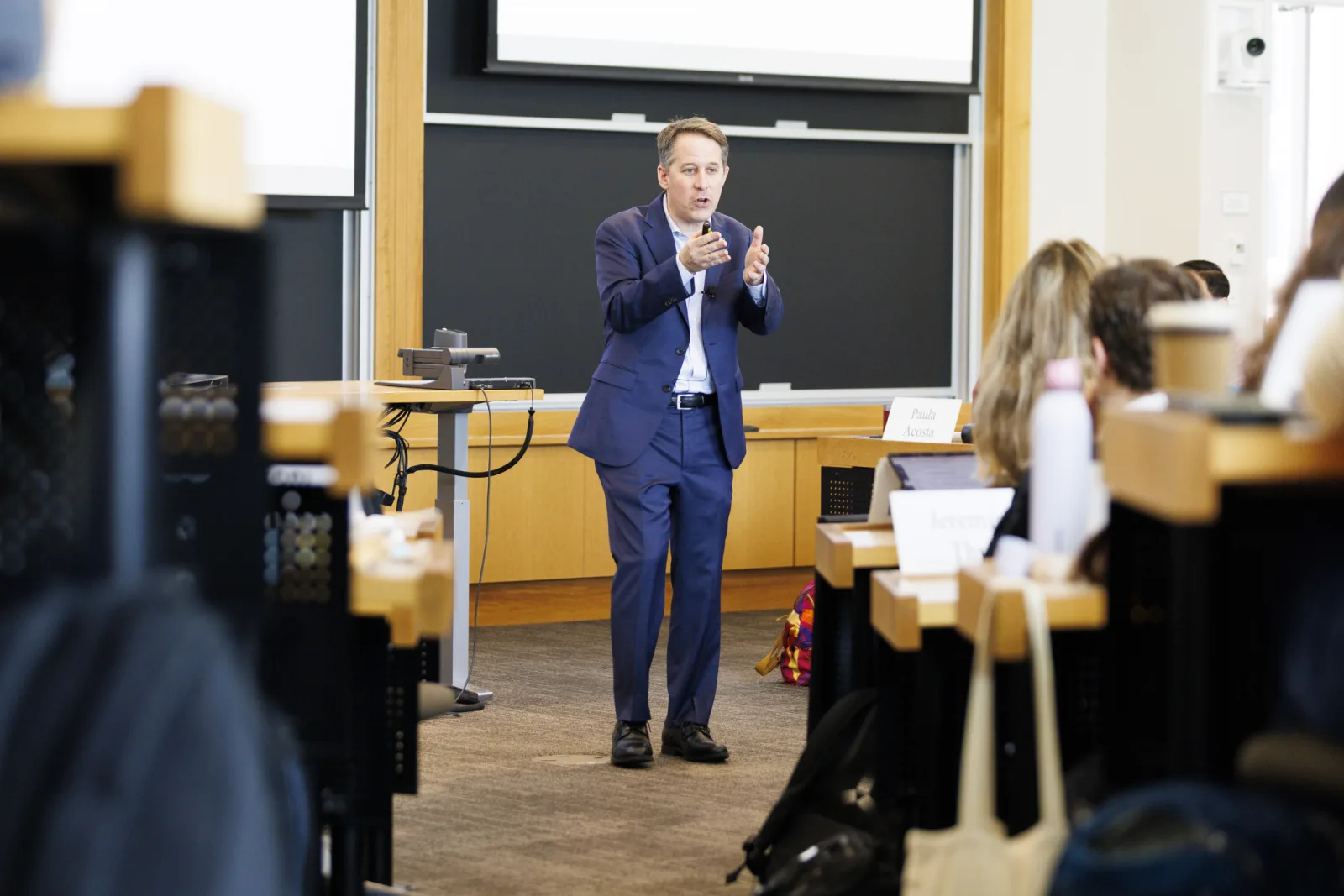
This year, HKS offered two notable semester-long courses: one on AI’s national security implications led by former White House National Security Advisor Jake Sullivan, and another co-taught by Dean Jeremy Weinstein and computer scientist Sharad Goel focusing on AI’s application to public problem solving. These courses combine hands-on technical training with policy analysis, aiming to build student competency in coding, data analytics, and AI tool usage specifically tailored to public sector challenges.
Unlike previous disruptive technologies historically driven by governments, AI development is primarily driven by the private sector, creating a unique environment of intense innovation and considerable uncertainty. Sullivan pointed to this dynamic as unprecedented in history, highlighting the need for policymakers to understand both AI’s capabilities and risks in a rapidly evolving geopolitical context. His course addresses the geopolitical and strategic dimensions of AI, including its implications for U.S.-China relations.
HKS’s approach aims to bridge gaps for students without STEM backgrounds by offering interdisciplinary coursework that combines case studies, policy discussions, and technical assignments. This prepares future leaders to confront AI-related questions spanning national security, healthcare, education, and science policy. Weinstein emphasized the importance of transforming students into active users of AI technologies so they can effectively leverage these innovations to tackle complex societal issues.
As AI continues to accelerate, Harvard Kennedy School stands at the forefront of training the next generation of public leaders equipped for an AI-driven world, embedding AI literacy as an essential component of leadership education.