

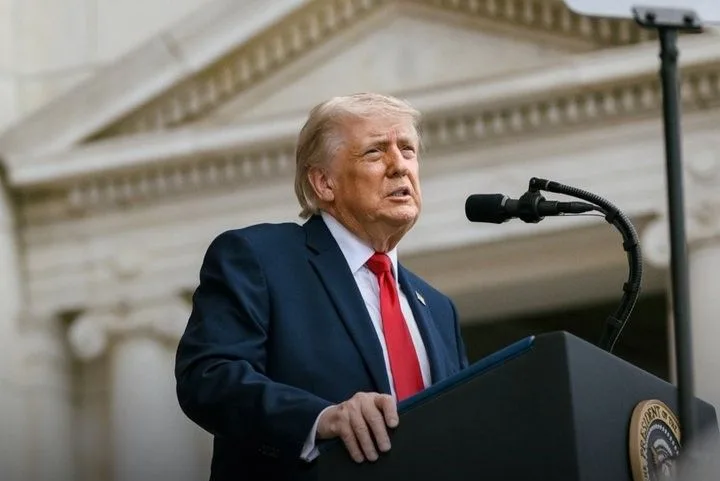
President Donald Trump stressed the need for a significant expansion of the United States' energy capacity to sustain its lead in artificial intelligence (AI) over China. Speaking at an event promoting the administration's Ratepayer Protection Pledge, Trump warned that the rapid rise of AI technology would require more than double the current electricity generation in the country.
To meet this demand, Trump introduced a strategy that encourages technology companies to build and finance their own power plants adjacent to AI data centers instead of relying solely on the outdated national grid. He argued this approach would prevent rate increases for American consumers while accelerating infrastructure investment essential to AI development.

The President described AI as a transformative force exceeding the impact of the internet and predicted that dominance in AI would decide global power dynamics. His plan aims to have tech companies not only generate enough electricity for their operations but also supply surplus energy back to the grid, which he says will ultimately reduce electricity rates.
Trump revealed that over 220 utilities, tech firms, and governmental partners had already committed to the Ratepayer Protection Pledge. He emphasized this initiative safeguards electricity prices for the majority of Americans and bolsters energy reliability amid the AI expansion.
Contrasting U.S. regulations with China’s more streamlined energy development model, Trump noted that China avoids environmental impact reviews to quickly build infrastructure. This comparison framed his administration’s efforts as a necessary response to a strategic competition with Beijing in AI technology.
The President also mentioned an upcoming meeting with Chinese President Xi Jinping scheduled for later this year, where energy infrastructure and AI development are expected to feature prominently in their discussions.