

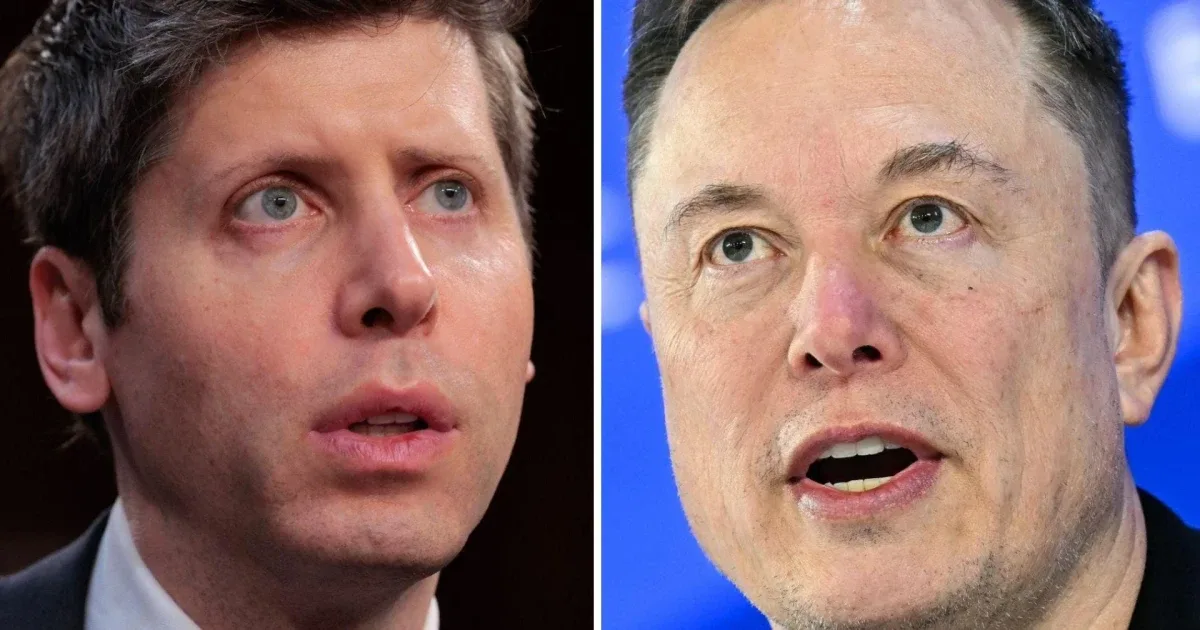
Elon Musk’s proposal to build a vast network of space-based data centers has sparked direct pushback from Sam Altman, underscoring the tensions between two prominent tech entrepreneurs. SpaceX recently applied for approval to launch up to one million satellites into low Earth orbit, aiming to create an expansive orbital computing infrastructure. Altman dismissed Musk’s pitch as overly optimistic, suggesting Musk was aggressively marketing the concept to investors despite critical uncertainties.
SpaceX’s filing with the Federal Communications Commission (FCC) marks a shift from speculative discussions about space data centers to tangible regulatory scrutiny. The sheer scale of the plan has raised concerns regarding spectrum allocation, deployment logistics, and the enormous number of rocket launches needed. The Government Accountability Office (GAO) has examined these ambitions and warned of significant technical hurdles, particularly in managing heat and power in the space environment.

Operating data centers in orbit theoretically offers benefits like abundant solar energy and a cold surrounding environment that could reduce terrestrial resource consumption. However, dissipating heat in the vacuum of space presents a severe obstacle, as traditional cooling methods rely on convection, which is ineffective in near-vacuum conditions. Additionally, powering these systems, ensuring robust communication with Earth, and building support infrastructure pose unresolved engineering challenges—especially when constrained by launch weight limits and satellite size.
Industry experts view the goal of deploying operational data centers in space within a short timeframe as highly ambitious. Dylan Taylor, CEO of Voyager Technologies, described a two-year development horizon for space data centers as “aggressive,” emphasizing cooling as a particularly stubborn barrier. Meanwhile, Google has initiated Project Suncatcher, which aims to test prototype satellites in orbit by early 2027 to evaluate the hardware necessary for such ventures.