

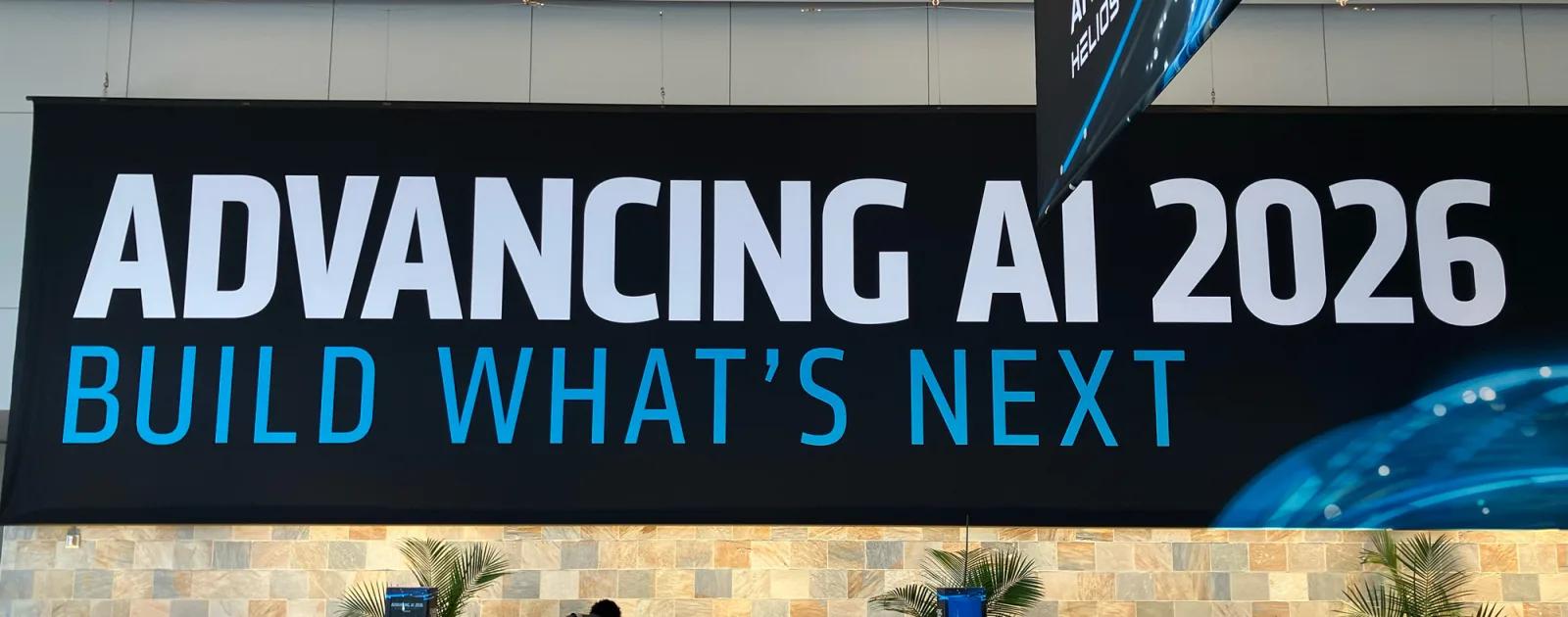
AMD showcased significant progress in its AI and data center strategy during its Advancing AI 2026 keynote in San Francisco, spotlighting its first rackscale system, Helios. This integrated platform combines AMD’s MI455X GPUs, EPYC “Venice” CPUs, and Pensando DPUs within a single rack, designed to operate as a unified high-performance machine through advanced scale-up networking.
The Helios system directly rivals NVIDIA’s NVL72 racks by offering a compact yet powerful infrastructure tailored for large-scale AI workloads. AMD highlighted that the system will enter volume production and shipping in the latter half of 2026. Notably, Microsoft has already committed as a customer, signaling early industry adoption of this platform.

Beyond introducing Helios, AMD detailed updates on the core components powering the system. The MI455X GPUs represent a leap in compute density and efficiency, the EPYC “Venice” CPUs bring enhanced server performance, and the Pensando DPUs provide specialized data processing capabilities crucial for AI infrastructure. Together, these elements form a tightly integrated stack, further supported by AMD’s ROCm software platform, which continues to evolve to maximize performance and compatibility across AI workloads.
The event marked a transformation of AMD’s traditional press conference into a comprehensive trade show, featuring developer sessions and product demonstrations, akin to NVIDIA’s GTC event held nearby. This year’s Advancing AI attracted a large audience, filling the Moscone Center West and underlining AMD’s rising influence in the AI hardware space.
While the keynote focused heavily on near-term launches, AMD also hinted at future product roadmaps beyond Helios, though details remained limited. Market watchers anticipate additional announcements around next-generation chips and AI infrastructure later in the year, as AMD aims to maintain momentum against competitors in a rapidly evolving sector.