

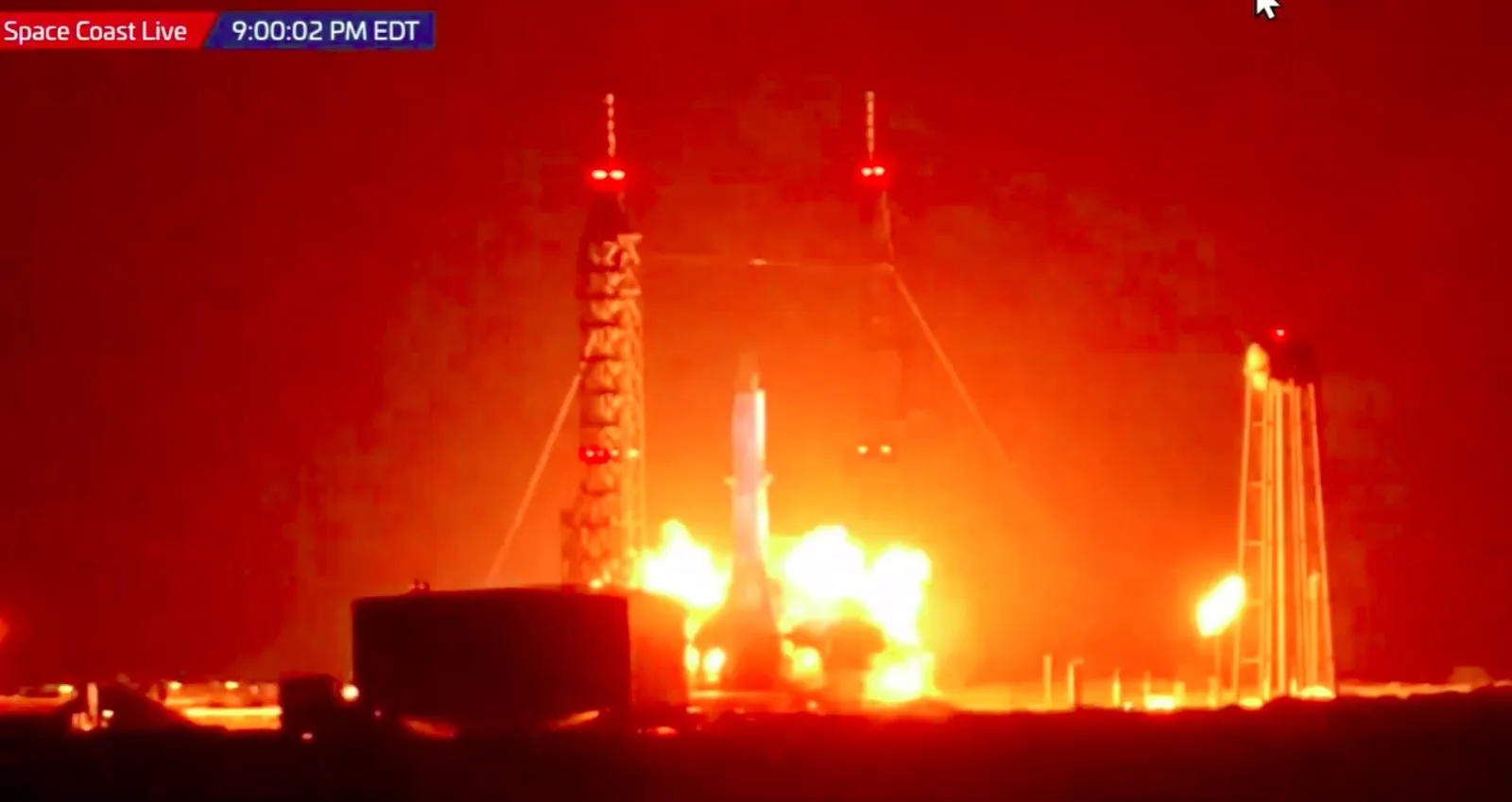
Blue Origin’s New Glenn rocket suffered a catastrophic failure during a hotfire test on a launchpad in Florida, detonating without leaving the ground and damaging both the pad and surrounding equipment. The incident occurred while preparing for a future launch intended to deploy a constellation of satellites aimed at expanding Amazon’s low-Earth-orbit internet service.
The rocket’s namesake is John Glenn, the first American astronaut to orbit Earth and a former U.S. senator. Its mission was key to Blue Origin’s ambitions to compete with SpaceX’s Starlink by providing global internet coverage through satellite networks. This setback comes at a critical time as NASA had planned to utilize similar rockets from Blue Origin for upcoming lunar missions.

NASA recently announced contracts for two Blue Origin rockets to ferry lunar rovers as part of the Artemis program’s later phases. These rovers are intended to assist astronauts during Artemis IV and V missions, following the success of Artemis II, which marked the return of crewed lunar flybys after more than five decades. The explosion raises concerns about the readiness and timeline of Blue Origin's contributions to these efforts.
Blue Origin acknowledged the anomaly publicly, confirming that all personnel were safe and accounted for after the incident. The test was part of ongoing preparations linked to the company’s role in NASA’s moon exploration ambitions, which also involve competing with SpaceX in the commercial space industry.
Previously, Blue Origin gained attention for a high-profile all-woman space tourism flight that included celebrities. The company continues to pursue ambitious space projects, but technical challenges like this latest accident underline the complexities of rocket development and space exploration logistics.