

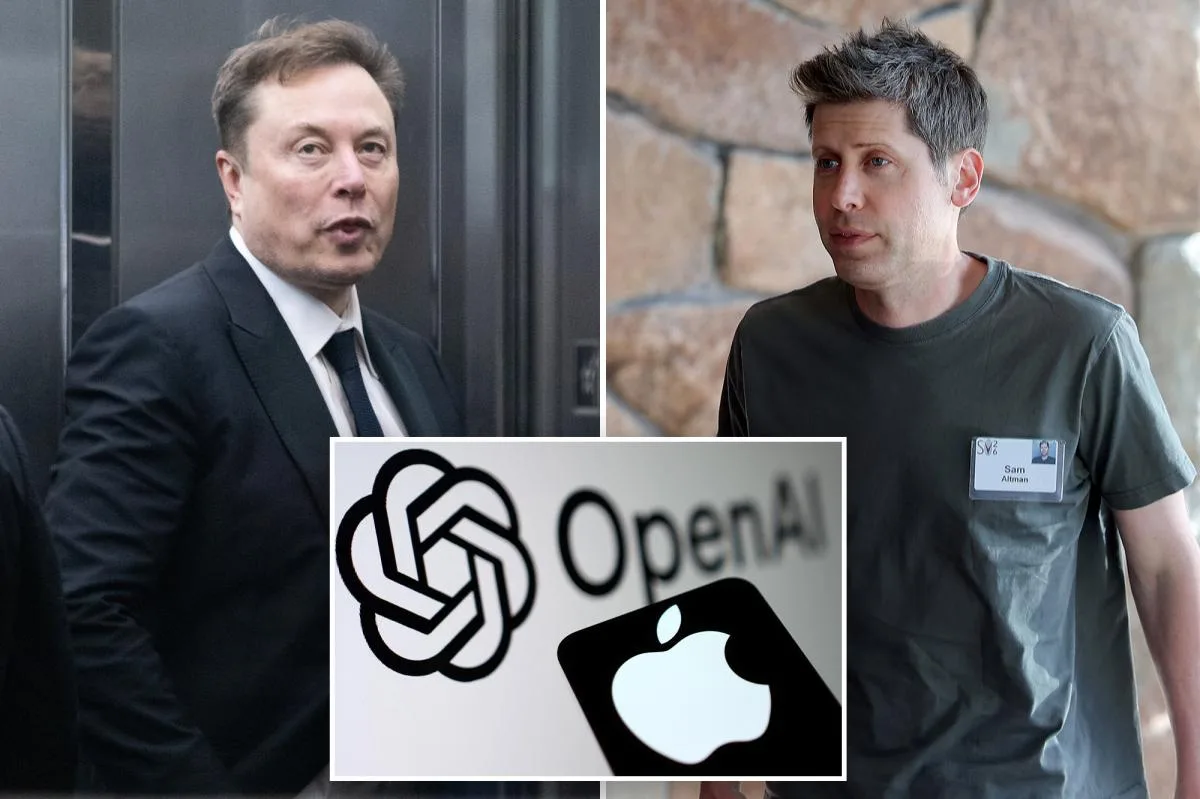
Elon Musk and Sam Altman, two of the most prominent figures in the tech world, have reignited their contentious feud against the backdrop of a high-profile lawsuit filed by Apple. The legal battle alleges that OpenAI, the AI company led by Altman, misappropriated Apple’s trade secrets, intensifying tensions between the tech visionaries.
The lawsuit claims that OpenAI accessed confidential Apple information through an employee who improperly used Apple login credentials. Apple also accuses OpenAI’s hardware chief, Tang Tan, a former Apple vice president with two decades at the company, of soliciting sensitive data. Tan allegedly urged Apple job candidates to bring actual components from Apple devices to “show and tell” sessions, a move Apple views as a serious breach of confidentiality.

Apple’s allegations draw parallels with its previous legal battles against Google and Samsung, companies it accused of copying iPhone technology. The current suit opens a fresh front in what Apple frames as a defense against intellectual property theft in a rapidly evolving tech landscape.
The public dispute between Musk and Altman escalated quickly on social media. Musk reignited his longtime nickname for Altman, calling him “Scam Altman” and accusing him of widespread scamming, even sharing a mocking image implying Altman loves deceiving others. Altman fired back by mocking Musk’s recentSpaceX IPO, the largest in history, questioning Musk’s business tactics and accusing him of prioritizing short-term gains.
The rivalry spilled over into AI product launches as well. Altman promoted OpenAI’s latest GPT-5.6 Sol model as possibly the best AI model currently available, while Musk recently launched Grok 4.5, his own AI assistant. Altman commented on Musk’s fixation with him as indirect proof of OpenAI’s success, reflecting how their competition extends far beyond personal animosity into the battlefield of AI innovation.
This feud between Musk and Altman highlights the broader competition in AI and tech entrepreneurship, now complicated by legal accusations that could redefine corporate boundaries on intellectual property and innovation.