

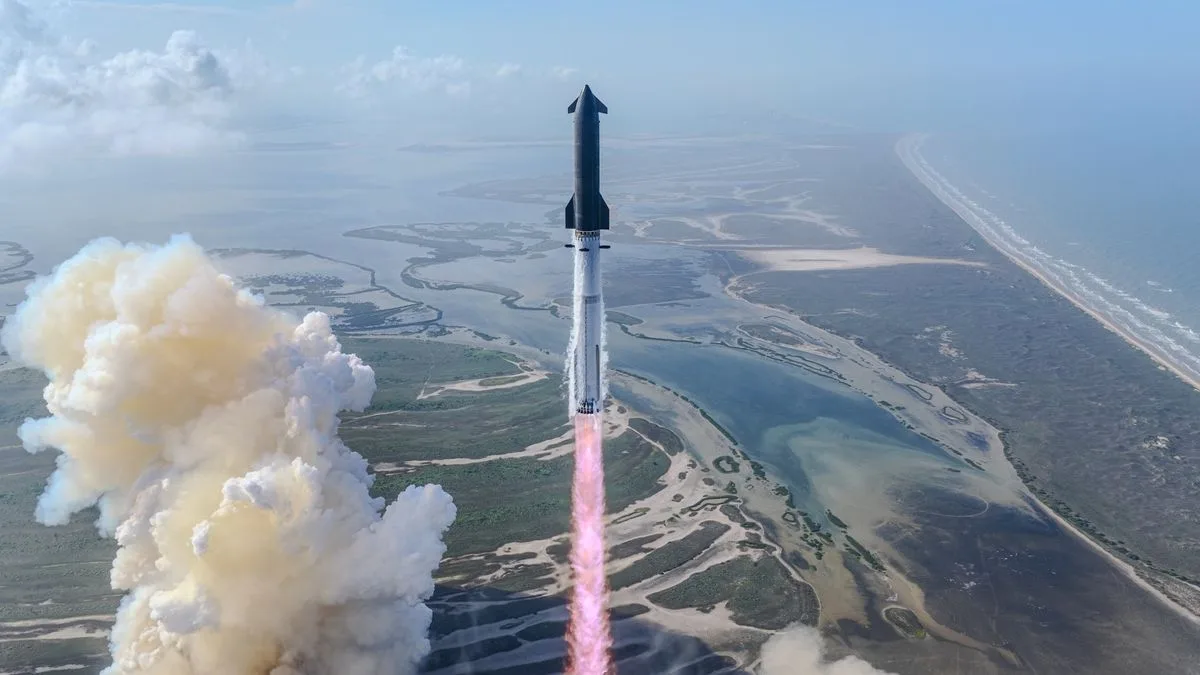
SpaceX’s latest Starship V3 megarocket has been grounded just days after its highly anticipated inaugural suborbital flight. The Federal Aviation Administration (FAA) classified the booster’s rough splashdown in the Gulf of Mexico as a mishap and ordered SpaceX to investigate the failure before any further launches.
The Starship system includes two main components: the Super Heavy first-stage booster and the Starship upper stage, both engineered for rapid reuse. The 408-foot-tall V3 version aims to enable ambitious missions, including NASA’s Artemis 4 lunar landing scheduled for late 2028. Last week's flight marked the program’s twelfth test and the V3’s debut, drawing significant attention as a critical step toward deep-space travel.

Despite the booster’s hard splashdown, the flight achieved several milestones. The upper stage successfully deployed 20 dummy Starlink satellites alongside two operational Starlinks equipped with cameras to monitor heat shield performance during reentry. The Starship spacecraft itself executed a controlled splashdown off Western Australia, showcasing key recovery capabilities.
However, issues arose when the Super Heavy booster failed to perform the engine burns necessary for a soft water landing. SpaceX reported the booster experienced a "hard splashdown" in the Gulf of Mexico. The FAA considers this a serious safety incident and now requires a thorough investigation, with the agency overseeing all aspects and approving corrective measures.
The duration of this investigation remains uncertain, though SpaceX’s previous FAA grounding episodes have been resolved swiftly. For example, the company’s Falcon 9 experienced a brief four-day grounding earlier this year. The FAA emphasized public safety as the primary factor before allowing Starship flights to resume.
This setback highlights the complex challenges of developing fully reusable, heavy-lift launch vehicles designed for human spaceflight and interplanetary missions. The Starship program’s next steps hinge on resolving booster reliability and regulatory approval, crucial for its role in future NASA and private missions.