

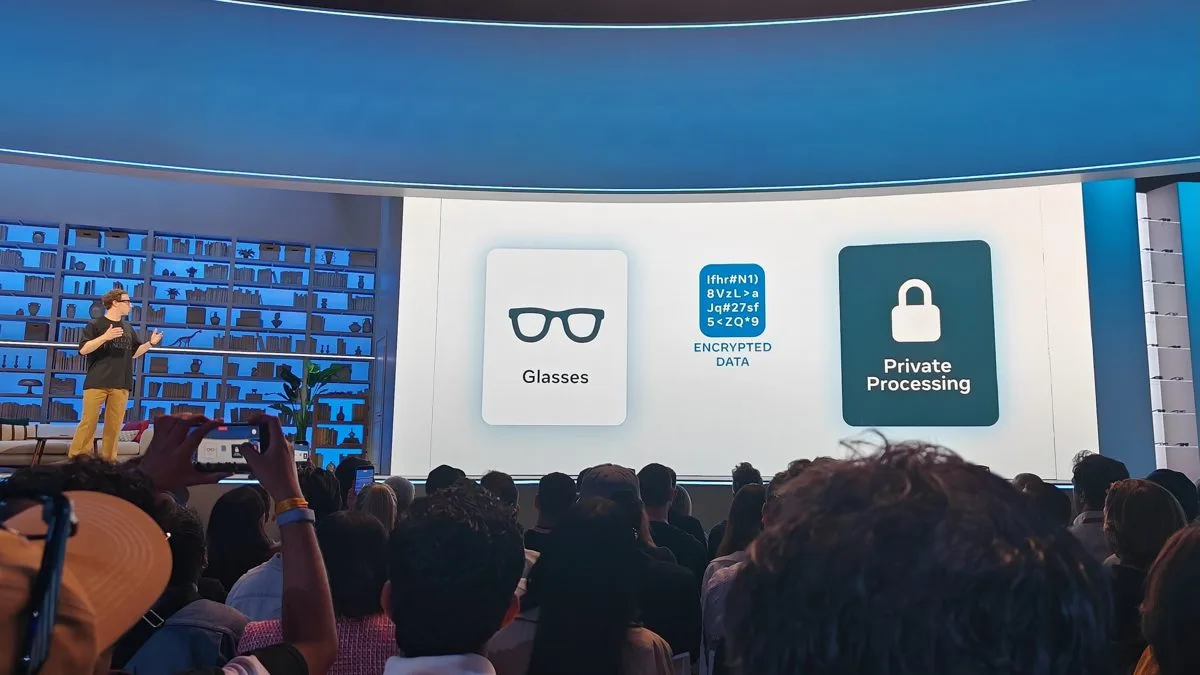
Meta is developing end-to-end encryption for conversations conducted through its forthcoming smart glasses, aiming to secure AI-powered interactions as wearable devices become a new platform for digital communication. This move anticipates widespread adoption of AI assistants via wearables, where user privacy remains a critical concern.
Currently, Meta employs encryption technology to protect messages on its social media platforms, but bringing this protection to smart glasses represents a significant step in safeguarding real-time AI conversations. Users will be able to communicate with AI-driven features without exposing sensitive data to either Meta or external entities.

As smart glasses integrate with AI chat systems, privacy risks increase because these devices capture and process personal information continuously. By implementing robust encryption protocols, Meta aims to prevent unauthorized access and reassure consumers about the confidentiality of their AI conversations on this emerging interface.
Although technical details remain limited, the encryption is expected to secure voice commands, responses, and any data exchanged during AI interactions on the glasses. This initiative aligns with broader industry efforts to build trust around AI technologies, particularly as they become embedded in everyday accessories.
Meta’s push for encrypted AI chat on smart glasses underscores the growing emphasis on user privacy amid expanding AI deployment in consumer electronics. It also highlights the challenges tech companies face in balancing convenience with data security as AI increasingly mediates human-device communication.