

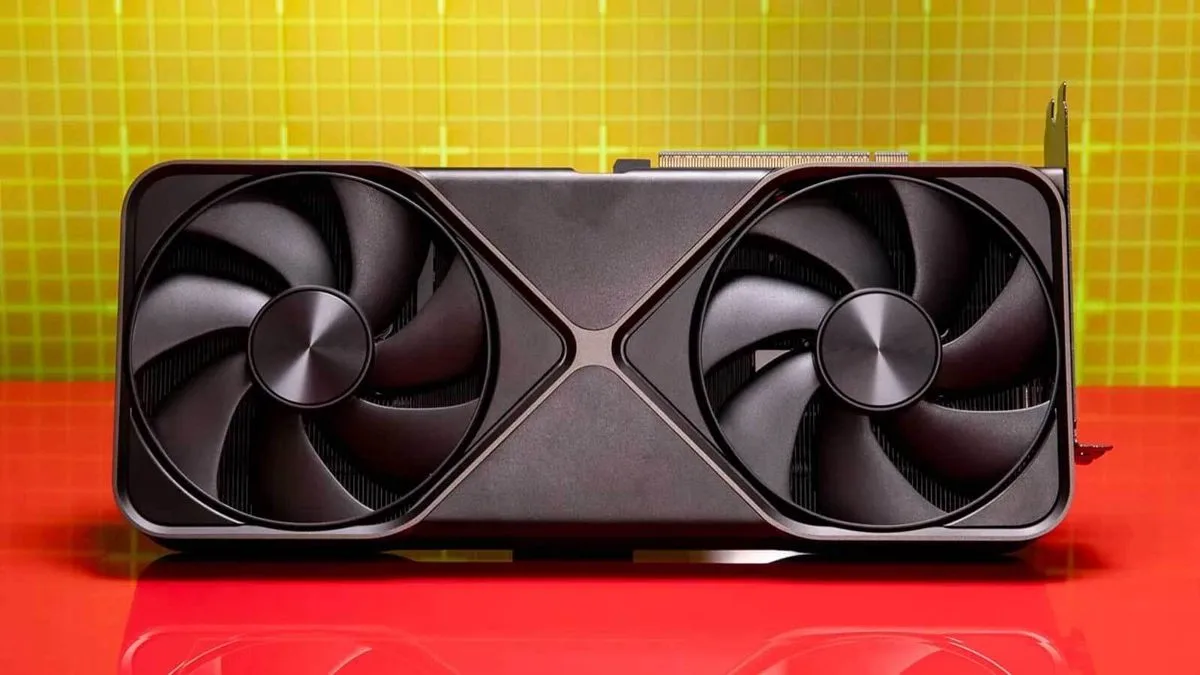
Nvidia is developing a new graphics card, the RTX 5090 SE, designed to fill the performance gap between the RTX 5080 and the RTX 5090. According to industry reports, this upcoming model will combine high-end specifications with a price point that sits between its two siblings, potentially reshaping Nvidia’s product lineup.
The RTX 5090 SE is expected to feature 32GB of GDDR7 memory, matching the flagship RTX 5090, but it will use a narrower 384-bit memory bus, which may reduce memory bandwidth compared to the 5090’s full specifications. The card is based on the GB202 GPU, the same chip powering the RTX 5090 and Nvidia’s professional and regional variants, yet it will activate fewer CUDA cores—about 14,080—offering roughly 31% more cores than the RTX 5080 but fewer than the full RTX 5090.

Power consumption for the RTX 5090 SE is projected around 500W, with Nvidia recommending a 1,000W power supply to ensure system stability, slightly less than the 575W rating of the RTX 5090. However, current RTX 5090 models often draw significantly more than their rated power, signaling ramp-up headroom for enthusiasts and overclockers.
The new card aims to outperform the rumored RTX 5080 Super while targeting a retail price near $1,500. Although Nvidia’s original MSRP placed the RTX 5080 at $1,000 and the RTX 5090 at $2,000, actual market prices have risen considerably, with the RTX 5080 often selling for between $1,400 and $2,000, and the RTX 5090 frequently exceeding $4,000.
This proposed product strategy seems intended to offer consumers a high-memory, high-performance option at a price point more accessible than the top-tier RTX 5090, especially for gaming and AI workloads needing large VRAM capacity. As Nvidia continues to expand its GDDR7 graphics offerings, the RTX 5090 SE may attract users seeking a balance between power and cost within the premium GPU segment.