

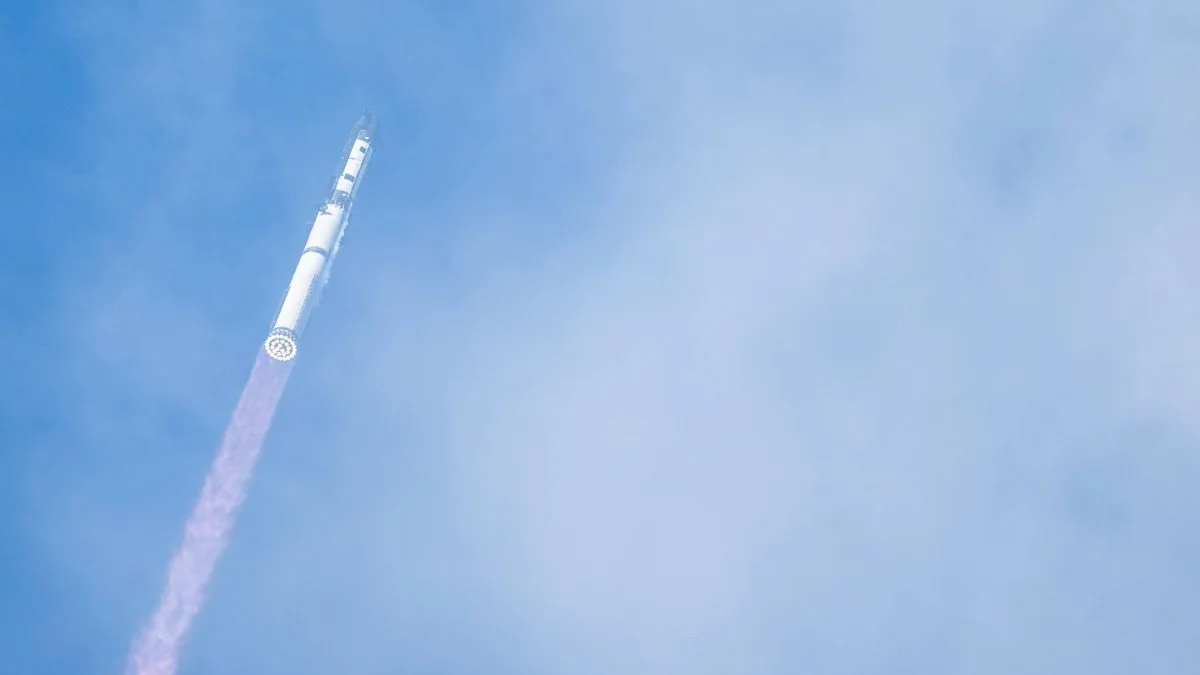
SpaceX launched its newest Starship version after a long developmental pause, delivering a mixed test flight that showcased both progress and ongoing challenges. The rocket lifted off from SpaceX’s Starbase facility in Texas powered by 33 Raptor 3 methane-fueled engines—two more than previous boosters—but experienced an early engine shutdown shortly after liftoff.
Despite one of the 33 main engines cutting out less than two minutes into ascent, the booster fulfilled its primary mission by completing its burn and initiating the "hotstage" process. This procedure ignites the six engines of the upper stage moments before booster separation. However, the booster failed to reignite its engines for descent control, resulting in a hard splashdown in the Gulf of Mexico, falling short of reaching the ocean more gently.

The upper stage also suffered an engine failure, with one Raptor shutting down; the other five engines compensated by extending their burn. This forced SpaceX to cancel a planned mid-flight engine relight necessary for achieving orbital capability and safely deorbiting the spacecraft. Although limited, the second stage successfully completed several mission objectives, including deploying 20 Starlink satellite simulators through an opened payload bay door.
Additionally, two larger test payloads equipped with cameras captured exterior video during flight. After its suborbital trajectory, the upper stage endured the intense heat of atmospheric reentry, surviving intact. It then maneuvered over the Indian Ocean, reigniting two engines to slow its descent and attempt a controlled water landing. The craft briefly remained upright on the surface but ultimately fell over and exploded, generating a distinctive mushroom cloud—a known risk for returning stages with residual propellant.
SpaceX has repeatedly demonstrated its ability to recover Falcon 9 first stages safely, but Starship’s larger size and new design introduce fresh complexities. This flight marks a significant step toward refining Starship’s capabilities while providing valuable data on the rocket’s performance under duress.
The launch followed a scrubbed attempt the prior day, delayed by technical issues with a pin on the launch tower. It arrives as SpaceX prepares for its upcoming initial public offering, underscoring the importance of proving Starship’s reliability. Though the mission fell short of full success, the partial achievements highlight incremental progress in one of the aerospace sector’s most ambitious projects.