

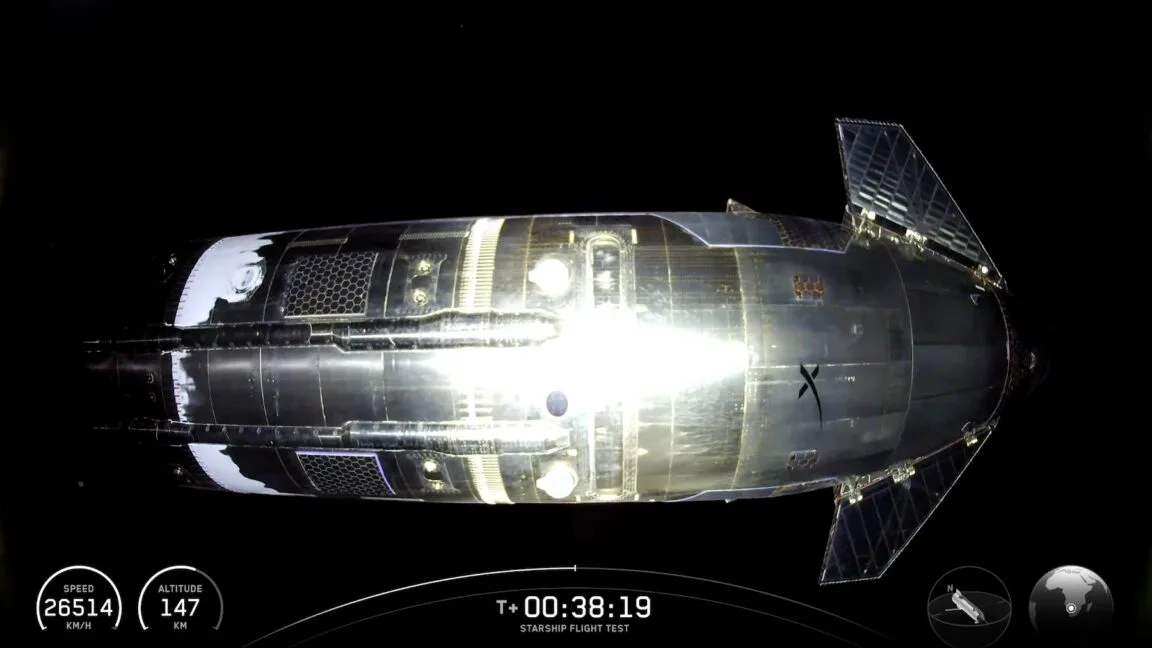
SpaceX marked a major step forward with the inaugural flight of its Starship V3 rocket and Super Heavy booster from its launch site in South Texas. The towering 408-foot rocket, powered by 33 methane-fueled engines, lifted off on a clear trajectory over the Gulf of Mexico before safely splashing down in the Indian Ocean, completing the flight after just over an hour.
This test flight represented a notable improvement compared to previous Starship versions, which had failed to survive their maiden launches. SpaceX’s latest model overcame earlier challenges, maintaining structural integrity during the critical reentry phase and demonstrating the durability of its heat shield and aerodynamic control surfaces throughout descent.

Key figures at SpaceX praised the milestone, recognizing it as a major advancement toward the company’s broader goal of reusable heavy-lift rockets capable of reaching low-Earth orbit and beyond. The smooth performance positions Starship V3 as a closer contender for fulfilling contracts with NASA, which is monitoring the program closely because of SpaceX’s role in developing lunar landers for upcoming missions.
The launch came after a longer-than-usual pause in Starship testing. SpaceX utilized this interval to finalize a second launch pad at its Texas facility and address technical issues encountered during ground tests. This preparation contributed to the flight’s success and the reliable operation of the vehicle’s complex systems.
Among the flight’s highlights was the robustness of Starship V3’s heat shield, which remained undamaged through intense atmospheric reentry. Onboard footage confirmed that the rocket’s flaps, essential for controlled landing maneuvers, functioned as intended, contrasting with past flights where these components suffered damage or loss.
Moving forward, SpaceX will continue refining Starship towards fully operational orbital missions. Each successful test flight serves to validate the design improvements and expands confidence in the rocket’s long-term viability for crewed spaceflight and deep space exploration.