

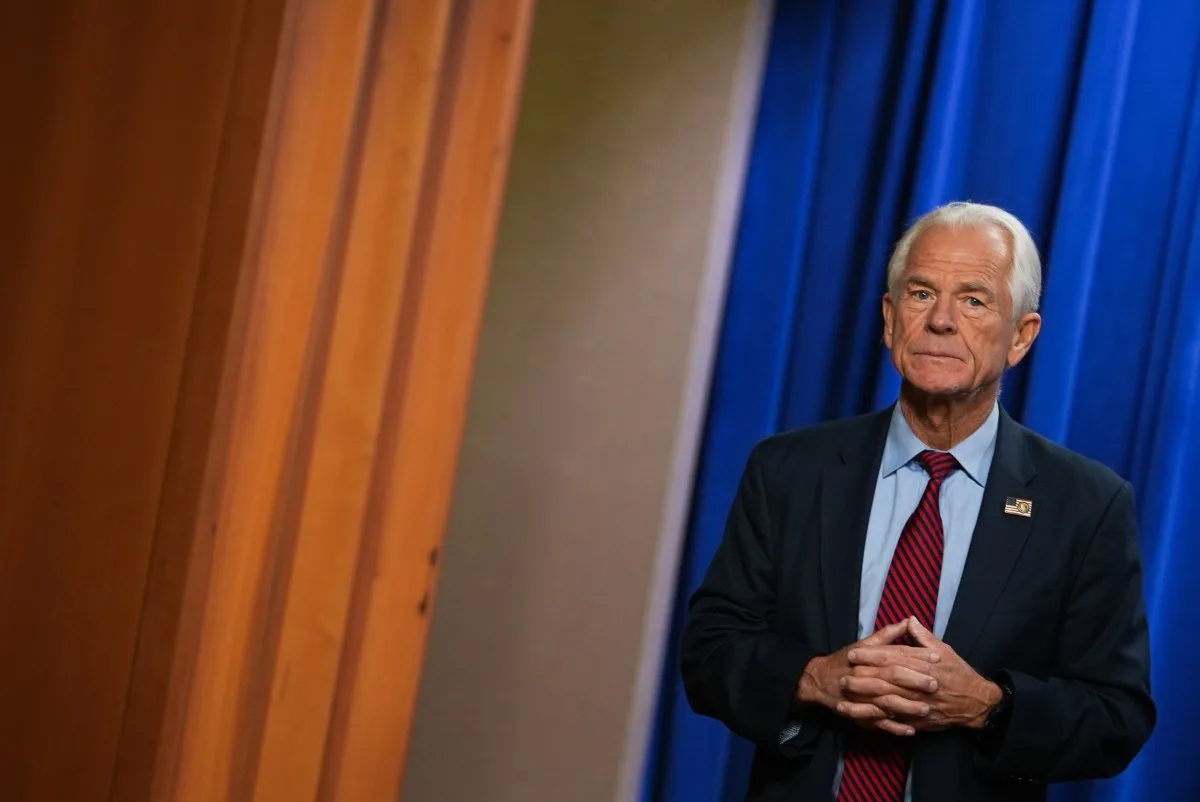
Former President Donald Trump’s recent visit to China was marked by tension and discomfort among some leading technology executives who joined the delegation, according to a senior adviser. Peter Navarro criticized the experience as humiliating for prominent figures including Elon Musk and Apple’s Tim Cook, alleging they were sidelined by Chinese hosts during the meetings.
Navarro described the Chinese hosts as viewing these business leaders as “useful idiots,” claiming they were at times barred from key discussions. While the trip was held as a milestone—the first by a sitting U.S. president in nearly a decade—Navarro suggested that the delegation’s corporate guests did not enjoy the engagement, exposing unresolved mistrust in U.S.-China relations, especially in tech sectors.

The adviser sharply leveled accusations against China for exploiting access to American technology. He pointed to examples where U.S. companies, such as General Electric and Tesla, allegedly transferred valuable intellectual property only to see local Chinese competitors ascend rapidly. Navarro criticized the American approach to China as naïve, asserting the country continuously leverages these visits to gain unfair commercial advantages.
Trump had aimed to use the summit as an opportunity to encourage China to open its markets, allowing executives from sectors including technology, aerospace, finance, and agriculture to foster business deals. Notable participants included CEOs from Apple, Nvidia, and GE Aerospace, alongside Meta’s president. Despite these hopes, Navarro’s comments underscored a discord between diplomatic objectives and commercial realities in the bilateral relationship.
In addition to economic discussions, Trump reportedly spent extensive time with Chinese President Xi Jinping addressing Taiwan, a critical and sensitive point in U.S.-China ties. Trump later drew criticism for comments about Taiwan’s leadership, warning of potential conflict triggered by the island’s push for independence—an issue Beijing regards as central to its national interests.