

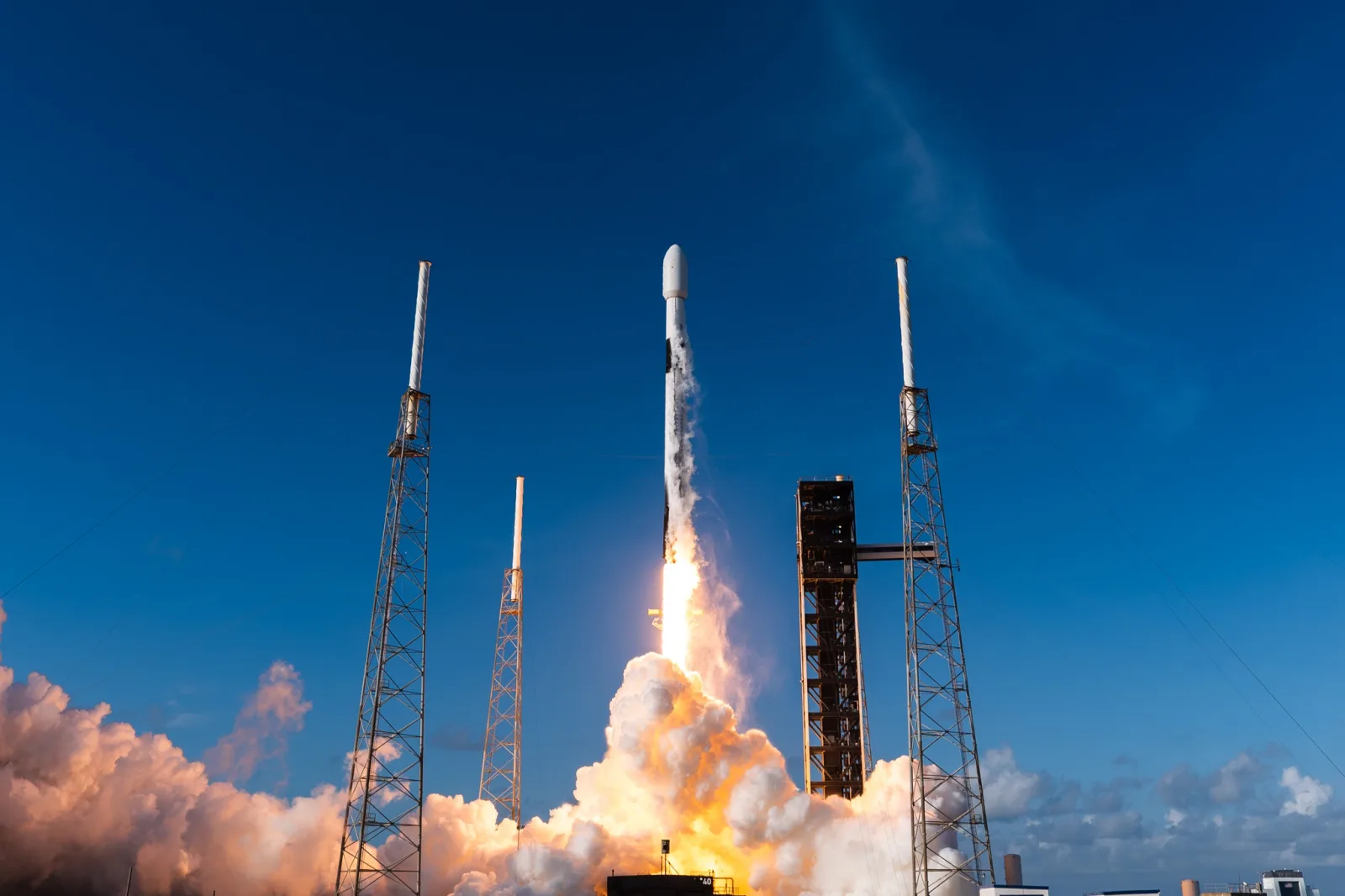
Exolaunch and SEOPS, companies known for organizing small satellite payloads on SpaceX rideshare missions, have purchased dedicated Falcon 9 launches to address increasing demand for rideshare access to orbit. Exolaunch secured two launches targeting no earlier than late 2027 and 2028, while SEOPS booked a Falcon 9 ride for the third quarter of 2028, marking their first exclusive rideshare missions separate from SpaceX’s own Transporter flights.
Previously, SEOPS contracted a Falcon 9 launch for a geostationary transfer orbit rideshare mission named Darkstar-1, planned for 2028. Both companies cited strong market demand driven by a growing number of small satellite operators deploying individual spacecraft and constellation fleets. Their dedicated missions aim to provide customers greater launch opportunities and scheduling certainty. SEOPS’s Waymaker-1 mission serves as a strategic option to alleviate bottlenecks in the low Earth orbit rideshare market.

Bringing technical expertise from managing payload integration on SpaceX’s mass rideshare flights, Exolaunch will deploy its proprietary EXOtube modular stacks and separation systems, capable of accommodating payloads ranging from 20 to 1,400 kilograms, including cubesats. SEOPS collaborates with Maverick Space Systems to support the Waymaker mission, handling payloads from small cubesats up to larger "cake topper" satellites positioned atop the stack.
In addition to launch services, SEOPS offers space safety solutions such as payload identification and collision warning support for two months post-deployment through its partnership with Digantara, an Indian space situational awareness provider. SEOPS has already contracted some capacity on Waymaker-1 to commercial and U.S. government clients, while the French integrator RIDE! Space secured 1,000 kilograms for European customers on the same mission.
Exolaunch and SEOPS indicate that their dedicated rideshare flights will expand the availability and reliability of access to orbit for a wide spectrum of satellite operators, helping accommodate a diverse marketplace that ranges from startups to established players and international customers. While Darkstar-1 still has available capacity, early interest is notable, particularly from global clients seeking launches to geostationary transfer orbit.