

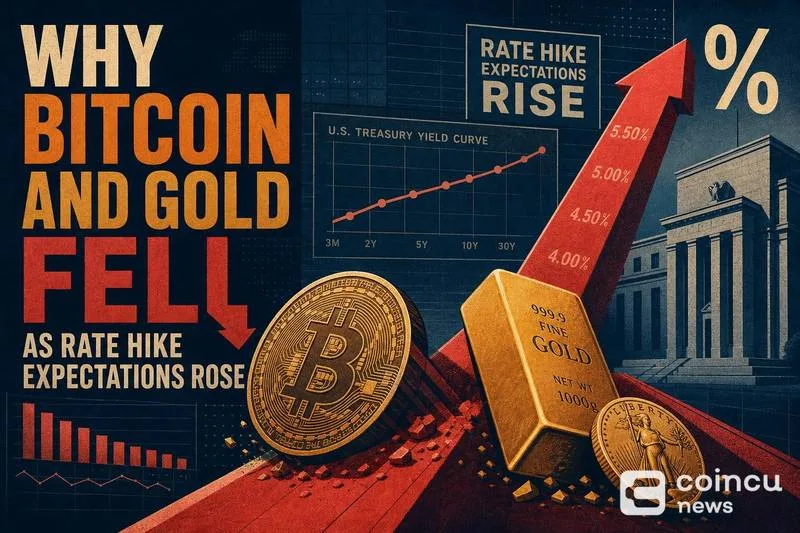
Bitcoin and gold have both fallen amid growing market expectations of upcoming interest rate hikes, undermining their longstanding reputations as safe-haven assets. As investors anticipate tighter monetary policy, these assets—often seen as hedges against inflation and currency depreciation—face significant selling pressure due to broader macroeconomic repricing.
Interest rate hike expectations are quantified through futures and bond market pricing, reflecting the perceived likelihood of central banks raising benchmark rates in forthcoming meetings. Asset prices adjust even before any official decision, as traders reposition portfolios to account for higher rates. This shift increases the opportunity cost of holding non-yielding assets such as gold and Bitcoin, driving demand toward cash and short-duration bonds that offer more immediate returns.

The strengthening U.S. dollar, which typically accompanies rising rate expectations, compounds downward pressure on dollar-priced commodities and risk-sensitive assets. This dynamic often leads to synchronized declines across different asset classes, including Bitcoin and gold, despite their historically diverse roles in portfolios. The fast-changing environment causes correlations between these assets and broader markets to surge, eroding their standing as isolated hedges.
Bitcoin, in particular, has a dual identity that complicates its behavior in these scenarios. While long-term holders treat it as a digital store of value similar to gold, short-term traders view Bitcoin as a high-volatility risk asset that is sensitive to liquidity and monetary conditions. When rate hikes loom, the speculative, risk-asset aspect tends to dominate, prompting selling as a stronger dollar, higher real yields, and tighter liquidity reduce Bitcoin’s appeal in the short term.
This bifurcated nature explains why Bitcoin often moves in line with equities during episodes of macroeconomic stress, despite its fixed supply cap of 21 million coins. The limited supply does not immunize it from short-term price drops linked to funding costs and portfolio rotations toward income-generating assets, especially as leveraged traders exit positions amid rising rates.
The distinction between Bitcoin’s short-term price dynamics and its long-term store-of-value thesis remains crucial. While transient drops triggered by rate expectations test its hedge narrative, they do not invalidate the asset’s foundational case built on multi-year adoption and concerns over fiat currency debasement. Investors continue to weigh these factors as they navigate a complex market environment shaped by evolving monetary policy signals.