

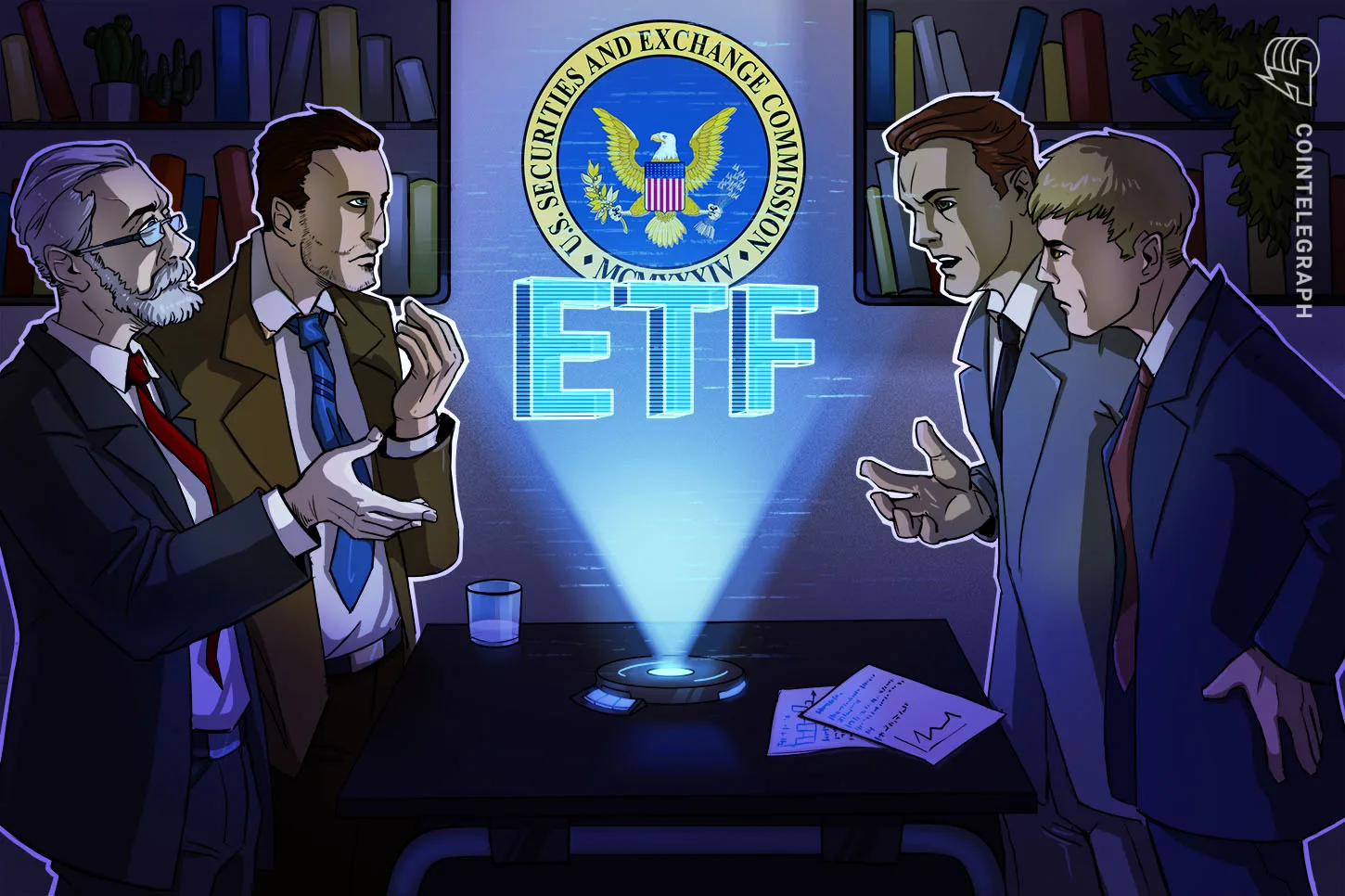
The US Securities and Exchange Commission (SEC) is delaying decisions on a fresh wave of exchange-traded funds (ETFs) that enable investors to speculate on the outcomes of events such as elections and sports. These "prediction market" ETFs would allow retail investors to access binary event contracts through conventional brokerage accounts, marking a potential shift in how speculative instruments are offered under regulated markets.
SEC Chair Paul Atkins highlighted the novelty of these products, indicating that their introduction raises complex regulatory questions. In response, the SEC staff has been directed to solicit public commentary to better gauge the implications before moving forward with approvals. This cautious stance reflects concerns over investor protections and market integrity amid the rapid emergence of new asset classes tied to event outcomes.

Prediction markets have gained significant traction within the cryptocurrency sector over the past year and a half, frequently generating substantial trading volumes across a spectrum of topics, including elections, financial results, and cultural happenings. In February, companies like Bitwise, Roundhill Investments, and GraniteShares filed applications for ETFs based on these markets, with Bitwise’s PredictionShares brand specifically targeting US election predictions.
Such ETFs would mirror the earlier institutional adoption seen with cryptocurrency products, where Bitcoin and Ether ETFs have drawn billions in investments. Bloomberg ETF analyst Eric Balchunas noted that the SEC is grappling with the regulatory framework for this new asset class, similar to its deliberations on spot crypto ETFs, which only recently received approval in early 2024. The SEC aims to establish a clear, comfortable regulatory environment before broadly opening access to prediction market ETFs.
The regulator’s hesitation also coincides with ongoing legal challenges faced by platforms like Kalshi in various state courts, underscoring the unsettled legal and regulatory landscape surrounding prediction markets in the US.
Despite the delays, the SEC has demonstrated increased openness to innovation within the securities ecosystem. Atkins pointed out that ETFs have been a significant force in expanding investor choices and capital formation, with assets in ETFs tripling since 2019. Recent regulatory reforms—including the introduction of a generic listing standard—have aimed to streamline the approval process and encourage product diversity.
Looking ahead, the SEC is reportedly exploring an “innovation exemption” that would facilitate trading tokenized versions of traditional stocks such as Apple, Nvidia, and Tesla on crypto platforms, indicating a broader willingness to integrate digital assets with conventional market structures.