

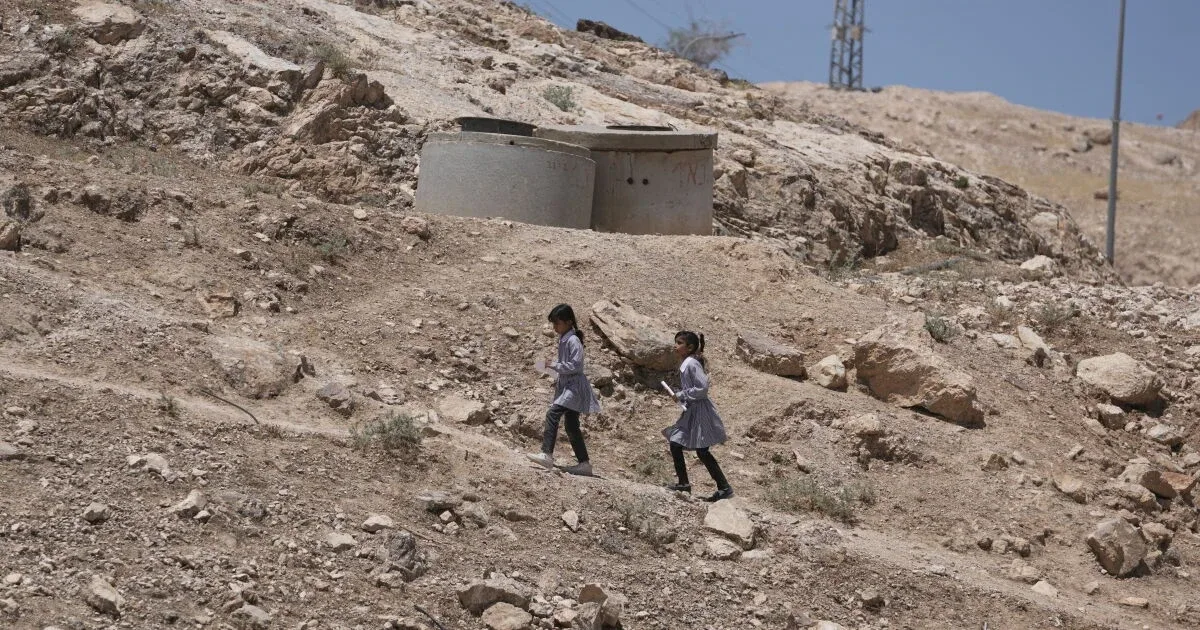
Amnesty International has accused Israel of conducting a systematic campaign aimed at forcibly displacing Palestinian Bedouin and herding communities within Area C of the occupied West Bank. The rights group described this campaign as part of an organized state effort rather than isolated settler actions, targeting land to facilitate annexation ambitions.
The London-based organization detailed that over three and a half years, numerous Bedouin and herding communities faced forced displacement or the threat thereof. The report highlights 27 such communities impacted between 2023 and 2025, involving hundreds of Palestinians subjected to threats, demolitions, or actual displacement. Amnesty linked this escalation to the war in Gaza and criticized international inaction as encouraging Israeli authorities to intensify their efforts.

This phenomenon echoes prior disputes over communities near Jerusalem, particularly around Khan al-Ahmar, which has confronted demolition and eviction threats for years. The issue has broader humanitarian dimensions, reflected in United Nations data indicating widespread displacement in the region. The UN Office for the Coordination of Humanitarian Affairs (OCHA) documented that since early 2023, over a hundred West Bank communities experienced full or partial displacement, with a significant concentration in Bedouin and herder areas of Area C.
OCHA also recorded numerous settler-related incidents throughout 2024 and early 2025, including attacks that led to thousands of Palestinians being displaced and the destruction of many structures. The UN noted that October 2025 recorded the highest monthly settler violence since tracking began nearly two decades ago.
Amnesty International frames these actions as potentially amounting to unlawful transfer and ethnic cleansing, serious breaches under international humanitarian law. The Fourth Geneva Convention deems the forced transfer of protected populations a war crime, a stance supported by various UN human rights bodies. Bedouin communities, in particular, face heightened risks under these circumstances.
Israeli authorities rejected Amnesty’s allegations, with the Israel Defense Forces disputing the characterization of the events. The report arrives amid ongoing debates over Israeli settlement expansion, annexation policies, and the responsibilities of international allies that maintain trade and cooperation with Israel. Amnesty urged these governments to halt actions facilitating what it describes as unlawful occupation, apartheid, and ethnic cleansing, calling for sanctions against officials involved in the campaign.