

The Middle East witnessed a sharp escalation in conflict as the United States launched a fresh wave of airstrikes against Iranian targets, prompting Tehran to respond with missile attacks on countries allied with Washington. This intensified exchange of fire raises serious doubts about the survival of an interim ceasefire designed to halt ongoing hostilities in the region.
The latest confrontations unfolded amid heightened tensions with multiple sirens sounding across Bahrain, Kuwait, Qatar, and Jordan, all key locations with U.S. military presence. Bahrain, hosting the U.S. Navy’s 5th Fleet headquarters, endured repeated alerts. Kuwait intercepted a barrage of ballistic and cruise missiles, as well as drone attacks, injuring one civilian due to falling debris. Jordan and Bahrain also reported intercepting incoming Iranian fire, while Qatar was targeted but no immediate damage was reported. Iranian state media confirmed that the Islamic Revolutionary Guard Corps launched missiles at a U.S. base in Jordan.

Washington’s Central Command revealed that its strikes hit approximately ninety targets within Iran, focusing on military infrastructure including missile launchers and an airport runway. The U.S. justified the attacks as efforts “to further degrade” Iran’s capacity to threaten maritime navigation through the Strait of Hormuz. This strategic waterway is critical, as nearly one-fifth of the world’s oil and natural gas trade passes through it, raising concerns about disruption to global energy supplies amid increasing hostilities.
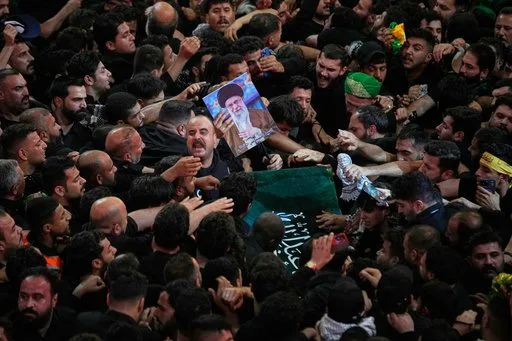
The Iranian Health Ministry confirmed that the recent U.S. airstrikes caused at least fourteen deaths and left dozens wounded, with most casualties reportedly among military personnel. An intense public mourning also took place for Supreme Leader Ayatollah Ali Khamenei, who was killed in the initial days of the conflict and whose funeral drew large crowds in his hometown. His death marks a significant moment in the ongoing war dynamics.
The exchanges follow warnings from U.S. leaders that recent Iranian attacks on vessels in the Strait of Hormuz signal the collapse of the ceasefire and threaten to broaden the war. The fragile agreement, brokered to reduce regional tensions, now faces severe jeopardy as both sides intensify offensive actions, underscoring the volatility of a conflict that risks engulfing multiple countries and disrupting global energy markets.