

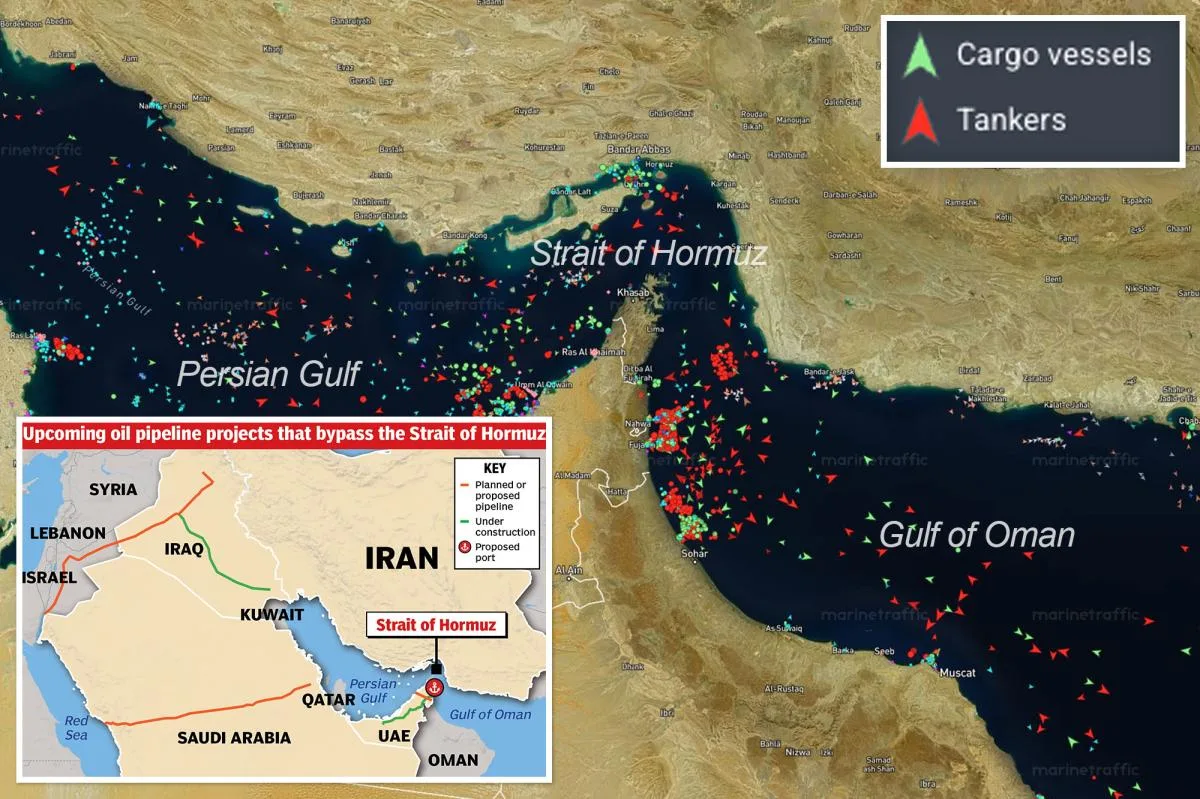
Several key oil-producing countries in the Persian Gulf have launched significant infrastructure projects aiming to circumvent the Strait of Hormuz, a critical maritime chokepoint that handles about 20% of the world’s oil shipments. This move responds to repeated Iranian attacks on ships and Tehran’s threats to impose tolls and extract protection fees, heightening concerns over the security of global energy supplies as regional tensions escalate.
Among these efforts, two major pipeline initiatives are actively progressing in the United Arab Emirates (UAE) and Iraq, while Saudi Arabia and Dubai are exploring additional routes and port developments to lessen their dependence on the strait. Analysts project that by 2027, the expanding pipeline networks could redirect nearly half of the Gulf’s oil exports away from the vulnerable waterway, substantially lowering the risk posed by Iran’s regional leverage.

The UAE’s West-East Pipeline stands out as a pivotal component of this strategy. Now halfway complete, this 252-mile pipeline is set to double the nation’s overland oil transport capacity to 3.6 million barrels per day once finished by 2027. This development runs alongside the existing Fujairah pipeline, enhancing the country’s ability to move crude safely through its eastern coastline without passing through the Strait of Hormuz.
From Iraq, a far-reaching project aims to establish a 435-mile pipeline linking Basra to Haditha and extending connections into Jordan, Syria, and Turkey. The Basra-Haditha pipeline, with an estimated capacity of 2.5 million barrels per day, began construction recently with significant funding committed. Iraqi officials emphasize this as a critical safeguard against regional instability that could disrupt their oil exports.
The wider objective of these projects is to significantly shrink the volume of oil passing through the Strait of Hormuz, which remains a persistent flashpoint amid ongoing conflict. Goldman Sachs estimates that pipeline capacity outside the strait could reach 7.3 million barrels per day by 2028, making 60% of Gulf oil exports “strait-proof.”
Leaders in the UAE affirm that the conflict with Iran validates their long-term vision of diversifying export routes. The head of the Abu Dhabi National Oil Company emphasized that reducing dependence on narrow maritime chokepoints is critical to stabilizing global energy flows. Meanwhile, Saudi Arabia’s leadership is reportedly pursuing its own infrastructure projects as part of a broader regional effort to safeguard vital oil shipments from geopolitical risks linked to Iran.