

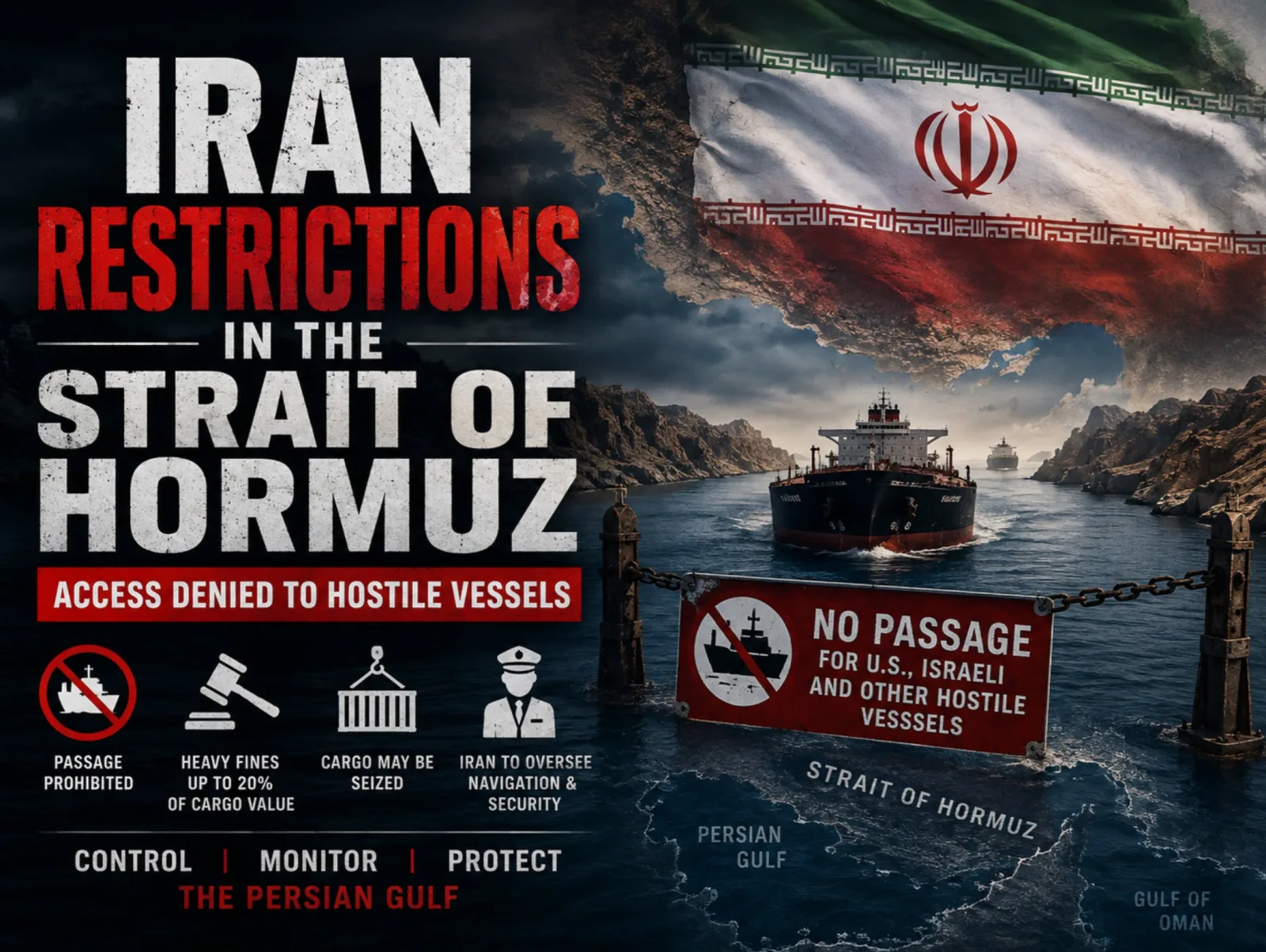
Iran is developing a strategic plan that would tighten its control over navigation through the Strait of Hormuz by barring vessels connected to the United States, Israel, and other designated hostile countries. This move aims to prevent military and civilian ships associated with these nations from transiting this critical waterway, which serves as a vital artery for global oil shipments.
The proposed policy would extend beyond military ships to include cargo vessels linked to activities against Iran or its allied groups known as the "Resistance Front." In addition to denying passage, Iran could impose heavy fines on violators, potentially up to 20% of the cargo’s value. There is also the possibility of cargo seizures for ships that breach these restrictions. Furthermore, countries or entities accused of damaging Iran could face prolonged denial of access to the Strait and the Persian Gulf until compensation claims are addressed.

Supervision and enforcement of these rules would fall under the joint authority of Iranian military forces and other national agencies tasked with monitoring maritime security in the region. Despite these plans being widely discussed and currently under expert review, they have not yet been ratified as official government policy, leaving the extent and timing of implementation uncertain.