

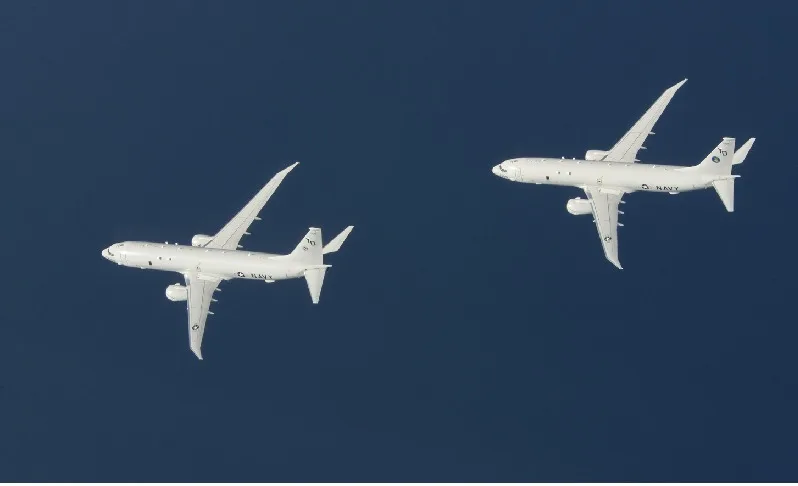
Israel is evaluating the purchase of the U.S. Navy’s P-8 Poseidon maritime patrol and anti-submarine warfare aircraft, a move driven by increasing apprehension about Turkey’s expanding submarine fleet in the Eastern Mediterranean. The Israeli Defense Forces (IDF) see the P-8 as a potential asset for long-range surveillance and specialized anti-submarine operations over maritime zones where current platforms offer limited coverage.
The P-8 Poseidon, based on the Boeing 737-800 airframe, performs multiple roles including maritime patrol, anti-surface warfare, and intelligence, surveillance, and reconnaissance (ISR). This aircraft is operated by a select group of countries worldwide but represents a significant financial commitment. Each unit has a flyaway cost of about $328.5 million, making the acquisition a costly endeavor for Israel’s already stretched defense budget. Officials suggest that any purchase would likely need to be negotiated within a broader strategic framework with the United States.

The IDF already fields advanced anti-submarine capabilities and operates a unique strategic intelligence aircraft known as Oron, which supports multiple branches including the Air Force, Military Intelligence, and the Navy. However, the P-8’s endurance and specialized sensors would enhance Israel’s ability to monitor submarines more effectively across wider maritime areas.
Turkey’s recent naval expansion, including its growing submarine fleet, has become a notable regional security concern for Israel. Despite Iran and its proxies remaining primary adversaries, Israel’s relations with Turkey have sharply deteriorated, marked by diplomatic strains, mutual accusations over actions in Gaza, and Turkey’s issuance of war crime arrest warrants against Israeli leadership. In response, Israel has strengthened ties with Greece and Cyprus—both regional rivals of Turkey—further intensifying strategic competition in the Eastern Mediterranean.
Should Israel proceed with the acquisition, it would become the twelfth global operator of the P-8 Poseidon alongside nations such as the United States, the United Kingdom, Australia, India, and Germany. The potential addition reflects Israel’s focus on maintaining maritime security in a contested region increasingly defined by shifting alliances and advanced naval capabilities.