

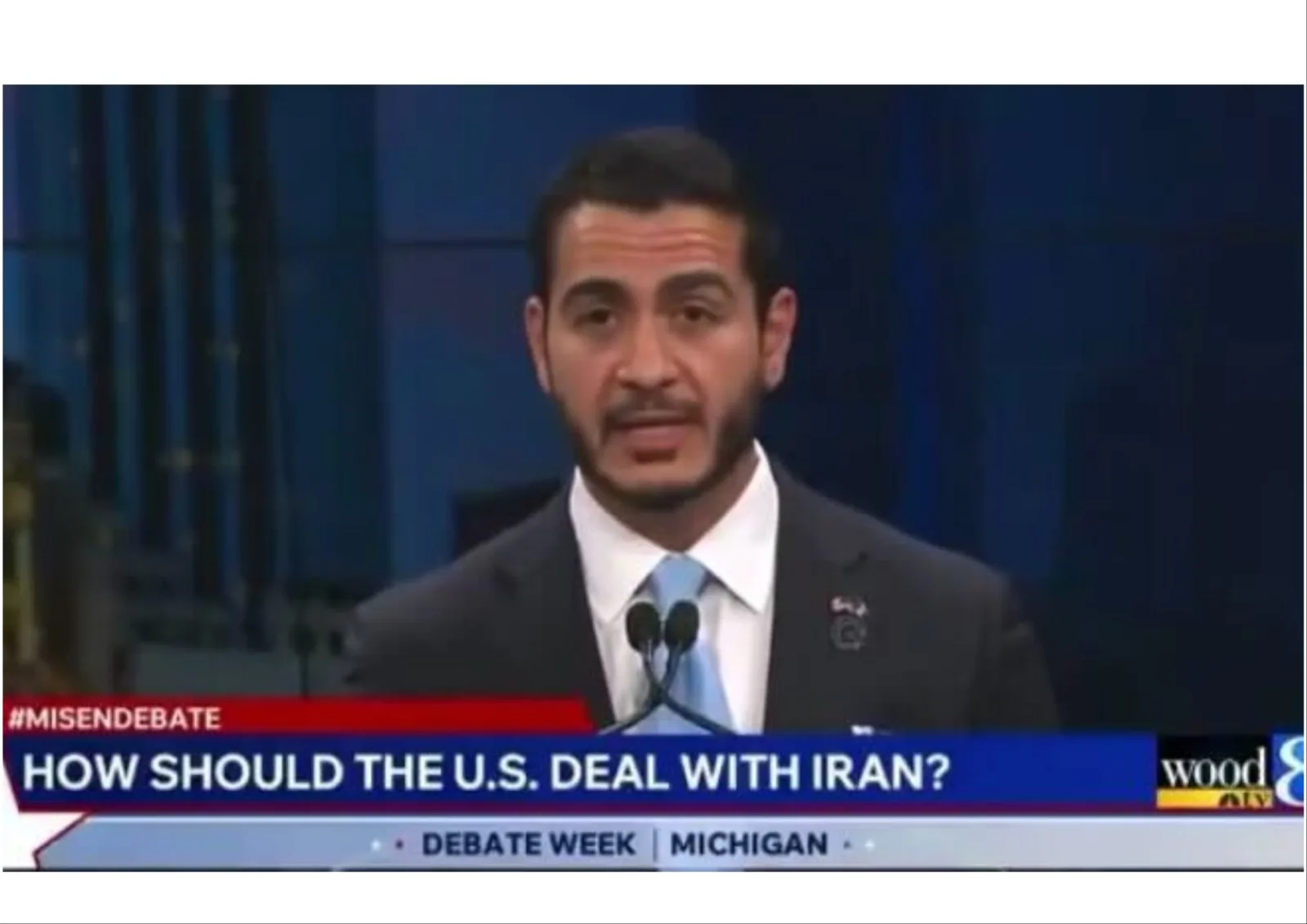
Michigan Democratic Senate hopeful Abdul El-Sayed focused much of his recent primary debate against Rep. Haley Stevens on accusing Israel of exerting undue influence over U.S. domestic and foreign policy. He repeatedly blamed the Jewish state and the American Israel Public Affairs Committee (AIPAC) for a range of American problems, including regulation of artificial intelligence, the national debt, and ongoing conflicts in the Middle East.
When questioned about regulating AI, El-Sayed charged that his campaign was vastly outspent because of contributions from AIPAC. He argued that foreign interests divert U.S. funds abroad instead of investing domestically, claiming the government continues to serve those who finance it. This critique linked to his broader narrative that U.S. governance is compromised by money from pro-Israel lobbies.

El-Sayed also pointed to Israel as a primary force behind America's involvement in conflicts, specifically in Iran. He criticized U.S. policy for supporting what he called “stupid wars” influenced by foreign governments, especially Israel’s leadership. The candidate attributed rising gas prices and the difficulty in resolving these foreign entanglements partly to American policymakers following AIPAC and Israeli cues.
The debate marked the first head-to-head contest between El-Sayed and Stevens following the exit of state senator Mallory McMorrow from the race. With the August primary approaching, El-Sayed holds a notable lead in polls backed by his super PAC. Throughout the campaign, he has prioritized framing the race around U.S.-Israel relations, frequently condemning AIPAC as a corrupt lobby that buys political influence across parties.
El-Sayed’s outreach has raised controversy beyond his statements on Israel. He has appeared alongside figures accused of antisemitism and recently celebrated the opening of a mosque with a cleric known for Holocaust denial. Meanwhile, he has avoided public criticism of Iran’s regime, reportedly refraining from commenting on the death of Ayatollah Ali Khamenei to avoid alienating constituents in areas with significant Iranian-American populations.
During the debate, El-Sayed was also asked about concerns that the Democratic Party is moving too far left, signaling broader questions about his vision for the party’s direction and policies beyond foreign affairs.